


Taiwan People’s Party (TPP) Chairman and presidential nominee Ko Wen-je (柯文哲) on Thursday proposed creating a “council of new immigrants” to handle issues relating to the 2 million new immigrants in Taiwan, who account for about 8.5 percent of the population.
At a news conference, Ko unveiled policy proposals regarding new immigrant, indigenous and Hakka populations.
Saying that there are about as many foreign spouses in Taiwan as there are indigenous people — about 600,000 in each group — Ko added that since there is a Cabinet-level Council of Indigenous Peoples, there should also be a council of new immigrants.
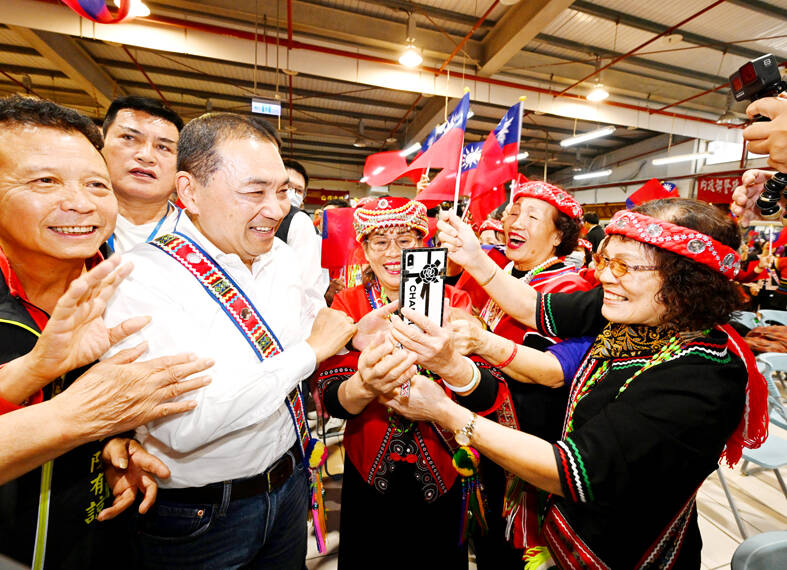
Photo: Tien Yu-hua, Taipei Times
The size of the “new immigrant” population rises to 2 million if international students, as well as the children of foreign spouses, migrant workers and professionals are included, he added, citing Immigration Agency and National Development Council data.
He outlined a plethora of issues facing new immigrants, including obstacles in teaching their native languages to their children, discrimination and illegal migrant workers, he said.
Ko also said that illegal migrant workers have been using National Health Insurance (NHI) cards that do not belong to them, causing some doctors to “falsify” the medical records of patients whom the workers impersonated, leading to more problems.
There is also inconsistency in the rules on the waiting period for new immigrants to receive their NHI and national ID cards, which should be addressed. For example, migrant workers are granted access to the NHI system upon arrival, but foreign spouses must wait six months, he said.
Commenting on the preservation and promotion of Hakka and indigenous cultures and languages, Ko stressed the importance of digitizing learning materials and events.
An online language database should be created for members of younger Hakka and indigenous generations by digitizing materials, he said, adding that this task is especially urgent in indigenous communities.
It is also crucial that events held in Hakka villages showcasing unique cultural elements continue to be held and expanded, he said.
In addition, companies should hold “Indigenous Peoples Day” events where children in indigenous villages are given tours of company premises, which would help promote identity and boost employment prospects for young indigenous people, he said.
Separately on Thursday, New Taipei City Mayor and Chinese Nationalist Party (KMT) nominee Hou You-yi (侯友宜) outlined his own policies toward indigenous communities, saying he would do his utmost to better protect and boost their well-being.
Speaking at a news conference in New Taipei City’s Sijhih District (汐止), Hou said Taiwan’s indigenous peoples must be treated fairly and afforded equal opportunities to flourish and develop to their fullest potential.
As tribal elders are key figures who conserve and pass on the cultural heritage and traditional craftsmanship of their communities, Hou proposed a full NHI subsidy for those aged 55 to 64 (excluding those above a certain income level).
As most indigenous communities face a lack of resources, he promised a larger federal subsidy to build sustainable businesses by training locals and exploring local resources and cultural heritage, as a way of creating more jobs for young people, attracting more tourists and selling more agricultural products.
Underscoring his resolve to build a well-rounded education system to ensure the vitality of each indigenous language and culture, Hou said he would promote amendments to the Educational Fundamental Act (教育基本法) so indigenous people have the right to choose schools where their mother tongue is used.
Turning to the issue of safeguarding indigenous peoples’ right to claim their traditional ownership of territories, Hou said he firmly supports the passage of the draft “Oceans and Lands Rights Act” currently stalled in the legislature, which would honor their traditional way of living in harmony with nature and designate traditional territorial boundaries.
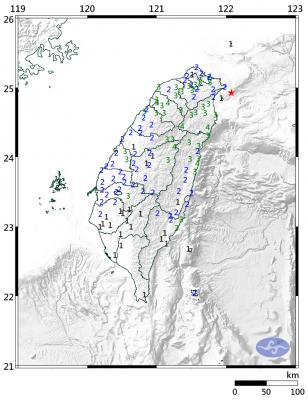
A magnitude 6.1 earthquake struck off the coast of Yilan County at 8:39pm tonight, the Central Weather Administration (CWA) said, with no immediate reports of damage or injuries. The epicenter was 38.7km east-northeast of Yilan County Hall at a focal depth of 98.3km, the CWA’s Seismological Center said. The quake’s maximum intensity, which gauges the actual physical effect of a seismic event, was a level 4 on Taiwan’s 7-tier intensity scale, the center said. That intensity level was recorded in Yilan County’s Nanao Township (南澳), Hsinchu County’s Guansi Township (關西), Nantou County’s Hehuanshan (合歡山) and Hualien County’s Yanliao (鹽寮). An intensity of 3 was
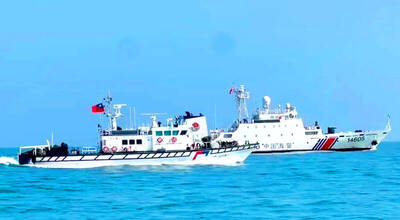
Instead of focusing solely on the threat of a full-scale military invasion, the US and its allies must prepare for a potential Chinese “quarantine” of Taiwan enforced through customs inspections, Stanford University Hoover fellow Eyck Freymann said in a Foreign Affairs article published on Wednesday. China could use various “gray zone” tactics in “reconfiguring the regional and ultimately the global economic order without a war,” said Freymann, who is also a nonresident research fellow at the US Naval War College. China might seize control of Taiwan’s links to the outside world by requiring all flights and ships entering or leaving Taiwan
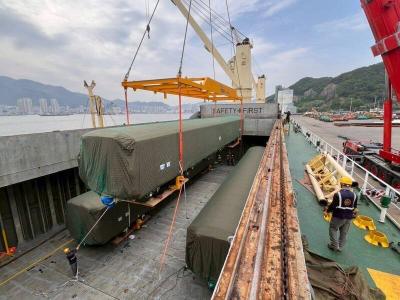
The first of 10 new high-capacity trains purchased from South Korea’s Hyundai Rotem arrived at the Port of Taipei yesterday to meet the demands of an expanding metro network, Taipei Rapid Transit Corp (TRTC) said yesterday. The train completed a three-day, 1,200km voyage from the Port of Masan in South Korea, the company said. Costing NT$590 million (US$18.79 million) each, the new six-carriage trains feature a redesigned interior based on "human-centric" transportation concepts, TRTC said. The design utilizes continuous longitudinal seating to widen the aisles and optimize passenger flow, while also upgrading passenger information displays and driving control systems for a more comfortable
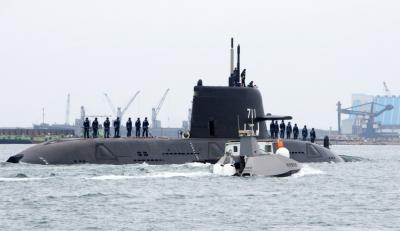
Taiwan's first indigenous defense submarine, the SS-711 Hai Kun (海鯤, or Narwhal), departed for its 13th sea trial at 7am today, marking its seventh submerged test, with delivery to the navy scheduled for July. The outing also marked its first sea deployment since President William Lai (賴清德) boarded the submarine for an inspection on March 19, drawing a crowd of military enthusiasts who gathered to show support. The submarine this morning departed port accompanied by CSBC Corp’s Endeavor Manta (奮進魔鬼魚號) uncrewed surface vessel and a navy M109 assault boat. Amid public interest in key milestones such as torpedo-launching operations and overnight submerged trials,


 RSS
RSS