


The National Central Library on Monday launched its first Taiwan Academic Digital Resource Center in Paris to help improve the accessibility of Taiwanese research documents to academics in France.
The center was established in collaboration with the Paris-based University Library of Languages and Civilizations (BULAC) and inaugurated at an event attended by National Central Library Director-General Tseng Shu-hsien (曾淑賢) and BULAC director Marie-Lise Tsagouria.
The new center is an online service that provides digital resources for research, including electronic books, compiled by the National Central Library and other Taiwanese institutions or businesses, Tseng said.
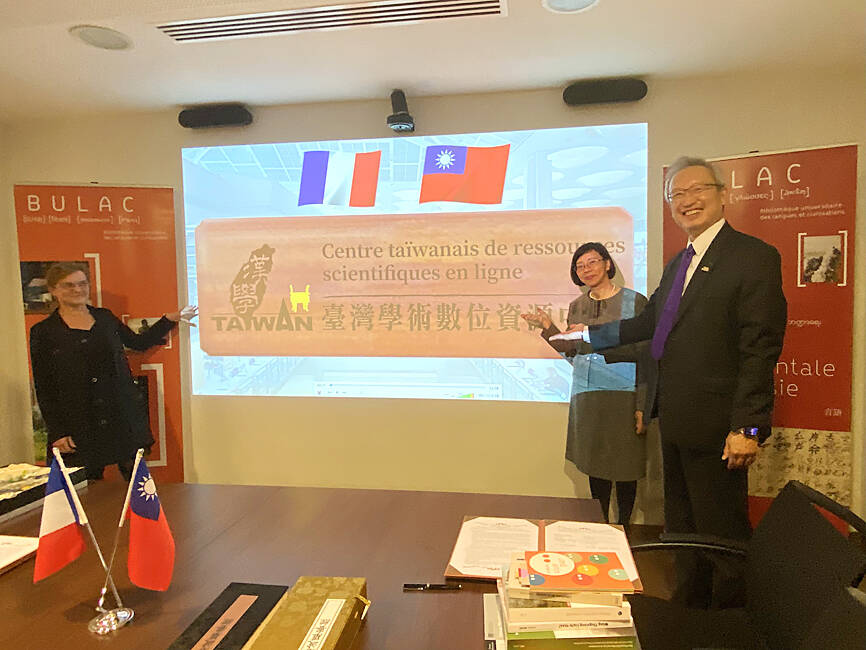
Photo: CNA
Digitization can help solve storage issues and distance constraints, while saving time for researchers, she said.
“Through digital transformation, the National Central Library has established the first-ever Taiwan Academic Digital Resource Center to help Taiwan research be accessible to French academics,” she said.
The National Central Library seeks to deepen its cooperation with BULAC, including by organizing workshops and online lectures, she said.
The center is the first platform of its kind launched in collaboration with a foreign partner, Tsagouria said, adding that it is a model for other institutions.
BULAC anticipates more cooperation with the National Central Library, whether it be in Chinese-language studies or library training, she said.
Monday’s ceremony also included the signing of an agreement between the two institutions to collaborate on a catalog of ancient Chinese books.
The National Central Library since 2005 has been involved in digitization cooperation projects in numerous countries with university and national libraries that have important ancient Chinese books.
It has Taiwan Resource Center for Chinese Studies in 40 countries, which provide institutions with physical copies of Taiwanese research materials.
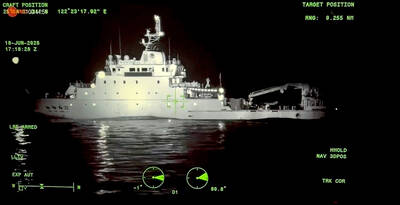
EXCUSES: Beijing is using government and research vessels as a pretext to harass the nation and enter its EEZ, and engage in ‘hegemonic expansion,’ the coast guard said The Coast Guard Administration yesterday said it drove away Chinese oceanographic research vessel Xiang Yang Hong 22 (向陽紅33) from restricted waters after warning it that it was in Taiwan’s exclusive economic zone (EEZ). The Chinese vessel entered restricted waters off the coast of Yilan County’s Suao (蘇澳) at 11:35pm on Thursday, the coast guard said, adding that it dispatched the Lanyu patrol vessel and the boat PP-10077 to shadow the Chinese ship and issue radio warnings ordering it to leave. China has no sovereignty over waters off Taiwan’s east coast, Lanyu’s crew told Xiang Yang Hong 22 over the radio, and demanded
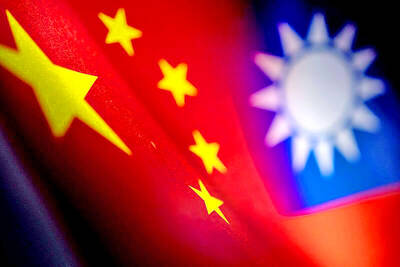
BAIT AND SWITCH: Allowing KMT-run counties to sell to China while the threat of abrupt cancelations hangs overhead is another form of coercion, officials said Beijing is using agricultural purchase offers announced during the Straits Forum to deepen Taiwan’s dependence on the Chinese market, a Taiwanese official said yesterday as they criticized the Taitung County commissioner’s participation in the initiative. During the Straits Forum held in Xiamen on Saturday, Chinese officials announced a sales and purchase agreement for agricultural products from some counties led by the Chinese Nationalist Party (KMT). Taitung County Commissioner Yao Ching-ling (饒慶鈴), who was barred from attending the event in person by the Mainland Affairs Council, participated via video. Under the agreement, China would purchase atemoyas, pomeloes, tea and grouper harvested in Taitung,
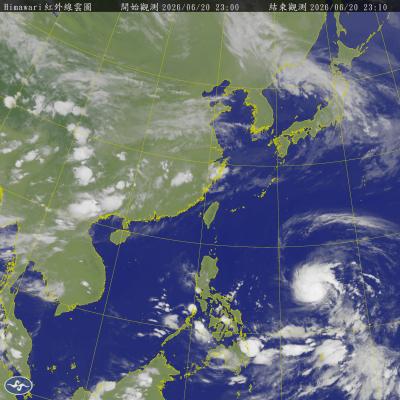
Tropical Storm Mekkhala is forecast to strengthen into a typhoon tomorrow and could come close enough to Taiwan later in the week to prompt a sea warning, the Central Weather Administration (CWA) said yesterday. As of 2 pm, the storm was located 1,870 kilometers southeast of Taiwan's southern tip and moving west- northwest at 23 km per hour. CWA forecaster Cheng Chieh-jen (鄭傑仁) said Mekkhala is expected to continue moving west-northwest through Tuesday under the influence of the Pacific high- pressure system before gradually turning north toward waters east of Taiwan or south of the Ryukyu Islands. The timing and angle of the
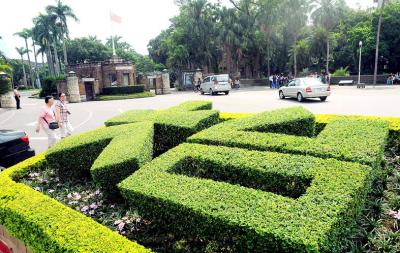
Four Taiwanese universities have been ranked among the world's top 200 institutions in the Quacquarelli Symonds (QS) World University Rankings for next year, the highest Taiwan has ever placed in the category, with National Taiwan University (NTU) achieving its best performance at 54th globally and 17th in Asia. The four Taiwanese institutions in the global top 200 are NTU (54th), National Tsing Hua University (142nd), National Yang Ming Chiao Tung University (177th) and National Cheng Kung University (191st), the rankings showed. All four universities achieved their highest-ever global rankings this year, QS data showed. National Cheng Kung University entered the top 200 for


 RSS
RSS