


Operators of the 24-hour Taichung Citizen 1999 Hotline not only have to stay up to date with the latest municipal policies, they also need to read the news, and even sometimes put up with scoldings or harassment.
Amid the COVID-19 pandemic, the hotline last year received more than 920,000 calls, including people who were under home isolation for the disease and needed an ambulance, and many who asked about vaccination or quarantine rules, but there were also some who wanted to chat, complain, scold or make repeated reports about alleged violations.
The Taichung City Government’s Research, Development and Evaluation Commission said that the “top 10 callers” last year made nearly 20,000 calls between them, costing the city government up to NT$180,000 (US$5,569), with the “top caller” calling nearly 7,000 times — averaging about 20 calls per day — costing more than NT$73,000 in phone bills paid by the city.
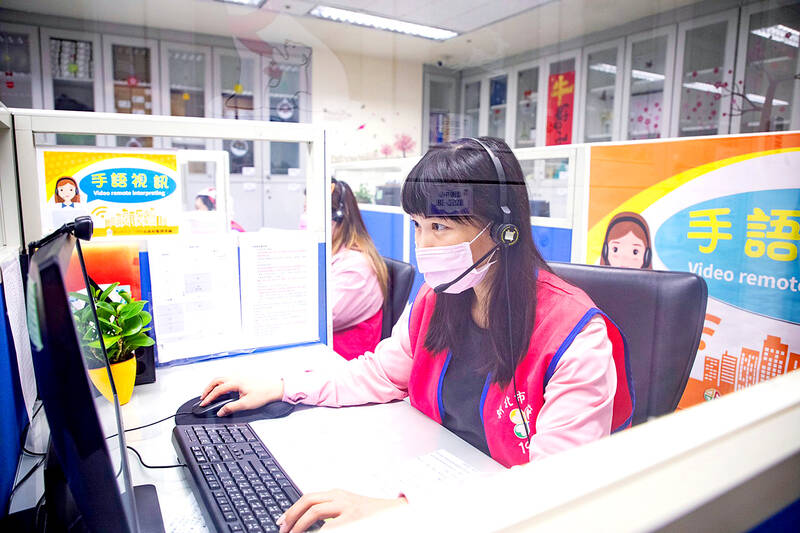
Photo courtesy of the New Taipei City Government
The “top 10” this year had made more than 16,000 calls as of August, costing more than NT$176,000, with the “top caller” making nearly 5,000 calls — a similar average as the top caller last year and costing NT$53,000.
During the early years of the hotline, it was free for 10 minutes and would automatically hang up after that, the commission said.
The phone bill was NT$7 million to NT$8 million per year, it said.
The city in 2015 changed the service to be free for the first five minutes, with fees paid by the caller after that, it said.
However, the city still paid about NT$5.15 million last year and it has already spent nearly NT$2.63 million this year as of August, it said.
Calls by the “top 10” are usually not about the city’s policies or timely issues, with some expressing opinions about news events, while others were from outside the city who just wanted to chat, it said.
To prevent such callers from keeping the hotline busy and affecting residents’ right to call in, the commission has asked operators to limit “chat” calls to three minutes and urged city residents to only use the hotline for services associated with the city.
There are 69 operators working at the Taichung Citizen 1999 Hotline, assisting people with problems, enduring scolding and complaints, and sometimes putting up with harassment, the commission said.
However, they have also helped Taiwanese in other countries return to their family, so many operators think their job is meaningful, it said.
An operator surnamed Lee (李), who has worked at the hotline since it launched in 2009, said when smartphone apps were not yet popular, they often received calls from city residents asking about bus information, especially during commuting hours, so many operators had memorized bus routes and schedules.
Amid the pandemic last year, most calls were about COVID-19 policies, such as quarantine hotels, vaccinations and home isolation rules, and the operators needed to deal with an increase in call volume while having to stay up to date with policies to avoid misleading the callers with outdated information, it said.
The operators need to deal with special requests, such as people asking that they respond in Hoklo (commonly known as Taiwanese), it said.
They would be “educated” if they did not speak the language fluently, with one caller even complaining that the operator’s Hokklo “did not improve” in the next call, it said.
Some callers prefer specific operators, so they hang up immediately if their call is picked up by another operator, and they continue to call until they find the “right” one, the commission said.
Some frequent callers would change their voices and tones, sometimes pretending to be a woman or a man; while some like to call at midnight to harass the operators, it said.
There was a call from a woman who could not get her grandson to fall asleep. She asked if the operator could pretend to be a bus driver and talk to her grandson, who loves buses.
An elderly man who did not know which bus to take thanked the operator for “being nicer to him than his family” for giving him detailed instructions.
Amid the pandemic, there was a call from a mother who was crying and asking for help, as her son or daughter who had not been able to return to Taiwan for more than two years fell ill, but could not get proper treatment, the commission said.
The Taichung Department of Health assisted with returning the person to Taiwan, it said.
After the deadly explosion at the Formosa Fun Coast water park in 2015, a person who was severely injured was in a poor condition after returning home to Taichung for treatment, the commission said.
Their family members felt helpless and called the hotline for assistance, so the city sent personnel to care for them, it said.
Another operator who has worked at the hotline for 11 years said that although the job is challenging, most callers are rational and there are heartwarming incidents, which has helped her continue doing the job.
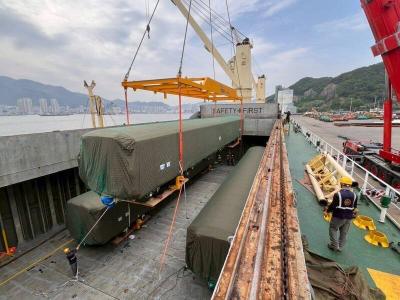
The first of 10 new high-capacity trains purchased from South Korea’s Hyundai Rotem arrived at the Port of Taipei yesterday to meet the demands of an expanding metro network, Taipei Rapid Transit Corp (TRTC) said yesterday. The train completed a three-day, 1,200km voyage from the Port of Masan in South Korea, the company said. Costing NT$590 million (US$18.79 million) each, the new six-carriage trains feature a redesigned interior based on "human-centric" transportation concepts, TRTC said. The design utilizes continuous longitudinal seating to widen the aisles and optimize passenger flow, while also upgrading passenger information displays and driving control systems for a more comfortable
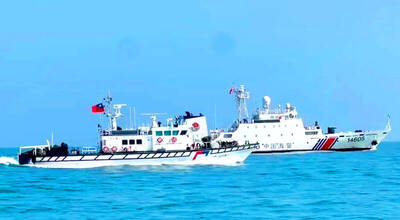
Instead of focusing solely on the threat of a full-scale military invasion, the US and its allies must prepare for a potential Chinese “quarantine” of Taiwan enforced through customs inspections, Stanford University Hoover fellow Eyck Freymann said in a Foreign Affairs article published on Wednesday. China could use various “gray zone” tactics in “reconfiguring the regional and ultimately the global economic order without a war,” said Freymann, who is also a nonresident research fellow at the US Naval War College. China might seize control of Taiwan’s links to the outside world by requiring all flights and ships entering or leaving Taiwan
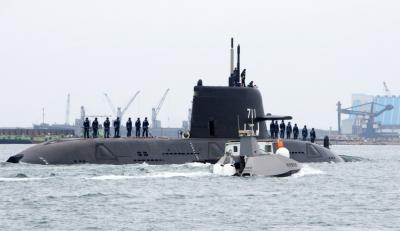
Taiwan's first indigenous defense submarine, the SS-711 Hai Kun (海鯤, or Narwhal), departed for its 13th sea trial at 7am today, marking its seventh submerged test, with delivery to the navy scheduled for July. The outing also marked its first sea deployment since President William Lai (賴清德) boarded the submarine for an inspection on March 19, drawing a crowd of military enthusiasts who gathered to show support. The submarine this morning departed port accompanied by CSBC Corp’s Endeavor Manta (奮進魔鬼魚號) uncrewed surface vessel and a navy M109 assault boat. Amid public interest in key milestones such as torpedo-launching operations and overnight submerged trials,
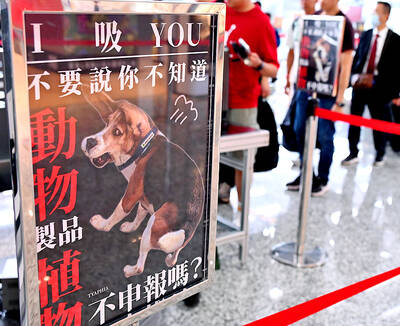
Quarantine awareness posters at Taiwan Taoyuan International Airport have gone viral for their use of wordplay. Issued by the airport branch of the Animal and Plant Health Inspection Agency, the posters feature sniffer dogs making a range of facial expressions, paired with advisory messages built around homophones. “We update the messages for holidays and campaign needs, periodically refreshing materials to attract people’s attention,” quarantine officials said. “The aim is to use the dogs’ appeal to draw focus to quarantine regulations.” A Japanese traveler visiting Taiwan has posted a photo on X of a poster showing a quarantine dog with a


 RSS
RSS