


The Taiwan Railways Administration (TRA) is to incur a financial loss topping NT$7.492 billion (US$233.89 million) after it is officially corporatized in January next year, based on a budget it submitted to the legislature.
The agency’s estimated business revenue for the 2024 fiscal year is NT$34.452 billion, while business expenditure would reach NT$41.944 billion, the agency said.
The loss would be a 60.33 percent increase from NT$2.819 billion budgeted for fiscal 2023, it said.
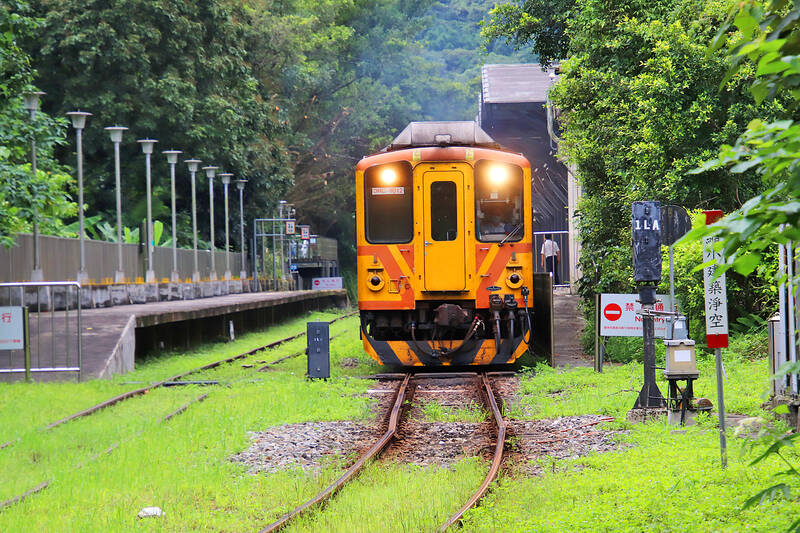
Photo: Huang Mei-chu, Taipei Times
The TRA said that the expected increase is because the soon-to-be-established railway company would bear additional financial burdens during its first year of operations:
First, a 4 percent pay raise for all workers would increase expenditure by NT$600 million, it said.
Second, 1.5 percent of state-owned Taiwan Railway Co’s capital would be allocated to establish employee welfare funds, costing about NT$1.2 billion in total, it said.
Third, the new company would assume losses of NT$1 billion due to asset depreciation and amortization, the TRA said.
“As a public facility, the TRA is tasked with serving society and must not run a profit-oriented operation,” it said. “However, the agency has had a severe funding shortage, as train ticket prices have been kept low and it can no longer cover the costs.”
“The agency’s ability to pay short-term debts is inadequate and it must carry a heavy interest burden as well,” it said.
The TRA has had some relief, with the government paying its interest obligations for the TRA’s employee pension fund and derivative debts, it said.
The state has also subsidized its less-profitable railway services, including stations with low use rates, it said.
The TRA said that losing customers who prefer high-speed services for long-distance travel was inevitable, but it is finding ways to replace that lost revenue.
The TRA is to offer “Intercity MRT services” on the west coast by increasing commuter train services and working with other public transit operators to offer train passengers seamless transfers between services, it said.
With complete electrification of railway services across Taiwan to be finished soon, the TRA plans to increase ridership to the east coast by working with tour operators, it said.
Other plans include an increase in freight services and participation in urban development plans to profit from its properties, the agency said.
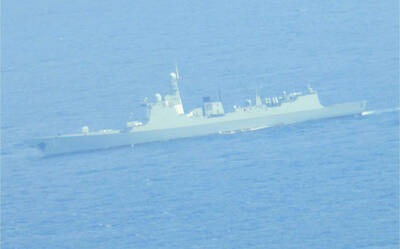
The military has spotted two Chinese warships operating in waters near Penghu County in the Taiwan Strait and sent its own naval and air forces to monitor the vessels, the Ministry of National Defense (MND) said. Beijing sends warships and warplanes into the waters and skies around Taiwan on an almost daily basis, drawing condemnation from Taipei. While the ministry offers daily updates on the locations of Chinese military aircraft, it only rarely gives details of where Chinese warships are operating, generally only when it detects aircraft carriers, as happened last week. A Chinese destroyer and a frigate entered waters to the southwest
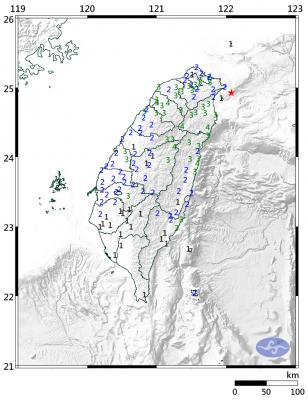
A magnitude 6.1 earthquake struck off the coast of Yilan County at 8:39pm tonight, the Central Weather Administration (CWA) said, with no immediate reports of damage or injuries. The epicenter was 38.7km east-northeast of Yilan County Hall at a focal depth of 98.3km, the CWA’s Seismological Center said. The quake’s maximum intensity, which gauges the actual physical effect of a seismic event, was a level 4 on Taiwan’s 7-tier intensity scale, the center said. That intensity level was recorded in Yilan County’s Nanao Township (南澳), Hsinchu County’s Guansi Township (關西), Nantou County’s Hehuanshan (合歡山) and Hualien County’s Yanliao (鹽寮). An intensity of 3 was

Japanese Prime Minister Sanae Takaichi’s comment last year on Tokyo’s potential reaction to a Taiwan-China conflict has forced Beijing to rewrite its invasion plans, a retired Japanese general said. Takaichi told the Diet on Nov. 7 last year that a Chinese naval blockade or military attack on Taiwan could constitute a “survival-threatening situation” for Japan, potentially allowing Tokyo to exercise its right to collective self-defense. Former Japan Ground Self-Defense Force general Kiyofumi Ogawa said in a recent speech that the remark has been interpreted as meaning Japan could intervene in the early stages of a Taiwan Strait conflict, undermining China’s previous assumptions
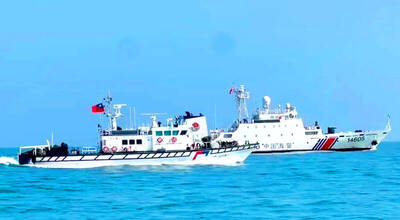
Instead of focusing solely on the threat of a full-scale military invasion, the US and its allies must prepare for a potential Chinese “quarantine” of Taiwan enforced through customs inspections, Stanford University Hoover fellow Eyck Freymann said in a Foreign Affairs article published on Wednesday. China could use various “gray zone” tactics in “reconfiguring the regional and ultimately the global economic order without a war,” said Freymann, who is also a nonresident research fellow at the US Naval War College. China might seize control of Taiwan’s links to the outside world by requiring all flights and ships entering or leaving Taiwan


 RSS
RSS