

The number of people listening to podcasts in Taiwan has reached half the number of those listening to traditional radio programs, a National Communications Commission (NCC) broadcasting market investigation report said.
The report said that 17.3 percent of people above the age of 16 listen to traditional radio programs, 8.9 percent listen to podcasts and 5.7 percent listen to radio programs over the Internet.
Nearly 73 percent said they do not listen to any podcasts or traditional radio programs.

Photo: Ting Yi, Taipei Times
The report said 18.2 percent of podcast listeners were aged 16 to 25, with interest waning as people grew older.
Fewer than 1 percent of podcast listeners were over the age of 66, it said.
About 23.5 percent of traditional radio listeners were aged 46 to 55, while those aged 16 to 25 only comprised 10.7 percent of conventional radio listeners, it said.
The audience of traditional radio programs is passive and is constrained by the time of the program or the topic discussed by the host on a given day, said Liao Ching (廖靖), podcast manager of Comma School (逗點學校).
He added that radio program hosts also have a relatively higher vocational qualification threshold.
The audiences actively search for whichever podcasts they wish to listen to, without radio stations dictating the length or the topic of podcasts, he said.
While most podcast listeners are 23 to 44 years old, if the popularity of podcasts continues to rise, older people might begin accepting the medium as well, Liao said.
Competition between podcasting and traditional radio does not need to be a “zero-sum” game, said Tu Sheng-tsung (杜聖聰), chairman of Ming Chuan University’s radio and television department.
The broadcast industry still has much room to grow, as audiobooks and other derivative media show, Tu said, adding that he was more concerned with how podcasters would be able to turn a profit and keep the industry afloat, as Taiwan has a small audience base.
Traditional radio programs are encountering the issue of an aging audience, and creating YouTube channels to broaden their audience bases might be one of the solutions, Tu said.
The NCC poll was conducted from March 14 to April 24 last year and targeted people aged 16 or older. It received 1,346 valid responses and claimed a margin of error of 3 percentage points.

Ocean Affairs Council (OAC) Minister Kuan Bi-ling (管碧玲) on Wednesday said decommissioned coast guard vessels were given to the Philippines to enhance regional rescue capacity and would not affect Taiwanese fishers’ rights and benefits. Kuan made the remarks after confirmation on Tuesday that a 500-tonne Coast Guard Administration (CGA) patrol and rescue vessel would be given to the Philippine Coast Guard. The donation ceremony was reportedly done in Manila, but whether the vessel — previously numbered “CG123” and named Kinmen (金門) — has been handed over has yet to be confirmed. China’s Taiwan Affairs Office (TAO) on Wednesday criticized the donation for “taking
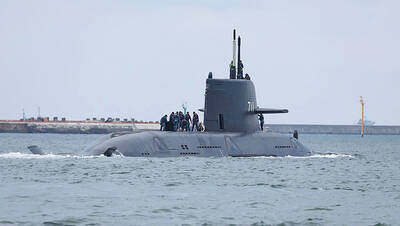
UPDATE: The submarine would need to undergo combined systems testing and crew training for navy personnel before it is ready for mission, an expert said Taiwan’s first domestically built submarine, the Hai Kun (Narwhal, 海鯤), could be delivered to the navy as early as next month, military expert and Taiwan Association for Security and Development chairman Chi Tung-yun (紀東昀) said yesterday. The submarine was yesterday morning observed departing for its 21st sea trial and its 15th submerged test. The vessel missed the initial delivery deadline of November last year due to “testing delays,” its primary contractor, shipbuilder CSBC Corp, Taiwan, said in June. The contractor also cited “political pressure from China” in procuring critical equipment. All testing operations are in the final stages, with the
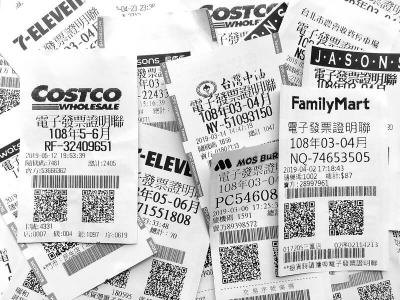
Six NT$10 million (US$315,527) special prizes and seven NT$2 million grand prizes in Taiwan's May-June uniform invoice lottery remained unclaimed as of today, including one NT$10 million winner who spent only NT$10 on an Uber Eats delivery order, the Ministry of Finance said. The ministry said the 13 winners need to claim their prizes by Nov. 5. The eight-digit serial number that won the NT$10 million special prize for May-June was 38548029, with 18 winning receipts in total. The NT$2 million grand prize number was 10138845, of which there were 22 winning receipts, the ministry said. In addition to the receipt issued for an
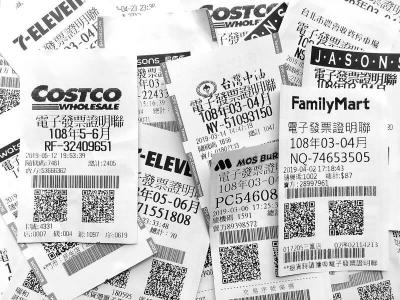
The Ministry of Finance today announced the winning numbers for the July-August uniform invoice lottery. The winning number for the NT$10 million (US$314,663) special prize is 89996565, while the winning number for the NT$2 million grand prize is 91098182. Three numbers were drawn for the NT$200,000 first prize: 54348835, 44991397 and 06595111. Those with receipts matching the last seven digits of any of the first-prize numbers can claim the NT$40,000 second prize, while those matching the last six digits qualify for the NT$10,000 third prize. Those whose receipts match the last five digits of the first-prize numbers are eligible for the NT$4,000 fourth prize,


 RSS
RSS