

The government should be transparent about easing pesticide and fungicide restrictions, a Consumers’ Foundation official said yesterday, after the Food and Drug Administration (FDA) eased some regulations at the request of the Japan-Taiwan Exchange Association.
The agency in February added maximum residue limits (MRLs) for five types of pesticides and fungicides used on seven types of agricultural products.
The FDA last week confirmed that the association had applied for relaxed regulations on chlorfenapyr and flonicamid, as strawberries imported from Japan were frequently being found to have excessive residues of the pesticides.

Photo copies by Wu Liang-yi, Taipei Times
A specialist panel convened by the agency agreed to raise the limits for the pesticides, and the agency would publicize an advanced notice for the planned revision with a 60-day public comment period, it said.
The MRLs on five types of pesticides and fungicides were raised in Feb. 17 amendments to the Standards for Pesticide Residue Limits in Foods (農藥殘留容許量標準).
They include thiacloprid residue on tea leaves and grapes; isopyrazam residue on apples; dinotefuran residue on perilla flowers; flutianil residue on cantaloupes, oriental melons and strawberries; and benthiavalicarb isopropyl residue on grapes.
Imported agricultural products with residue levels below the MRLs would pass border inspections and be permitted for sale in Taiwan.
Consumers’ Foundation deputy chairperson Hsu Tse-yu (徐則鈺) said that the government should be open and transparent about easing restrictions, especially when it includes fungicides that have never been approved for use in Taiwan.
The FDA should explain why they were banned, if comprehensive evaluations were made before revising the regulations and what the conclusions of those evaluations were, so that consumers can feel safe consuming the products, he said.
As the FDA said that lonicamid or chlorfenapyr are already used on other agricultural products and it planned to only add MRLs for strawberries, the foundation hopes the agency will publicize its meeting minutes, so the public can understand its assessment and decisionmaking process, Hsu said.
In other developments, the Kaohsiung Department of Health on Friday fined Costco Taiwan NT$7.5 million (US$244,770) after a mixed berry product sold by the retailer tested positive for hepatitis A.
The department said it decided to impose the heavier penalty under the Act Governing Food Safety and Sanitation (食品安全衛生管理法), because of the scale, potential severity of infections and related factors.
Bags of the Kirkland Signature Three Berry Blend imported from Chile, which the department last month ordered to be removed from shelves and destroyed, were sold to about 2,400 people in Kaohsiung, it said.
The department on Friday last week fined Costco NT$300,000 for failing to provide a timely list of customers who bought the potentially contaminated frozen berry mix.
More than 17,000kg of the product had already been sold in 1.81kg bags by the time hepatitis A was found in a batch of the berries, the FDA said on Sunday last week.
The case was first brought to the attention of the FDA by the US FDA, which started recalling frozen berry and food products in March after five hepatitis A cases were reported in the US.
The cases in the US prompted the FDA to heighten its border inspection protocols, leading to the April 10 discovery that a Costco batch of Kirkland products containing a mix of frozen raspberries, blueberries and blackberries tested positive for the virus.
Additional reporting by Cheng Wei-chi and CNA
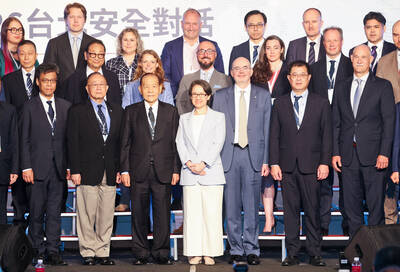
Taiwan’s growing defense preparations might be sending a stronger signal to the US than to Beijing, highlighting the need for Taipei to tailor its deterrence efforts to different audiences, a US security academic said yesterday. Stanford University Freeman Spogli Institute for International Studies fellow Oriana Skylar Mastro made the comment during a Taipei Security Dialogue panel examining lessons Taiwan could draw from the wars in Ukraine and the Middle East. Mastro said she was impressed by Taiwan’s increased defense spending, emphasis on asymmetric capabilities and efforts to prepare society for conflict, but questioned whom those initiatives were influencing. She said when she asked

A total of 400 foreign “high- level” professionals have been naturalized as Republic of China (Taiwan) citizens over the past decade as the government has eased nationality rules to attract talent from a wider range of fields, the Ministry of the Interior said yesterday. The 400th high-level professional, who works in the electronics industry, was approved for ROC citizenship on Aug. 26, the MOI said. The MOI quoted the newly naturalized citizen as saying that Taiwan is a leader in fields such as semiconductors, electronics manufacturing, artificial intelligence development and energy technology. He also said
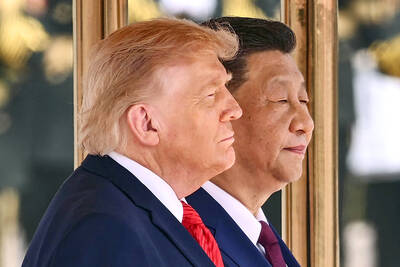
China has warned that it could cancel a planned US-China leaders’ summit if Washington approves new arms sales to Taiwan, a Japanese media outlet quoted sources as saying yesterday. US President Donald Trump, “apparently eager to showcase some diplomatic achievements ahead of November’s midterm congressional elections, places great importance on holding the summit with Chinese President Xi Jinping (習近平),” Japan’s Kyodo News reported. “While preparing for Xi’s upcoming trip, China has restated its position that the Taiwan issue is a ‘red line’ in bilateral relations,” the report said. The report said that when Xi met with Trump in Beijing in May, Xi said
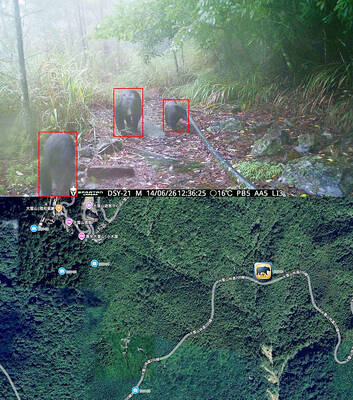
RARE PEEK: The footage released showed one of the bears staying in a cave for as long as 70 days, providing the first record of Formosan black bear’s overwintering The Forestry and Nature Conservation Agency yesterday released tracking records of released Formosan black bears for the first time, showing that they get much closer to human settlements than previously thought. The agency said it had captured two bears, Da Qu-ali (達古阿里) and Aziman (阿里曼), in indigenous villages in Hualien County and began to track them with a camera-mounted satellite collar after releasing them back into the wild. The results confirmed that the bears have moved from deep mountain areas into lowland hills closer to human communities, leading to an increase in human-bear conflicts, it said. The agency has introduced artificial intelligence-assisted early


 RSS
RSS