


Linkou Chang Gung Memorial Hospital generated the highest overall profit among the nation’s healthcare facilities last year for the sixth consecutive year, a report released yesterday by the National Health Insurance Administration (NHIA) showed.
The report — an annual publication of the profits of healthcare facilities that received National Health Insurance (NHI) funding exceeding NT$200 million (US$6.54 million) in the previous year — showed that Linkou Chang Gung Memorial Hospital reported NT$3.47 billion in profit.
Nineteen medical centers, 81 regional hospitals, 121 district hospitals, three primary care clinics and one clinical laboratory met the reporting criteria for last year, the NHIA said.
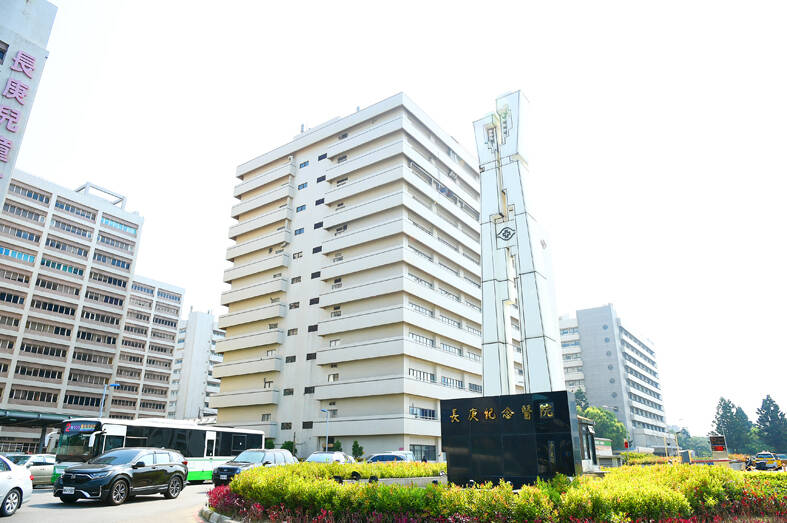
Photo: Chen Yi-kuan, Taipei Times
Kaohsiung Chang Gung Memorial Hospital ranked second, with NT$3.26 billion, followed by China Medical University Hospital with NT$2.35 billion, National Cheng Kung University (NCKU) Hospital with NT$1.73 billion and E-Da Hospital with NT$1.38 billion.
This year is the first time that NCKU Hospital and E-Da Hospital were included in the top five hospitals with the highest profits, the NHIA said, adding that National Taiwan University Hospital, which ranked fourth in 2021, fell to eighth in the rankings for last year.
In terms of revenue derived solely from medical services, the most profitable hospital was China Medical University Hospital, with NT$1.87 billion, followed by Kaohsiung Medical University Chung-Ho Memorial Hospital with NT$1.41 billion, Changhua Christian Hospital with NT$748 million, Taipei City Hospital with NT$728 million and Kaohsiung Chang Gung Memorial Hospital with NT$718 million.
New Taipei City Tucheng Municipal Hospital had the highest overall deficit at NT$448 million, followed by National Taiwan University Cancer Center with NT$223 million, Tainan’s Sin-Lau Hospital with NT$85 million, Chiayi Chang Gung Memorial Hospital with NT$68 million and Yunlin County’s Chang Gung Memorial Hospital with NT$43 million.
The percentage of healthcare facilities that had surplus revenue at the end of last year rose from 86.3 percent in 2021 to 89.3 percent last year, while only 24 facilities had a deficit, the NHIA said.
This was likely as a result of the nearly NT$800 billion NHI budget for last year, which was augmented with special medical funding of about 5 percent of the total budget to support healthcare facilities amid the COVID-19 pandemic, the administration said.

SECURITY: Starlink owner Elon Musk has taken pro-Beijing positions, and allowing pro-China companies to control Taiwan’s critical infrastructure is risky, a legislator said Starlink was reluctant to offer services in Taiwan because of the nation’s extremely high penetration rates in 4G and 5G services, the Ministry of Digital Affairs said yesterday. The ministry made the comments at a meeting of the legislature’s Transportation Committee, which reviewed amendments to Article 36 of the Telecommunications Management Act (電信管理法). Article 36 bans foreigners from holding more than 49 percent of shares in public telecommunications networks, while shares foreigners directly and indirectly hold are also capped at 60 percent of the total, unless specified otherwise by law. The amendments, sponsored by Chinese Nationalist Party (KMT) Legislator Ko

The military has spotted two Chinese warships operating in waters near Penghu County in the Taiwan Strait and sent its own naval and air forces to monitor the vessels, the Ministry of National Defense (MND) said. Beijing sends warships and warplanes into the waters and skies around Taiwan on an almost daily basis, drawing condemnation from Taipei. While the ministry offers daily updates on the locations of Chinese military aircraft, it only rarely gives details of where Chinese warships are operating, generally only when it detects aircraft carriers, as happened last week. A Chinese destroyer and a frigate entered waters to the southwest
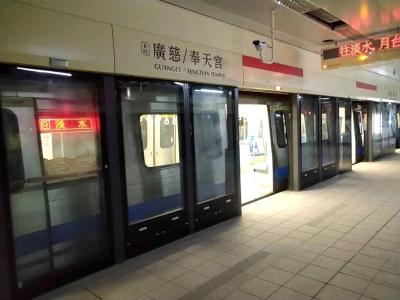
The eastern extension of the Taipei MRT Red Line could begin operations as early as late June, the Taipei Department of Rapid Transit Systems said yesterday. Taipei Rapid Transit Corp said it is considering offering one month of free rides on the new section to mark its opening. Construction progress on the 1.4km extension, which is to run from the current terminal Xiangshan Station to a new eastern terminal, Guangci/Fengtian Temple Station, was 90.6 percent complete by the end of last month, the department said in a report to the Taipei City Council's Transportation Committee. While construction began in October 2016 with an
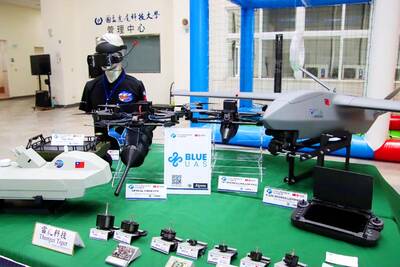
NON-RED SUPPLY: Boosting the nation’s drone industry is becoming increasingly urgent as China’s UAV dominance could become an issue in a crisis, an analyst said Taiwan’s drone exports to Europe grew 41.7-fold from 2024 to last year, with demand from Ukraine’s fight against Russian aggression the most likely driver of growth, a study showed. The Institute for Democracy, Society and Emerging Technology (DSET) in a statement on Wednesday said it found that many of Taiwan’s uncrewed aerial vehicle (UAV) sales were from Poland and the Czech Republic. These countries likely transferred the drones to Ukraine to aid it in its fight against the Russian invasion that started in 2022, it said. Despite the gains, Taiwan is not the dominant drone exporter to these markets, ranking second and fourth


 RSS
RSS