


The High Court on Tuesday rejected a second appeal by prosecutors to detain Chinese Nationalist Party (KMT) Central Standing Committee member Hsiao Ching-tien (蕭景田), who is suspected of vote-buying in the local elections in November last year.
The High Court upheld the order given by the Shilin District Court on Saturday last week to release Hsiao on bail of NT$15 million (US$493,632), ruling that Hsiao was neither a flight risk nor capable of destroying, forging or colluding with others to tamper with evidence.
The Shilin District Court first rejected a request by prosecutors to detain Hsiao on Tuesday last week, when it set Hsiao’s bail at NT$8 million.
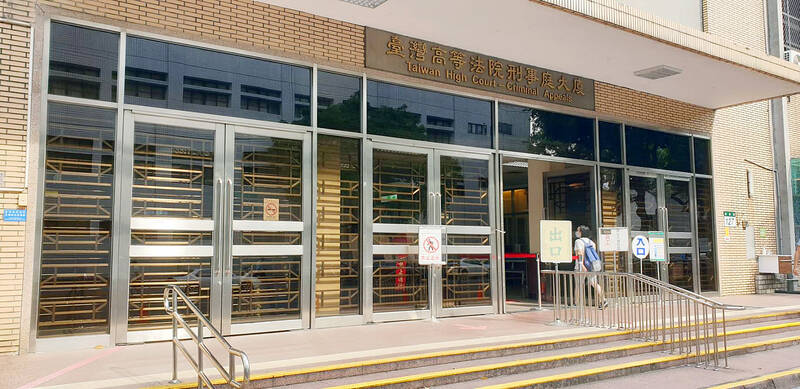
Photo: Yang Kuo-wen, Taipei Times
Prosecutors appealed the ruling, resulting in the court’s decision on Saturday last week to increase the bail amount, but prosecutors appealed to detain Hsiao and hold him incommunicado, a request the High Court rejected.
Hsiao, 69, voluntarily reported to the prosecutors’ office on Tuesday last week after a warrant for his arrest was issued on Dec. 29 last year, as he did not respond to a summons related to allegations of vote-buying on behalf of KMT Taipei City Council candidate Lin Hsing-er (林杏兒).
Prosecutors and investigators involved in the case said they received a tip-off alleging that Hsiao and one of Lin’s local campaign officials surnamed Tseng (曾) made payments to borough warden candidates in the Shilin and Beitou constituency where Lin was running.
They allegedly paid NT$6,000 to NT$10,000 to the borough warden candidates to gain their support and promote Lin’s candidacy, Chinese-language media reported.
Lin won the race and her victory was confirmed by the Central Election Commission on Dec. 2 last year, but prosecutors filed a suit on Dec. 30 to annul Lin’s election amid the vote-buying allegations.
Candidates are considered to have engaged in vote-buying if they participated in, abetted or condoned vote-buying committed on their behalf, regardless of whether the bribes originated from the candidates themselves, prosecutors said, citing the Civil Servants Election and Recall Act (公職人員選舉罷免法).

The Centers for Disease Control (CDC) yesterday reported the first case of a new COVID-19 subvariant — BA.3.2 — in a 10-year-old Singaporean girl who had a fever upon arrival in Taiwan and tested positive for the disease. The girl left Taiwan on March 20 and the case did not have a direct impact on the local community, it said. The WHO added the BA.3.2 strain to its list of Variants Under Monitoring in December last year, but this was the first imported case of the COVID-19 variant in Taiwan, CDC Deputy Director-General Lin Ming-cheng (林明誠) said. The girl arrived in Taiwan on

South Korea is planning to revise its controversial electronic arrival card, a step Taiwanese officials said prompted them to hold off on planned retaliatory measures, a South Korean media report said yesterday. A Yonhap News Agency report said that the South Korean Ministry of Foreign Affairs is planning to remove the “previous departure place” and “next destination” fields from its e-arrival card system. The plan, reached after interagency consultations, is under review and aims to simplify entry procedures and align the electronic form with the paper version, a South Korean ministry official said. The fields — which appeared only on the electronic form

The Ministry of Foreign Affairs (MOFA) is suspending retaliation measures against South Korea that were set to take effect tomorrow, after Seoul said it is updating its e-arrival system, MOFA said today. The measures were to be a new round of retaliation after Taiwan on March 1 changed South Korea's designation on government-issued alien resident certificates held by South Korean nationals to "South Korea” from the "Republic of Korea," the country’s official name. The move came after months of protests to Seoul over its listing of Taiwan as "China (Taiwan)" in dropdown menus on its new online immigration entry system. MOFA last week
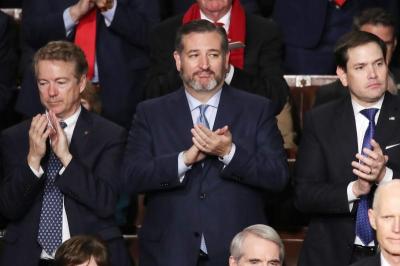
A bipartisan group of US senators has introduced a bill to enhance cooperation with Taiwan on drone development and to reduce reliance on supply chains linked to China. The proposed Blue Skies for Taiwan Act of 2026 was introduced by Republican US senators Ted Cruz and John Curtis, and Democratic US senators Jeff Merkley and Andy Kim. The legislation seeks to ease constraints on Taiwan-US cooperation in uncrewed aerial systems (UAS), including dependence on China-sourced components, limited access to capital and regulatory barriers under US export controls, a news release issued by Cruz on Wednesday said. The bill would establish a "Blue UAS


 RSS
RSS