


Beijing might renew its cognitive warfare and cyberattacks to influence the outcome of the Nov. 26 local elections, an official with knowledge of the matter said on Friday.
As Chinese President Xi Jinping (習近平) strives to break precedent by securing a third term at the Chinese Communist Party’s (CCP) 20th National Congress, the regime’s information warfare agencies have been focused on maintaining internal stability, the official said, speaking on condition of anonymity.
The stability operations have included a massive roundup of 1.4 million people accused of crimes, the eradication of organized political opposition, augmented surveillance of dissidents and advocates, and clampdowns on online speech, resulting in a brief reprieve for Taiwan, they said.
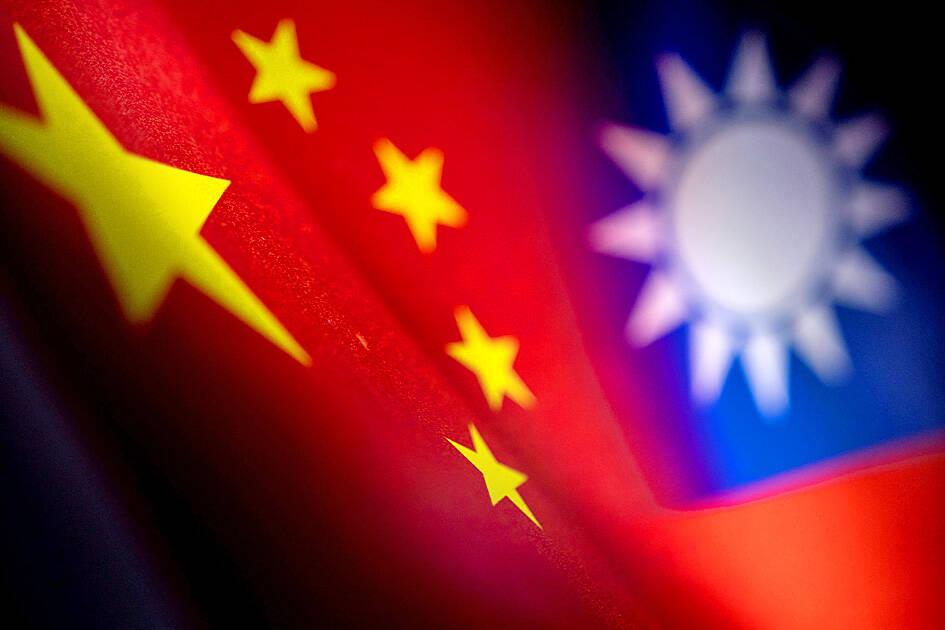
Photo: Reuters
However, after the conclusion of the CCP summit later this month, China could refocus on Taiwan, preparing an information campaign ahead of next month’s elections, they said.
Beijing’s methods would likely include spreading misinformation through social media accounts, cyberattacks and orchestrating political actions to be carried out by Chinese living in Taiwan and local pro-unification groups, the official said.
An electoral outcome favorable to China might accelerate Beijing’s timeline for unifying with Taiwan, leading to more acute dangers to national security, they added.
Local collaborators and Internet celebrities are crucial to China’s cognitive warfare model, which uses them as nodes of misinformation, Liu Wen-pin (劉文斌), deputy director of the Investigation Bureau’s situation analysis division, told a forum in Taipei on Friday.
Nodes are the channel through which distorted information, memes and public opinion manipulation — the key links of cognitive warfare — spread through social media, he said.
The strategy can be countered by revealing and neutralizing the nodes, he said.
Educating the public on digital citizenship would also help counter such tactics, he added.
Additional reporting by CNA
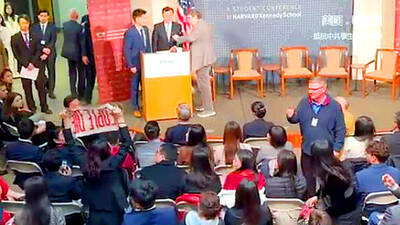
A group of Taiwanese-American and Tibetan-American students at Harvard University on Saturday disrupted Chinese Ambassador to the US Xie Feng’s (謝鋒) speech at the school, accusing him of being responsible for numerous human rights violations. Four students — two Taiwanese Americans and two from Tibet — held up banners inside a conference hall where Xie was delivering a speech at the opening ceremony of the Harvard Kennedy School China Conference 2024. In a video clip provided by the Coalition of Students Resisting the CCP (Chinese Communist Party), Taiwanese-American Cosette Wu (吳亭樺) and Tibetan-American Tsering Yangchen are seen holding banners that together read:

UNAWARE: Many people sit for long hours every day and eat unhealthy foods, putting them at greater risk of developing one of the ‘three highs,’ an expert said More than 30 percent of adults aged 40 or older who underwent a government-funded health exam were unaware they had at least one of the “three highs” — high blood pressure, high blood lipids or high blood sugar, the Health Promotion Administration (HPA) said yesterday. Among adults aged 40 or older who said they did not have any of the “three highs” before taking the health exam, more than 30 percent were found to have at least one of them, Adult Preventive Health Examination Service data from 2022 showed. People with long-term medical conditions such as hypertension or diabetes usually do not
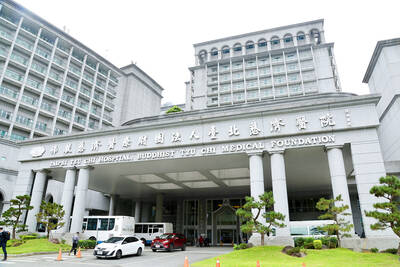
POLICE INVESTIGATING: A man said he quit his job as a nurse at Taipei Tzu Chi Hospital as he had been ‘disgusted’ by the behavior of his colleagues A man yesterday morning wrote online that he had witnessed nurses taking photographs and touching anesthetized patients inappropriately in Taipei Tzu Chi Hospital’s operating theaters. The man surnamed Huang (黃) wrote on the Professional Technology Temple bulletin board that during his six-month stint as a nurse at the hospital, he had seen nurses taking pictures of patients, including of their private parts, after they were anesthetized. Some nurses had also touched patients inappropriately and children were among those photographed, he said. Huang said this “disgusted” him “so much” that “he felt the need to reveal these unethical acts in the operating theater
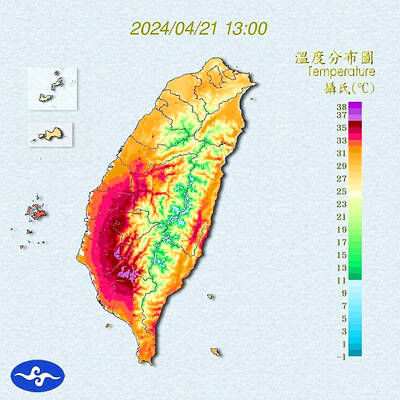
Heat advisories were in effect for nine administrative regions yesterday afternoon as warm southwesterly winds pushed temperatures above 38°C in parts of southern Taiwan, the Central Weather Administration (CWA) said. As of 3:30pm yesterday, Tainan’s Yujing District (玉井) had recorded the day’s highest temperature of 39.7°C, though the measurement will not be included in Taiwan’s official heat records since Yujing is an automatic rather than manually operated weather station, the CWA said. Highs recorded in other areas were 38.7°C in Kaohsiung’s Neimen District (內門), 38.2°C in Chiayi City and 38.1°C in Pingtung’s Sandimen Township (三地門), CWA data showed. The spell of scorching


 RSS
RSS