


A noted figure in Taiwan’s democracy movement was yesterday implicated as an informant of the then-Chinese Nationalist Party (KMT) regime during the White Terror era.
Lee Chiu-yuan (李秋遠) — a founding member of the China Democratic Party — informed the government of a plan by democracy advocate Su Tung-chi (蘇東啟), leading to his arrest, Academia Historica said at the book launch of The Su Tung-chi Case: A Collection of Historical Documents (蘇東啟案史料彙編) in Taipei.
Lee served in the National Security Council in 2000, under then-president Chen Shui-bian (陳水扁). He died in 2005.
The Su case is representative of the fate of Taiwanese independence advocates, Academia Historica president Chen Yi-shen (陳儀深) told the event.
The book, comprising four volumes of primary sources, details how Chiang Kai-shek’s (蔣介石) rule relied on secret police informants, he said.
Taiwanese who opposed the regime were targeted, as the government feared that they might take up arms against it, he added.
Tsai Kuan-yu (蔡寬裕), a survivor of political persecution, told the event that he was “surprised” when he learned about Lee’s complicity.
In 1961, Su planned to recruit ethnic Taiwanese members of the Marine Corps for an armed uprising against the government. He was motivated by the purge of the editor of and contributors to the Free China Journal, thinking that the incident showed that peaceful reform was not possible, the book shows.
Su told Lee about the plan, and the latter informed the National Security Bureau, which then arrested Su and about 50 other dissidents, citing information from a “highly placed informant,” the book shows.
Previously, Lee informed the bureau of four attempts to organize political parties in opposition to the KMT, with his spy activities including wearing a wire on one occasion, it shows.
Su was in 1962 sentenced to death by a military tribunal, but the sentence was later commuted to life in prison amid pressure on Chiang’s regime. Su remained in prison until a general pardon in 1975 after Chiang’s death. Su died in 1992.
His daughter, Su Chih-fen (蘇治芬), is a legislator representing a constituency in Yunlin County.
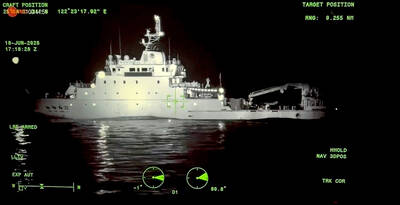
EXCUSES: Beijing is using government and research vessels as a pretext to harass the nation and enter its EEZ, and engage in ‘hegemonic expansion,’ the coast guard said The Coast Guard Administration yesterday said it drove away Chinese oceanographic research vessel Xiang Yang Hong 22 (向陽紅33) from restricted waters after warning it that it was in Taiwan’s exclusive economic zone (EEZ). The Chinese vessel entered restricted waters off the coast of Yilan County’s Suao (蘇澳) at 11:35pm on Thursday, the coast guard said, adding that it dispatched the Lanyu patrol vessel and the boat PP-10077 to shadow the Chinese ship and issue radio warnings ordering it to leave. China has no sovereignty over waters off Taiwan’s east coast, Lanyu’s crew told Xiang Yang Hong 22 over the radio, and demanded
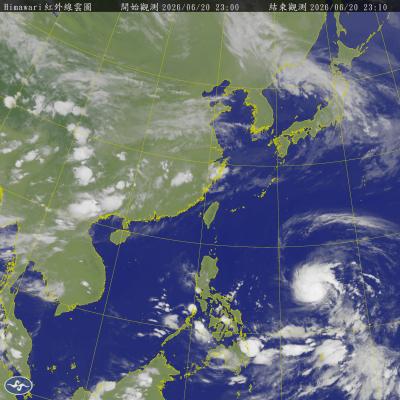
Tropical Storm Mekkhala is forecast to strengthen into a typhoon tomorrow and could come close enough to Taiwan later in the week to prompt a sea warning, the Central Weather Administration (CWA) said yesterday. As of 2 pm, the storm was located 1,870 kilometers southeast of Taiwan's southern tip and moving west- northwest at 23 km per hour. CWA forecaster Cheng Chieh-jen (鄭傑仁) said Mekkhala is expected to continue moving west-northwest through Tuesday under the influence of the Pacific high- pressure system before gradually turning north toward waters east of Taiwan or south of the Ryukyu Islands. The timing and angle of the
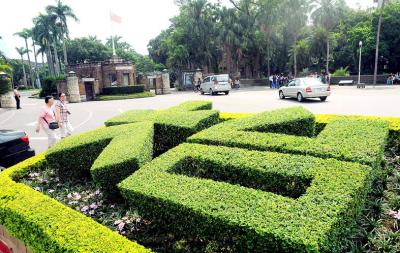
Four Taiwanese universities have been ranked among the world's top 200 institutions in the Quacquarelli Symonds (QS) World University Rankings for next year, the highest Taiwan has ever placed in the category, with National Taiwan University (NTU) achieving its best performance at 54th globally and 17th in Asia. The four Taiwanese institutions in the global top 200 are NTU (54th), National Tsing Hua University (142nd), National Yang Ming Chiao Tung University (177th) and National Cheng Kung University (191st), the rankings showed. All four universities achieved their highest-ever global rankings this year, QS data showed. National Cheng Kung University entered the top 200 for

RISING POPULARITY: Enhanced flight connectivity and a visa waiver trial program are among the motivations that have boosted travel to Taiwan by Filipinos, the agency said The Tourism Administration said yesterday that it is stepping up efforts to attract tourists from the Philippines following strong growth during the first quarter. The agency’s data showed the nation welcomed 210,000 Filipino visitors from January to March, marking a 43 percent increase compared with the same period last year. The Philippines is Taiwan’s top source of inbound tourists among the Southeast Asian nations, data showed. With a population of 116 million and national median age of 26, the Philippines boasts a young demographic with strong travel potential, the Tourism Administration said. Outbound travel demand in the Philippines continues to rise amid robust


 RSS
RSS