


China’s military capability represents a substantive threat to national security as it constitutes a challenge to the existence of a median line in the Taiwan Strait, the Ministry of National Defense said in a report to the Legislative Yuan yesterday.
The drills staged in waters around Taiwan last month by the Chinese People’s Liberation Army (PLA) enabled it to test its game plan for invading Taiwan and breaching the first island chain while strengthening its area denial capability, the ministry said in the latest annual report on China’s military power.
The PLA has put its second domestically made aircraft carrier, Fujian, to sea this year, which also saw China’s continued deployment of other advanced systems including J-16 fighter jets, J-20 stealth jets and transport aircraft, it said.

Photo courtesy of Military News Agency
The debut of new weapons is intended to showcase the fruits of Chinese President Xi Jinping’s (習近平) military reforms and lay the foundation for his election for a third term at the 20th National Congress of the Chinese Communist Party next month, it said.
Assessing the international situation, the report said that the Russia-Ukraine conflict could prompt Beijing to re-examine its war plans, especially in light of the political and economic sanctions against Moscow, it said.
Moscow’s use of nuclear threats to deter a direct intervention from NATO and Ukraine’s ability to strike at Russian supply lines would likewise be of interest to the Chinese military, it said.
Developments in the PLA’s hardware, its pattern of military exercises, and its doctrine of fighting short, decisive and low-casualty wars have led the ministry to deduce the range of possible military actions China might use against Taiwan, it said.
The actions span from an air-sea blockade, seizing Taiwan’s outlying islands, decapitation strikes and all-out invasion to gray zone conflicts, cognitive warfare and further attempts at intimidation via war drills, it said.
China must be able to deliver an amphibious force to the shores of Taiwan proper by sea and air to achieve an invasion’s strategic objective, which is the occupation of territory, it said.
Therefore, the PLA is likely to treat the rapid seizure of air, sea and electronic warfare superiority as the key to victory, but a lack of amphibious vessels and logistics continues to limit its ability to carry out large-scale ambitious operations, the ministry said.
The report for the first time included a chapter on nonmilitary activities targeting Taiwan, including joint exercises of maritime forces, navy and coast guard units, and the utilization of fishing boats and scientific vessels to provide cover for military patrols.
Additionally, China has deployed civilian aircraft, drones and weather balloons near Taiwan proper and its outlying islands in a bid to harass the country, conduct surveillance and bait the Taiwanese military to test its response, it said.
The actions the PLA carried out in Taiwan’s periphery — including the large-scale joint exercises — were part of an effort to test its invasion plan and see whether Chinese forces possess the capability to implement it, the ministry said.
Furthermore, the Chinese military has adjusted the deployment of its forces in air bases opposite to Taiwan, conducted targeted intelligence gathering operations, and made use of the drills as material to intensify its campaign of cognitive warfare against Taiwan, it said.
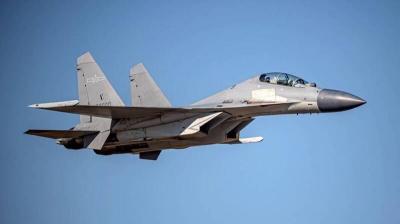
Eight Chinese naval vessels and 24 military aircraft were detected crossing the median line of the Taiwan Strait between 6am yesterday and 6am today, the Ministry of National Defense said this morning. The aircraft entered Taiwan’s northern, central, southwestern and eastern air defense identification zones, the ministry said. The armed forces responded with mission aircraft, naval vessels and shore-based missile systems to closely monitor the situation, it added. Eight naval vessels, one official ship and 36 aircraft sorties were spotted in total, the ministry said.
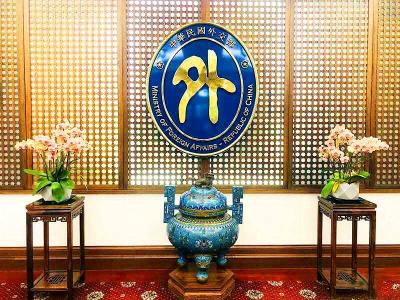
The Ministry of Foreign Affairs (MOFA) today said that if South Korea does not reply appropriately to its request to correct Taiwan’s name on its e-Arrival card system before March 31, it would take corresponding measures to alter how South Korea is labeled on the online Taiwan Arrival Card system. South Korea’s e-Arrival card system lists Taiwan as “China (Taiwan)” in the “point of departure” and “next destination” fields. The ministry said that it changed the nationality for South Koreans on Taiwan’s Alien Resident Certificates from “Korea” to “South Korea” on March 1, in a gesture of goodwill and based on the

Taiwanese officials were shown the first of 66 F-16V fighter jets purchased by Taiwan from the United States, the Ministry of National Defense said yesterday, adding the aircraft has completed an initial flight test and is expected to be delivered later this year. A delegation led by Deputy Minister of National Defense Hsu Szu-chien (徐斯儉) visited Lockheed Martin’s F-16 C/D Block 70 (also known as F-16V) assembly line in South Carolina on March 16 to view the aircraft. The jet will undergo a final acceptance flight in the US before being delivered to Taiwan, the
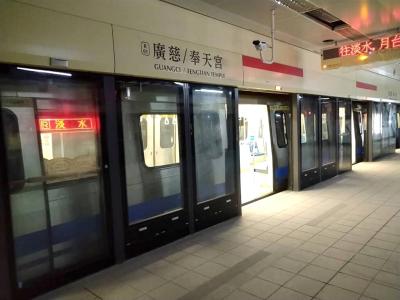
The New Taipei Metro's Sanyin Line and the eastern extension of the Taipei Metro's Tamsui-Xinyi Line (Red Line) are scheduled to begin operations in June, the National Development Council said today. The Red Line, which terminates at Xiangshan Station, would be connected by the 1.4km extension to a new eastern terminal, Guangci/Fengtian Temple Station, while the Sanyin Line would link New Taipei City's Tucheng and Yingge stations via Sanxia District (三峽). The council gave the updates at a council meeting reviewing progress on public construction projects for this year. Taiwan's annual public infrastructure budget would remain at NT$800 billion (US$25.08 billion), with NT$97.3


 RSS
RSS