

The Central Epidemic Command Center (CECC) yesterday said it would ask hospitals to increase the percentage of beds designated for COVID-19 patients in response to a rise in local cases.
Centers for Disease Control (CDC) Deputy Director-General Chuang Jen-hsiang (莊人祥), who is the CECC’s spokesman, said that 31,178 new local COVID-19 cases, 310 imported cases and 27 deaths were confirmed yesterday.
The local caseload increased by 5,083 cases, or 19.5 percent, compared with Tuesday last week, but is within the range expected by the CECC, he said.
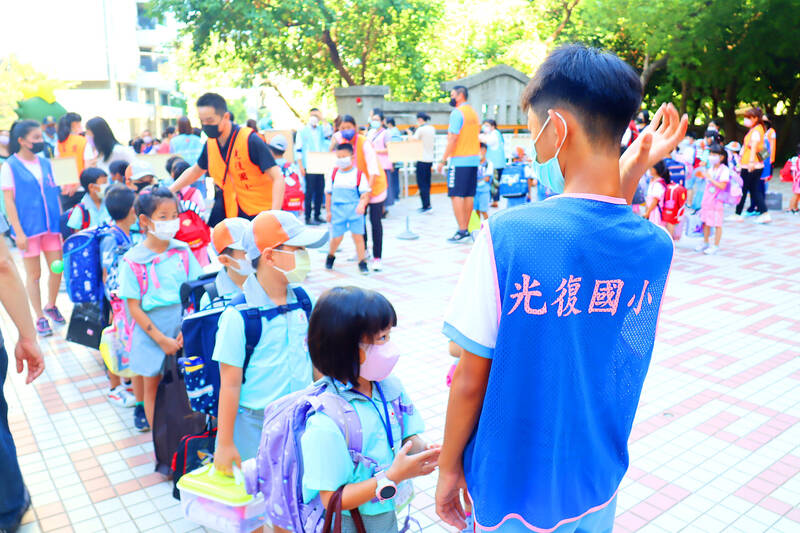
Photo: Weng Yu-huang, Taipei Times
The most cases were reported in New Taipei City with 6,631, followed by Taipei with 3,896, Taichung with 3,761, Taoyuan with 3,138, Kaohsiung with 2,573, Tainan with 2,026, Changhua County with 1,320, and fewer than 1,000 cases each in the 15 other administrative regions, CECC data showed.
CDC Deputy Director-General Philip Lo (羅一鈞), deputy head of the CECC’s medical response division, said that as the average vacancy rate of designated COVID-19 hospital beds nationwide is at 60.1 percent, but only 37.8 percent in Taipei and New Taipei City, a meeting was held yesterday morning to discuss adjustments for COVID-19 hospital beds.
COVID-19 response hospitals would be asked to increase COVID-19 beds to at least 15 to 20 percent of their total and to at least 25 to 30 percent of those in Taipei and New Taipei City, he said.
Hospitals with more than 500 beds have reserved 5 to 10 percent of them for COVID-19 patients, but hospitals in Taipei and New Taipei City would be asked to increase that percentage to at least 10 to 15 percent, and those in Taoyuan, and Hsinchu and Miaoli counties to at least 10 percent, he said.
Among the deceased reported yesterday, 26 had chronic diseases and 17 did not have a booster shot of a COVID-19 vaccine, Lo said.
The youngest was a woman in her 30s who had iron-deficiency anemia and tested positive for COVID-19 on June 30, he said.
After she was hospitalized on July 3, doctors discovered she had metastatic cancer, and she died of septic shock on July 17.
As COVID-19 was added as the main contributing cause to her death, the case was reported and confirmed yesterday, he said.
Lo said that as the local spread of the Omicron BA.5 subvariant of SARS-CoV-2 is driving an increase in case numbers, the daily number of COVID-19 antiviral drug prescriptions have also begun to rise — to 5,174 courses prescribed yesterday, the most since July 17.
He said there is still an adequate amount of antivirals in reserve, including about 306,000 courses of Paxlovid, enough for an estimated 127 days, and 116,000 courses of molnupiravir, enough for an estimated 231 days.
The nation’s first and second booster vaccination rates among older people has reached 75.5 and 33.7 percent respectively, Chuang said.
As about 30 percent of older people are eligible for the second booster shot, but have not received it, the center is encouraging them to get one for better protection against severe illness, he said.
Despite an increase in cases, Lo said that community testing stations would not be reopened, adding that a doctor can make a COVID-19 diagnosis based on a positive result from a rapid test.
The center does not recommend going to a hospital to be tested for genome sequencing, as the treatment for the Omicron BA.2 and BA.5 subvariants are the same, and most people’s symptoms would likely have ended before the results come back, he said.
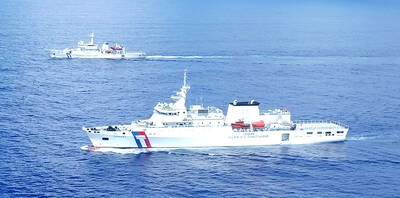
‘FRIENDSHIP FLEET’: A CGA official is scheduled to meet with the president of the Pacific nation, while one of the ships is to host a banquet and National Day event Two Coast Guard Administration (CGA) patrol vessels have docked at Malakal Harbor in Palau as part of an expedition exercise and diplomatic visit, during which a senior official is expected to meet with Palauan President Surangel Whipps Jr, the agency said yesterday. The two vessels, the 4,000-tonne-class Chiayi and the 1,000-tonne-class Penghu, set sail for Palau from Taiwan last week and arrived on Tuesday at Malakal Harbor, the CGA’s Fleet Branch said in a statement. The journey marks the second time the CGA has dispatched a “friendship fleet” to another country, after it sent its first-ever goodwill fleet, comprising the Hualien and
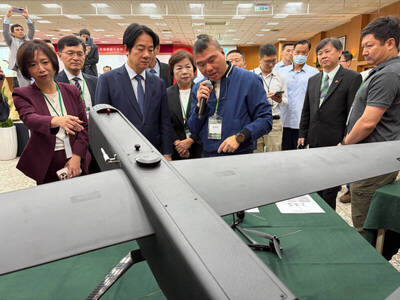
Two executives of drone supplier Jiin Ming Industry Co (錦明實業) have been detained and held incommunicado over the company's alleged use of prohibited China-made chips and camera lenses in drones supplied under recent military contracts, the Taoyuan District Prosecutors' Office said today. In a statement, prosecutors said they raided the offices of Jiin Ming — headquartered in Taoyuan — as well as those of its subsidiaries and its suppliers on Thursday last week. The raids followed a report that the company had breached its procurement contracts by putting the prohibited components into drones delivered to the military. During the raids, prosecutors summoned

South Korean boy band BigBang drew 120,000 fans to three concerts at Taipei Dome from Friday through yesterday, as the band thanked them for their support over their 20-year career. The Taipei Dome concerts were part of BigBang's "2026-2027 World Tour XX: Cosmos." Friday's concert was BigBang's first performance in Taiwan in 11 years. During the encore, group leader G-Dragon (GD) shouted "I love you" in Chinese and said he was especially happy to perform in Taiwan with bandmates Taeyang and Daesung. "Taipei, I'm very grateful to you all," GD said in Chinese, asking fans to wait for the band's return. Daesung thanked
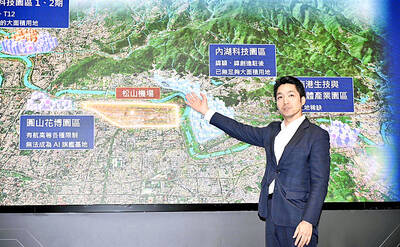
DETAILED PLAN NEEDED: Relocating the airport would affect not just travelers, but also undermine national defense and emergency medical services, a legislator said Taipei Mayor Chiang Wan-an (蔣萬安) yesterday proposed relocating Taipei International Airport (Songshan airport) and turning the site into an artificial intelligence (AI) park, drawing opposition from politicians across party lines. Chiang’s plan would turn the 300 hectares into an AI park featuring tech clusters, residential communities and green space. The industrial cluster would host 200 domestic enterprises, generate NT$12 trillion (US$376.47 billion) in output, and accommodate 65,000 jobs and 35,000 residents, he said. Cabinet spokeswoman Michelle Lee (李慧芝) said the Executive Yuan was surprised by the announcement, as the Taipei City Government did not discuss the proposal with the central government before making


 RSS
RSS