


The Central Epidemic Command Center (CECC) yesterday reported 26,095 new local COVID-19 cases, an increase of 13.9 percent from last week, and predicted that total caseloads this week could rise by about 10 percent.
New Taipei City had the most cases at 5,258, followed by Taipei with 3,189, Taichung with 3,038, Taoyuan with 2,673, Kaohsiung with 2,179, Tainan with 1,650 and Changhua County with 1,132, CECC data showed.
Centers for Disease Control (CDC) Deputy Director-General Philip Lo (羅一鈞), deputy head of the CECC’s medical response division, reported 28 moderate-to-severe cases, which is the lowest daily number since May 3.
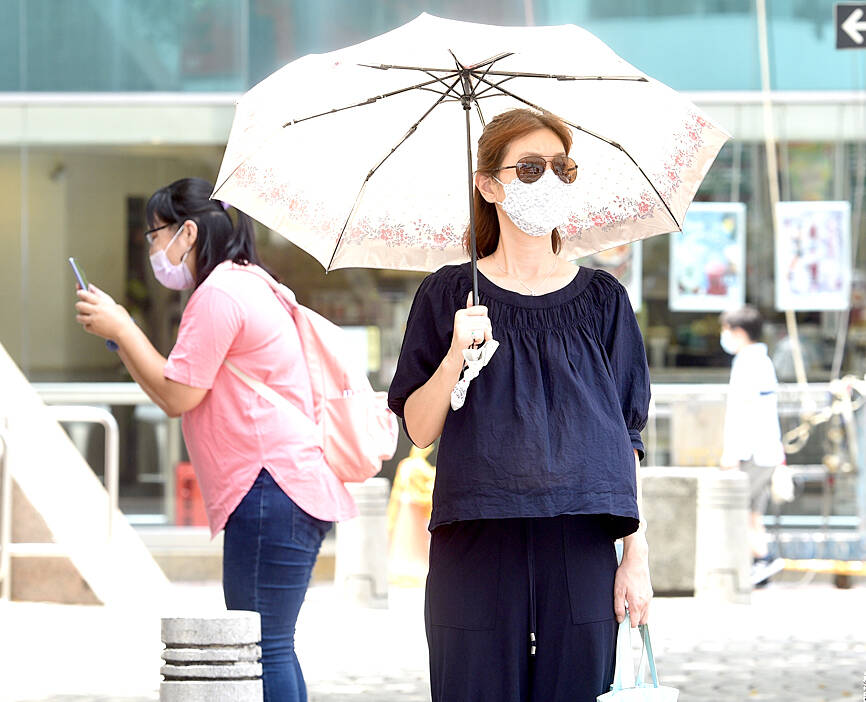
Photo: Lo Pei-te, Taipei Times
Among the 16 deceased reported yesterday, aged 50 to 90, nine had not received a booster vaccine and all had chronic illnesses, he said.
Lo also provided a weekly update on COVID-19 infections in residential care facilities, saying that positivity rates dropped further to 0.5 percent among staff and 0.6 percent among residents last week.
Meanwhile, the Control Yuan yesterday published its investigation report on the CECC’s “3+11” quarantine policy decision procedure.
The Chinese Nationalist Party (KMT) has blamed the “3+11” quarantine policy — three days of home quarantine, followed by 11 days of self-health management for Taiwan-based airline crewmembers imposed in April last year — as the main reason for the local COVID-19 outbreak in May last year, and has questioned the CECC’s statement that it did not take minutes of the meeting that led to the decision.
The Control Yuan report said that due process was followed, with the head of the CECC listening to the responsible divisions’ reports on the issue and making a decision, announcing the policy at a news conference and issuing a press release.
There are no clear regulations stipulating that meeting minutes must be taken and published, but as it concerns the public’s right to health and knowledge, the Ministry of Health and Welfare must amend related regulations, it said, adding that the center did not provide a thorough public explanation of how the policy was made — an area that needs improving.
CDC Deputy Director-General Chuang Jen-hsiang (莊人祥) later yesterday said that the “3+11” policy had been implemented since 2020, and it was only tightened to “7+7” during the autumn-winter COVID-19 prevention program launched in December that year.
As the management of airline crew in hotels in other countries greatly improved, such as adding surveillance cameras in hotel hallways and providing one-time hotel room cards, and violations of COVID-19 rules dropped, the quarantine requirement was eased to “5+9,” the CECC spokesman said.
Another review of airline crew management in April last year showed that there were no violations and COVID-19 tests of more than 9,000 crew members in March showed that the vast majority were negative, so the rule was eased to “3+11” on April 15, Chuang said.
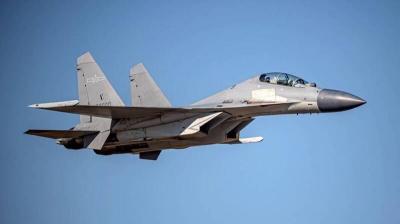
Eight Chinese naval vessels and 24 military aircraft were detected crossing the median line of the Taiwan Strait between 6am yesterday and 6am today, the Ministry of National Defense said this morning. The aircraft entered Taiwan’s northern, central, southwestern and eastern air defense identification zones, the ministry said. The armed forces responded with mission aircraft, naval vessels and shore-based missile systems to closely monitor the situation, it added. Eight naval vessels, one official ship and 36 aircraft sorties were spotted in total, the ministry said.
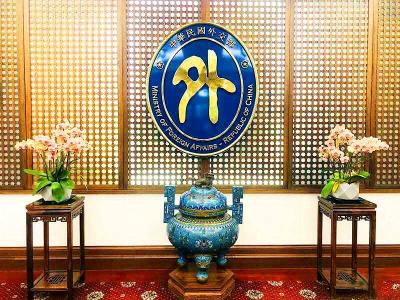
The Ministry of Foreign Affairs (MOFA) today said that if South Korea does not reply appropriately to its request to correct Taiwan’s name on its e-Arrival card system before March 31, it would take corresponding measures to alter how South Korea is labeled on the online Taiwan Arrival Card system. South Korea’s e-Arrival card system lists Taiwan as “China (Taiwan)” in the “point of departure” and “next destination” fields. The ministry said that it changed the nationality for South Koreans on Taiwan’s Alien Resident Certificates from “Korea” to “South Korea” on March 1, in a gesture of goodwill and based on the

Taiwanese officials were shown the first of 66 F-16V fighter jets purchased by Taiwan from the United States, the Ministry of National Defense said yesterday, adding the aircraft has completed an initial flight test and is expected to be delivered later this year. A delegation led by Deputy Minister of National Defense Hsu Szu-chien (徐斯儉) visited Lockheed Martin’s F-16 C/D Block 70 (also known as F-16V) assembly line in South Carolina on March 16 to view the aircraft. The jet will undergo a final acceptance flight in the US before being delivered to Taiwan, the
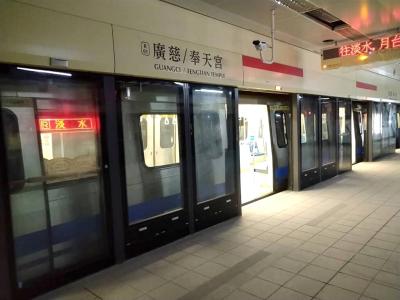
The New Taipei Metro's Sanyin Line and the eastern extension of the Taipei Metro's Tamsui-Xinyi Line (Red Line) are scheduled to begin operations in June, the National Development Council said today. The Red Line, which terminates at Xiangshan Station, would be connected by the 1.4km extension to a new eastern terminal, Guangci/Fengtian Temple Station, while the Sanyin Line would link New Taipei City's Tucheng and Yingge stations via Sanxia District (三峽). The council gave the updates at a council meeting reviewing progress on public construction projects for this year. Taiwan's annual public infrastructure budget would remain at NT$800 billion (US$25.08 billion), with NT$97.3


 RSS
RSS