


Mike Loree, the longest-serving foreign pitcher in Taiwan’s CPBL, is to resign next month to return to his family in the US, he said at a news conference yesterday.
The 37-year-old right-hander, who has played professional baseball in Taiwan since 2013, is slated to play his final game for the Fubon Guardians on Sept. 2 at New Taipei City’s Sinjhuang Baseball Stadium.
“I just want to make it very clear that I’m not retiring or I’m not leaving here because I’m unhappy,” Loree said. “I love playing for Fubon, I love playing with my teammates, I love playing in the CPBL and I’ve loved being in Taiwan for the past 10 years.”

Photo: CNA
Throughout his extensive career, his family has always given him the support that he needed, but now it is time to stay with them, Loree said.
“I want to spend more time with my kids. I want to be the father that I know that I can be, in being present at home with my kids,” Loree said. “Going to bed at night with them, waking up in the morning with them. I want to be there for my wife and I want to be a present father at home.”
Loree said that his son is seven years old and just started second grade last week, while his daughter is five and just started kindergarten in Arizona.
“My son loves basketball, so I’m going to be the basketball coach when I get home,” he said. “My daughter loves dance, so I look forward to going along with her to a dance class.”
His children came to Taiwan for two months each summer during his residency, but the COVID-19 pandemic and related border controls shortened their visiting time in the past three years, Loree said.
When asked why he chose to leave next month instead of finishing the current season, Loree said that thoughts preoccupied by family were detracting from his performance.
“That was the right decision to make, to retire, because you have to be here 100 percent and I knew I couldn’t give that anymore,” he said.
Loree, a household name in Taiwanese baseball, is the fourth CPBL player to record 100 career wins, which he achieved on July 23 after pitching six scoreless innings with eight strikeouts against the Wei Chuan Dragons.
He is also likely to become the first foreign player to be given domestic status for nine years playing in the CPBL, meaning he would be considered a local player and would not count against his team’s foreign player quota.
Loree said that he feels honored to earn the status, which is likely to be granted soon. His first game in Taiwan was with the Lamigo Monkeys in Taoyuan in 2013.
“It’s been a lot of hard work and commitment, it’s a nice accomplishment,” he said.
However, Loree suggested that the CPBL should lower the nine-year requirement to five or six years to reward foreign players for their commitment to their organizations and the league.

Kenting National Park service technician Yang Jien-fon (楊政峰) won a silver award in World Grand Prix Photography Awards Spring Season for his photograph of two male rat snakes intertwined in combat. Yang’s colleagues at Kenting National Park said he is a master of nature photography who has been held back by his job in civil service. The awards accept entries in all four seasons across six categories: architectural and urban photography, black-and-white and fine art photography, commercial and fashion photography, documentary and people photography, nature and experimental photography, and mobile photography. Awards are ranked according to scores and divided into platinum, gold and

More than half of the bamboo vipers captured in Tainan in the past few years were found in the city’s Sinhua District (新化), while other districts had smaller catches or none at all. Every year, Tainan captures about 6,000 snakes which have made their way into people’s homes. Of the six major venomous snakes in Taiwan, the cobra, the many-banded krait, the brown-spotted pit viper and the bamboo viper are the most frequently captured. The high concentration of bamboo vipers captured in Sinhua District is puzzling. Tainan Agriculture Bureau Forestry and Nature Conservation Division head Chu Chien-ming (朱健明) earlier this week said that the
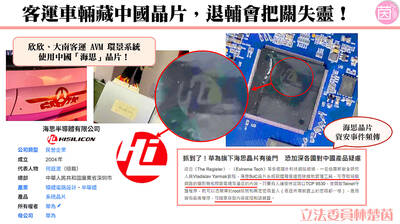
BREACH OF CONTRACT: The bus operators would seek compensation and have demanded that the manufacturer replace the chips with ones that meet regulations Two bus operators found to be using buses with China-made chips are to demand that the original manufacturers replace the systems and provide compensation for breach of contract, the Veterans Affairs Council said yesterday. Democratic Progressive Party Legislator Michelle Lin (林楚茵) yesterday said that Da Nan Bus Co and Shin-Shin Bus Co Ltd have fielded a total of 82 buses that are using Chinese chips. The bus models were made by Tron-E, while the systems provider was CYE Electronics, Lin said. Lin alleged that the buses were using chips manufactured by Huawei subsidiary HiSilicon Co, which presents a national security risk if the

The National Immigration Agency has banned two Chinese from returning to Taiwan, after they published social media content it described as disrespectful to national sovereignty. The agency imposed a two-month ban on a Chinese man surnamed Liang (梁) and a permanent ban on a woman surnamed Yang (楊), an influencer with 23 million followers, in October last year and last week respectively. Minister of the Interior Liu Shyh-fang (劉世芳) yesterday said on the sidelines of a legislative meeting that Chinese visitors to Taiwan are required to comply with the rules and regulations governing their entry permits. The government has handled the ban and


 RSS
RSS