

Not far from the rusted-out tanks and anti-landing spikes that litter the beaches of Kinmen County, 92-year-old veteran Yang Yin-shih reads his newspaper in the shadow of the enemy that regularly adorns its pages.
Several kilometers from Yang’s home on the tiny Kinmen Islands is China, where he can see for himself the military might that threatens his homeland.
Beijing last week staged unprecedented war games around the self-ruled democracy in a hailstorm of rage after US House of Representatives Speaker Nancy Pelosi visited Taiwan’s capital.
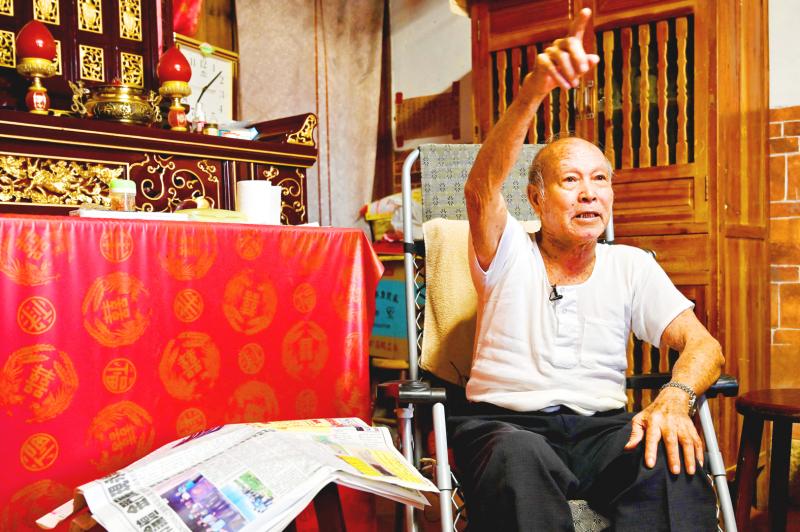
Photo: Sam Yeh, AFP
As Chinese vessels dotted the Taiwan Strait and missiles plunged into the waters surrounding the islands, a real risk of conflict reared its head.
However, Yang was unfazed by the latest beating of Beijing’s war drum, despite the islets of 140,000 people sitting just 3.2km across from the Chinese city of Xiamen.
“I am not nervous. Kinmen is calm and quiet,” he said, cracking a smile between his morning routines of watching television and strolling through his neighborhood.
Yang witnessed the deadliest bombardment of Taiwan’s closest islands to China more than 60 years ago, and said the latest drills are small in comparison.
In 1958, China fired more than 1 million shells at Kinmen and nearby communities, killing 618 people and injuring more than 2,600.
“The bombardment [in 1958] was more nerve-racking. It was more tense back then,” he said. “It’s hard to tell the situation — whether [China] intends to intimidate or has plans to attack.”
Despite the current tensions and bitter memories of conflict, many Kinmen residents hold friendly views of China after years of close trade and travel links across the short stretch of sea.
Taiwan suspended ferry services to Chinese cities because of COVID-19, but Yang Shang-lin, a 34-year-old in the tourism sector, said he hopes Kinmen will reopen to Chinese visitors soon despite Beijing’s sabre-rattling.
“Taiwan is more free and we don’t want to be ruled by China,” he said. “But we have to make ends meet.”
Yet there is a divide on the islands, with some Kinmen residents ready to defend their homeland against Chinese aggression.
“Should there be a war I will fight,” said Huang Zi-chen, a 27-year-old civil engineer.
“I was born in this country and I have to go through thick and thin when my country needs me,” he said during a break from supervising a construction project.
While the Kinmen Islands once served as a natural barrier to invasion, Beijing could now easily bypass them with its superpower armory of missiles, jets and aircraft carriers.
Car rental worker Yang said that “the disparity in military strength is far too great,” leaving Kinmen with little hope of beating back a Chinese onslaught, especially given its size and proximity to China.
“I would not want to go to the battlefield since there would be no chance of winning,” he said.
James Chen, an 18-year-old student who is one of the few of his age not to have left Kinmen to study or work in a city on Taiwan’s mainland, said fighting should be left to professional soldiers.
“I think there is a 50-50 chance of China using force against Taiwan, but we have no control over China, we should just be ourselves,” he said.
That means life is very much carrying on as normal in Kinmen.
Residents are not rushing for the bunkers to hide, or to supermarkets to stockpile, but rather singing karaoke at home and dining out with friends.
As 73-year-old Cheng Hsiu-hua played card games with her neighbors outside their homes in one of Kinmen’s quiet streets, she brushed off the possibility of Chinese troops one day landing on their shores.
“No, we are not afraid. They [Chinese troops] won’t come over here,” she said.
If Beijing did bring arms to bear, the elderly Yang says he would rather accept peaceful unification than conflict.
So he offers a message to the Chinese government, one learned from the legacy of the bombardment he saw with his own eyes decades ago.
“Don’t go to war. War brings suffering and misery,” he said. “There will be death on both sides.”

A total of 400 foreign “high- level” professionals have been naturalized as Republic of China (Taiwan) citizens over the past decade as the government has eased nationality rules to attract talent from a wider range of fields, the Ministry of the Interior said yesterday. The 400th high-level professional, who works in the electronics industry, was approved for ROC citizenship on Aug. 26, the MOI said. The MOI quoted the newly naturalized citizen as saying that Taiwan is a leader in fields such as semiconductors, electronics manufacturing, artificial intelligence development and energy technology. He also said
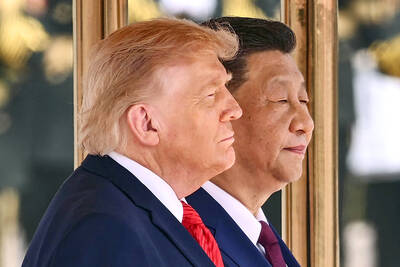
China has warned that it could cancel a planned US-China leaders’ summit if Washington approves new arms sales to Taiwan, a Japanese media outlet quoted sources as saying yesterday. US President Donald Trump, “apparently eager to showcase some diplomatic achievements ahead of November’s midterm congressional elections, places great importance on holding the summit with Chinese President Xi Jinping (習近平),” Japan’s Kyodo News reported. “While preparing for Xi’s upcoming trip, China has restated its position that the Taiwan issue is a ‘red line’ in bilateral relations,” the report said. The report said that when Xi met with Trump in Beijing in May, Xi said
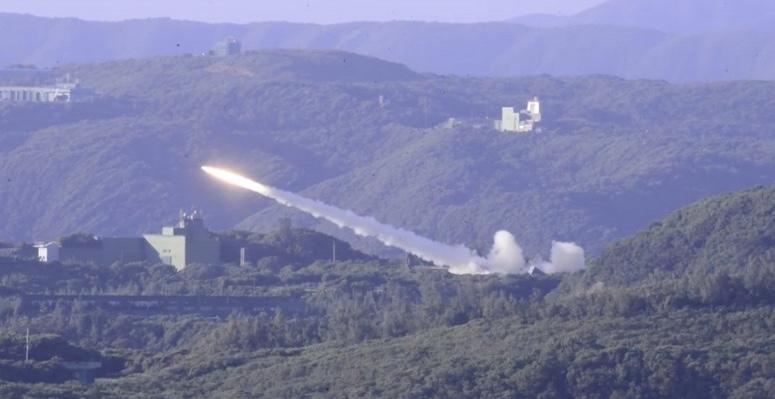
A Chinese military drone was spotted conducting reconnaissance off Taitung County as President William Lai (賴清德) visited Pingtung County this morning to inspect a drill of the armed forces’ precision-strike capabilities, prompting the military to closely monitor its actions. Today was the final day of a three-day military exercise at Jioupeng Base (九鵬基地) to test the joint combat capabilities of the armed forces and coast guard. The exercise began on Wednesday simulating air defense interception and yesterday tested long-range strike capabilities and new air defense weapons. This morning, the military conducted a final exercise involving air defense, anti-ship and drone operations. Military sources said
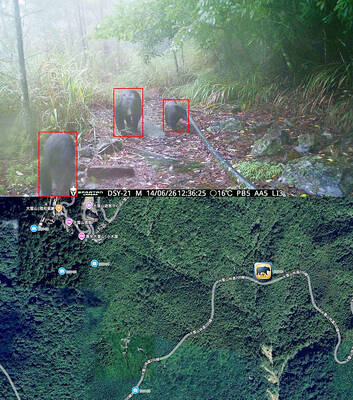
RARE PEEK: The footage released showed one of the bears staying in a cave for as long as 70 days, providing the first record of Formosan black bear’s overwintering The Forestry and Nature Conservation Agency yesterday released tracking records of released Formosan black bears for the first time, showing that they get much closer to human settlements than previously thought. The agency said it had captured two bears, Da Qu-ali (達古阿里) and Aziman (阿里曼), in indigenous villages in Hualien County and began to track them with a camera-mounted satellite collar after releasing them back into the wild. The results confirmed that the bears have moved from deep mountain areas into lowland hills closer to human communities, leading to an increase in human-bear conflicts, it said. The agency has introduced artificial intelligence-assisted early


 RSS
RSS