


The Maritime and Port Bureau and seven container shipping firms yesterday pledged to finance more young people to pursue careers in the shipping industry amid a global maritime labor shortage worsened by the COVID-19 pandemic and the Russo-Ukrainian war.
The firms that signed a memorandum of understanding with the bureau are Evergreen Marine Corp, Yang Ming Marine Transport Corp, Wan Hai Lines, China Steel Express, U-Ming Marine, Kuan Ming Shipping and TVL Business Group.
The training program has gained overwhelming support from the shipping industry, as it integrates resources from the government, large shipping carriers and welfare groups, as well as vocational schools and universities offering maritime courses and degrees, the bureau said.

Photo: Chen Hsin-yu, Taipei Times
The industry has experienced a severe labor shortage over the past few years, with shipping firms vying to recruit talent, Yang Ming Marine Transport chairman and chief executive officer Cheng Chen-mount (鄭貞茂) said.
“We welcome more young people to join the shipping industry, which offers well-paid and technically oriented positions. The monthly salary for ratings, who carry out support work for officers in all departments aboard, is about NT$80,000 to NT$90,000. The monthly salary of a captain is about NT$300,000,” Cheng said.
Life on a container ship is not as boring as people think, he said.
“Mariners must be skilled to handle various situations that could happen at sea,” he said. “Modern container ships are equipped with gyms, karaoke bars and other entertainment facilities. Crew members have their own rooms and are served daily with food prepared by cooks. They can talk on the phone with family members via the 5G system every day and have three months of paid vacation each year.”
More women are seeking careers in the shipping industry, which allows people to travel around the world and earn higher salaries, Cheng added.
Alex Li (李德仁), assistant manager at Yang Ming Marine Transport’s marine department, was a captain himself.
The maritime labor shortage has worsened due to the pandemic and the war, Li said, adding that Ukrainians and Russians account for about 15 percent of seafarers around the world.
The shortage is deteriorating mainly because of increased border controls, which often require seafarers to quarantine and follow other restrictions upon docking, the bureau said, adding that shipping firms as a result have had trouble recruiting mariners.
Demand for mariners would continue to grow, as large shipping firms are having new ships built to meet robust demand for cargo transport, the bureau said.
Bureau Director-General Yeh Hsieh-lung (葉協隆) said that students from remote townships and economically disadvantaged families have priority to enter the training program.
Each would be subsidized NT$100,000 to NT$180,000 per year to cover board, school tuition and living expenses, Yeh said.
Aside from students enrolling in universities offering maritime degree courses, those enrolling in maritime vocational schools can receive subsidies as well, he said.
Taiwanese shipping companies mainly hire mariners from China, Myanmar, Malaysia and the Philippines, while European and North American shipping firms mainly recruit from Russia, Ukraine, India and the Philippines.
Of the 1.89 million mariners working in commercial shipping worldwide, 10.5 percent were Russian and 4 percent were Ukrainian, a report published last year by the International Chamber of Shipping showed.
Due to the labor shortage, shipping firms often offer higher salaries or additional bonuses to ask mariners to extend their working time aboard.
Should the war between Ukraine and Russia drag on, salaries would likely rise, which would consequently increase shipping costs, industry observers said.
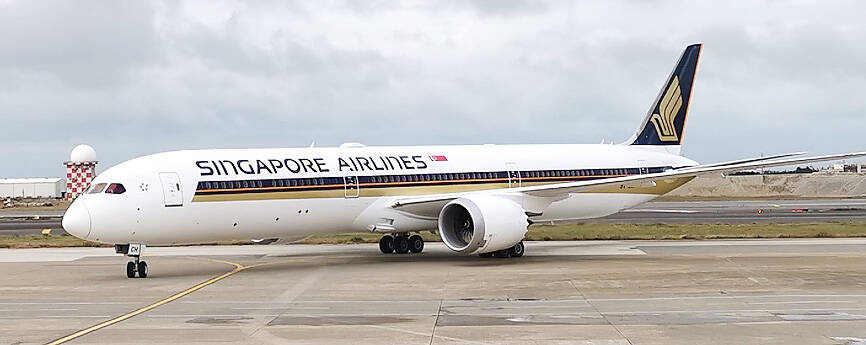
INCREASED CAPACITY: The flights on Mondays, Wednesdays, Fridays and Sundays would leave Singapore in the morning and Taipei in the afternoon Singapore Airlines is adding four supplementary flights to Taipei per week until May to meet increased tourist and business travel demand, the carrier said on Friday. The addition would raise the number of weekly flights it operates to Taipei to 18, Singapore Airlines Taiwan general manager Timothy Ouyang (歐陽漢源) said. The airline has recorded a steady rise in tourist and business travel to and from Taipei, and aims to provide more flexible travel arrangements for passengers, said Ouyang, who assumed the post in July last year. From now until Saturday next week, four additional flights would depart from Singapore on Monday, Wednesday, Friday

Taiwan’s three major international carriers are increasing booking fees, with EVA Airways having already increased the charge to US$28 per flight segment from US$25, while China Airlines (CAL) and Starlux Airlines are set to follow suit. Booking fees are charged by airlines through a global distribution system (GDS) and passed on to passengers. Carriers that apply the fees include CAL, EVA, Starlux and Tigerair Taiwan. A GDS is a computerized network operated by a company that connects airlines with travel agents and ticketing platforms, allowing reservations to be made and processed in real time. Major players include Amadeus, Sabre and Travelport. EVA Air began
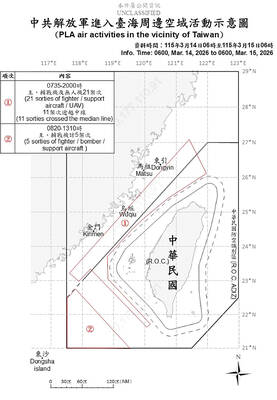
The Ministry of National Defense yesterday reported the return of large-scale Chinese air force activities after their unexplained absence for more than two weeks, which had prompted speculation regarding Beijing’s motives. China usually sends fighter jets, drones and other military aircraft around the nation on a daily basis. Interruptions to such routine are generally caused by bad weather. The Ministry of National Defense said it had detected 26 Chinese military aircraft in the Taiwan Strait over the previous 24 hours. It last reported that many aircraft on Feb. 25, when it spotted 30 aircraft, saying Beijing was carrying out another “joint combat

WATCH FOR HITCHHIKERS: The CDC warned those returning home from Japan to be alert for any contagious diseases that might have come back with them People who have returned from Japan following the World Baseball Classic (WBC) games during the weekend are recommended to watch for symptoms of infectious gastroenteritis, flu and measles for two weeks, the Centers for Disease Control (CDC) said. Flu viruses remain the most common respiratory pathogen in Taiwan in the past four weeks and the influenza B virus accounted for 55.7 percent of the tested cases, exceeding the percentage of influenza A (H3N2) infections and becoming the local dominant strain, CDC Epidemic Intelligence Center Deputy Director Lee Chia-lin (李佳琳) said at a news conference on Tuesday. There were 82,187 hospital visits for


 RSS
RSS