


A shipment of 777,600 doses of the Pfizer-BioNTech COVID-19 vaccine for children that Taiwan was to receive on Tuesday is expected to arrive on Monday next week, after being delayed by technical issues, the Central Epidemic Command Center (CECC) said yesterday.
The batch of Pfizer-BioNTech vaccine doses for children aged five to 11 had been scheduled to arrive in the nation on Tuesday at 6am, but the delivery was delayed due to problems with the pharmaceutical company’s information system, said Centers for Disease Control Deputy Director-General Chuang Jen-hsiang (莊人祥), who is the CECC’s spokesman.
The shipment, part of a deal for 4 million doses that was signed on April 28, is to leave Frankfurt, Germany, on Sunday and arrive in Taiwan early on Monday next week, Chuang told a committee hearing at the Legislative Yuan in Taipei.

Photo courtesy of the Penghu County Government via CNA
Taiwan last week received 2,000 doses of the Pfizer-BioNTech vaccine for children, but they were for testing purposes, the center said.
The CECC had said that after Taiwan takes delivery of the shipment, the Food and Drug Administration (FDA) is expected to spend seven days testing the vaccines, but aimed to complete administering them to children before Friday next week.
However, the delay means that the inoculation of children might not start until Friday next week, instead of finishing then, the center said.
On April 28, the government signed a deal to purchase about 4 million doses of the Pfizer-BioNTech vaccine: about 1.8 million doses for teenagers and adults, and 2.2 million doses for children.
The FDA has authorized administering the vaccine to children aged five to 11, with the recommendation that they wait at least 12 weeks between the first and second dose.
A child’s dose of the Pfizer-BioNTech vaccine is one-third of the dose given to people aged 12 or older, the center said.
Taiwan on Monday received the 1.85 million doses of the Pfizer-BioNTech vaccine ordered for those aged 12 or older, it said.

The military has spotted two Chinese warships operating in waters near Penghu County in the Taiwan Strait and sent its own naval and air forces to monitor the vessels, the Ministry of National Defense (MND) said. Beijing sends warships and warplanes into the waters and skies around Taiwan on an almost daily basis, drawing condemnation from Taipei. While the ministry offers daily updates on the locations of Chinese military aircraft, it only rarely gives details of where Chinese warships are operating, generally only when it detects aircraft carriers, as happened last week. A Chinese destroyer and a frigate entered waters to the southwest

A magnitude 6.1 earthquake struck off the coast of Yilan County at 8:39pm tonight, the Central Weather Administration (CWA) said, with no immediate reports of damage or injuries. The epicenter was 38.7km east-northeast of Yilan County Hall at a focal depth of 98.3km, the CWA’s Seismological Center said. The quake’s maximum intensity, which gauges the actual physical effect of a seismic event, was a level 4 on Taiwan’s 7-tier intensity scale, the center said. That intensity level was recorded in Yilan County’s Nanao Township (南澳), Hsinchu County’s Guansi Township (關西), Nantou County’s Hehuanshan (合歡山) and Hualien County’s Yanliao (鹽寮). An intensity of 3 was

Japanese Prime Minister Sanae Takaichi’s comment last year on Tokyo’s potential reaction to a Taiwan-China conflict has forced Beijing to rewrite its invasion plans, a retired Japanese general said. Takaichi told the Diet on Nov. 7 last year that a Chinese naval blockade or military attack on Taiwan could constitute a “survival-threatening situation” for Japan, potentially allowing Tokyo to exercise its right to collective self-defense. Former Japan Ground Self-Defense Force general Kiyofumi Ogawa said in a recent speech that the remark has been interpreted as meaning Japan could intervene in the early stages of a Taiwan Strait conflict, undermining China’s previous assumptions
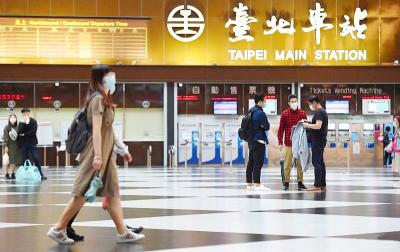
Taiwan Railways Corp (TRC) today announced that Shin Kong Mitsukoshi has been selected as the preferred bidder to operate the Taipei Railway Station shopping mall, replacing the current operator, Breeze Development Co Ltd. Among eight qualified firms that delivered presentations and were evaluated by a review committee, Shin Kong Mitsukoshi was ranked first, while Breeze was named the runner-up, the rail company said in a statement. Contract negotiations are to proceed in accordance with regulations, it said, adding that if negotiations with the top bidder fail, it could invite the second-ranked applicant to enter talks. Breeze in a statement today expressed doubts over


 RSS
RSS