


A 52-year-old woman suspected of starting a fire at a building in Kaohsiung that killed 46 people and injured 41 was charged with homicide yesterday.
Prosecutors asked the court to impose the “heaviest penalty,” with the Criminal Code stipulating the death penalty, a life sentence, or no less than 10 years in prison.
The Kaohsiung District Prosecutors’ Office said that the suspect, Huang Ke-ke (黃格格), at 2am on Oct. 14 last year lit mosquito-repellent incense and placed the burning product on a sofa in a small room on the ground floor of the Cheng Chung Cheng (城中城) building in Yancheng District (鹽埕), starting a fire that spread through the building.
The room in which the fire started was owned by someone else and had no water or electrical outlets, prosecutors said.
Huang often drank with her 53-year-old boyfriend, surnamed Kuo (郭), and others in the room, prosecutors said.
On the night of Oct. 13, Huang and Kuo had been drinking in the room, but three hours before the fire started, Kuo had left the building, they said.
Prosecutors released Kuo after questioning, saying that he played no role in starting the fire, which was confined to the room for almost 30 minutes, producing a lot of smoke and igniting its wooden interior, they said.
Many of the units on the first and second floors were not occupied, and 59 scooters and motorcycles parked on the first floor helped the fire to spread, prosecutors said.
The conditions led to thick smoke rising to the upper levels of the 40-year-old, 13-story building, killing people on the seventh floor and above, the office told the court.
The 46 people who died showed signs of nitric oxide poisoning, which inhibits breathing, and shock, the office said.
In addition to the homicide charges, the indictment document said that Huang committed an offense against public safety.
Prosecutors said that the suspect did not show any remorse during the investigation.
They sought the heaviest punishment after Huang argued with investigators in an ill-mannered way, the office said.
The indictment said that Huang started the fire because she was angry with Kuo, suspecting he had been deliberately avoiding her.
Citing witness accounts, the indictment said that Huang repeatedly called Kuo and texted him on the night before the blaze, but he did not reply.
It said that after the fire started, Huang had returned to her home in Fengshan District (鳳山), where she lived with Kuo, and texted him again, writing: “If you are mad, I will be mad with you” and “I will do what you want to see. This time, I did it.”
While Huang was sending angry messages to her boyfriend, the building was engulfed and people were dying, prosecutors said.

The military has spotted two Chinese warships operating in waters near Penghu County in the Taiwan Strait and sent its own naval and air forces to monitor the vessels, the Ministry of National Defense (MND) said. Beijing sends warships and warplanes into the waters and skies around Taiwan on an almost daily basis, drawing condemnation from Taipei. While the ministry offers daily updates on the locations of Chinese military aircraft, it only rarely gives details of where Chinese warships are operating, generally only when it detects aircraft carriers, as happened last week. A Chinese destroyer and a frigate entered waters to the southwest

A magnitude 6.1 earthquake struck off the coast of Yilan County at 8:39pm tonight, the Central Weather Administration (CWA) said, with no immediate reports of damage or injuries. The epicenter was 38.7km east-northeast of Yilan County Hall at a focal depth of 98.3km, the CWA’s Seismological Center said. The quake’s maximum intensity, which gauges the actual physical effect of a seismic event, was a level 4 on Taiwan’s 7-tier intensity scale, the center said. That intensity level was recorded in Yilan County’s Nanao Township (南澳), Hsinchu County’s Guansi Township (關西), Nantou County’s Hehuanshan (合歡山) and Hualien County’s Yanliao (鹽寮). An intensity of 3 was

Japanese Prime Minister Sanae Takaichi’s comment last year on Tokyo’s potential reaction to a Taiwan-China conflict has forced Beijing to rewrite its invasion plans, a retired Japanese general said. Takaichi told the Diet on Nov. 7 last year that a Chinese naval blockade or military attack on Taiwan could constitute a “survival-threatening situation” for Japan, potentially allowing Tokyo to exercise its right to collective self-defense. Former Japan Ground Self-Defense Force general Kiyofumi Ogawa said in a recent speech that the remark has been interpreted as meaning Japan could intervene in the early stages of a Taiwan Strait conflict, undermining China’s previous assumptions
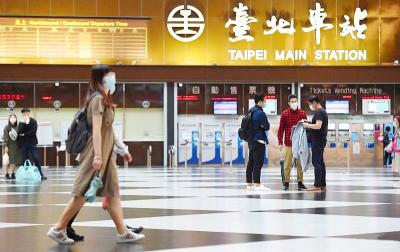
Taiwan Railways Corp (TRC) today announced that Shin Kong Mitsukoshi has been selected as the preferred bidder to operate the Taipei Railway Station shopping mall, replacing the current operator, Breeze Development Co Ltd. Among eight qualified firms that delivered presentations and were evaluated by a review committee, Shin Kong Mitsukoshi was ranked first, while Breeze was named the runner-up, the rail company said in a statement. Contract negotiations are to proceed in accordance with regulations, it said, adding that if negotiations with the top bidder fail, it could invite the second-ranked applicant to enter talks. Breeze in a statement today expressed doubts over


 RSS
RSS