


Taiwan Bravo (我們一家人), produced by the National Immigration Agency and SetTV (三立電視台), records the experiences of new immigrants in 368 towns and villages across Taiwan, including in Penghu and Lienchiang counties.
The program is broadcast at 2pm on Sundays along with a special daily Taiwan Bravo-themed segment on SetTV.
Most visitors’ first impression of Hong Kong is of a crowded city full of busy people. It is no wonder, then, that many Hong Kongers choose Taiwan as a new home.

This was certainly the case for a couple surnamed Wan (溫) and Wong (黃), who have 30 years of experience in French cooking.
After working in the kitchens of major hotels, Wan opened his own restaurant in Taiwan, although he would be in for an unforeseeable setback.
A COVID-19 alert this year put a pause on indoor dining, but Wong was ready with a plan: Bring the restaurant to the customer.
Wan and Wong brought utensils and ingredients to make a gourmet meal straight to the client’s kitchen.
Wan sources his ingredients himself. From edible roses to mushrooms, he visits farms across Taiwan to gauge their quality.
With the excellent reputation they have built for themselves, Wan and Wong have established a firm foothold in their new home.

The allure of Taiwan’s natural beauty is irresistible to many Europeans and Americans, yet the granola they are used to packing for a mid-hike boost is hard to find here.
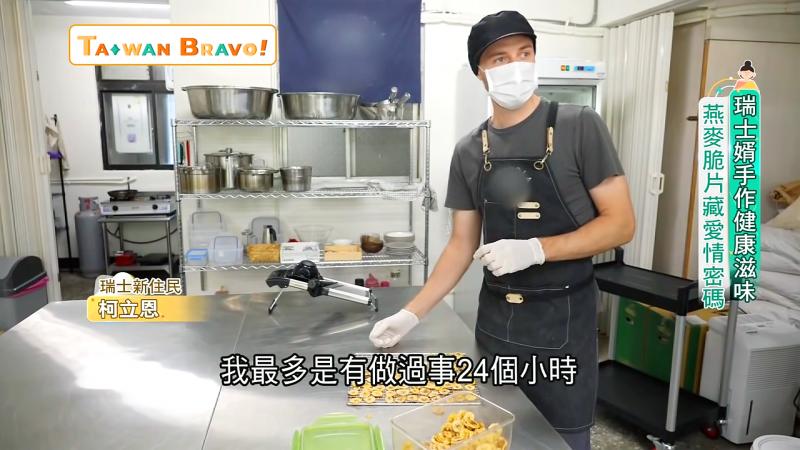
This presented an opportunity for Emilien Crett, who moved to Taiwan after falling in love with a Taiwanese classmate in the UK.
When racking their brains for a business idea, Crett realized that the granola he was used to eating every day in Switzerland was absent from store shelves.

He developed handcrafted recipes with dried Taiwanese fruit and natural pectin to hold them together.
To his students learning Japanese, Kuma-san is the fun teacher who is always joking. Yet to his daughter, he is a big teddy bear who sends her to school with lunches the envy of all her classmates.
He started making boxed lunch three years ago, determined to make adorable creations that could compete with those prepared by mothers in Japan.
The photographs he takes of his original designs have become a hit online, drawing admiration from his many followers.
Chang Li-ying (張麗英) worked as a flight attendant for many years before marrying and settling in Taiwan.
Although it has already become a second home, a special place in her heart is reserved for her homeland, Myanmar, and other immigrants like her.
Chang volunteers at the Service Center for New Immigrant Families in New Taipei City, reading stories to mothers and their children, and helping people fill out forms.
On top of helping with speaking and understanding Chinese, she also teaches a Burmese-language class to give children a holistic education in the hope that they could move fluently between the two languages and cultures.
The stories of these new immigrants in Taiwan Bravo, which is sponsored by the New Immigrants Development Fund, relate their experiences living in Taiwan and show how different cultures can unite.
Through in-depth interviews showing the diverse cultures of new immigrants, viewers can witness their moving stories.
Taiwan Bravo is broadcast on Sundays at 2pm on SetTV, channel 54.
Taiwan Bravo online:
Line: https://lin.ee/UvcPzdd
Facebook: https://www.facebook.com/SETwearefamily
Web site: http://setwearefamily.setn.com
YouTube: https://bit.ly/331eyXb

SECURITY: Starlink owner Elon Musk has taken pro-Beijing positions, and allowing pro-China companies to control Taiwan’s critical infrastructure is risky, a legislator said Starlink was reluctant to offer services in Taiwan because of the nation’s extremely high penetration rates in 4G and 5G services, the Ministry of Digital Affairs said yesterday. The ministry made the comments at a meeting of the legislature’s Transportation Committee, which reviewed amendments to Article 36 of the Telecommunications Management Act (電信管理法). Article 36 bans foreigners from holding more than 49 percent of shares in public telecommunications networks, while shares foreigners directly and indirectly hold are also capped at 60 percent of the total, unless specified otherwise by law. The amendments, sponsored by Chinese Nationalist Party (KMT) Legislator Ko
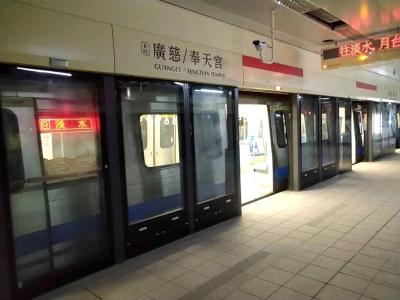
The eastern extension of the Taipei MRT Red Line could begin operations as early as late June, the Taipei Department of Rapid Transit Systems said yesterday. Taipei Rapid Transit Corp said it is considering offering one month of free rides on the new section to mark its opening. Construction progress on the 1.4km extension, which is to run from the current terminal Xiangshan Station to a new eastern terminal, Guangci/Fengtian Temple Station, was 90.6 percent complete by the end of last month, the department said in a report to the Taipei City Council's Transportation Committee. While construction began in October 2016 with an
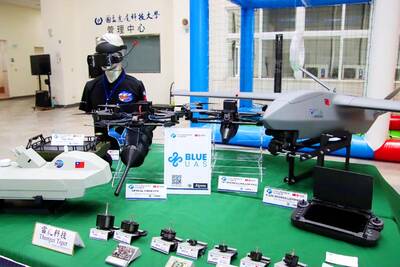
NON-RED SUPPLY: Boosting the nation’s drone industry is becoming increasingly urgent as China’s UAV dominance could become an issue in a crisis, an analyst said Taiwan’s drone exports to Europe grew 41.7-fold from 2024 to last year, with demand from Ukraine’s fight against Russian aggression the most likely driver of growth, a study showed. The Institute for Democracy, Society and Emerging Technology (DSET) in a statement on Wednesday said it found that many of Taiwan’s uncrewed aerial vehicle (UAV) sales were from Poland and the Czech Republic. These countries likely transferred the drones to Ukraine to aid it in its fight against the Russian invasion that started in 2022, it said. Despite the gains, Taiwan is not the dominant drone exporter to these markets, ranking second and fourth

The military has spotted two Chinese warships operating in waters near Penghu County in the Taiwan Strait and sent its own naval and air forces to monitor the vessels, the Ministry of National Defense (MND) said. Beijing sends warships and warplanes into the waters and skies around Taiwan on an almost daily basis, drawing condemnation from Taipei. While the ministry offers daily updates on the locations of Chinese military aircraft, it only rarely gives details of where Chinese warships are operating, generally only when it detects aircraft carriers, as happened last week. A Chinese destroyer and a frigate entered waters to the southwest


 RSS
RSS