

A new long-range radar system in New Taipei City’s Cape Santiago (三貂角) would help the Ministry of National Defense better detect Chinese military aircraft that fly into Taiwan’s southwest air defense identification zone, Minister of Transportation and Communications Wang Kwo-tsai (王國材) said yesterday.
Wang made the remarks on the sidelines of the new system’s launch ceremony, when asked by reporters if the system could detect Chinese military aircraft.
The new system enables the Air Navigation and Weather Services to monitor and search for civilian aircraft flying through the north of the Taipei Flight Information Region (FIR), Civil Aeronautics Administration (CAA) Director-General Lin Kuo-hsien (林國顯) told reporters.
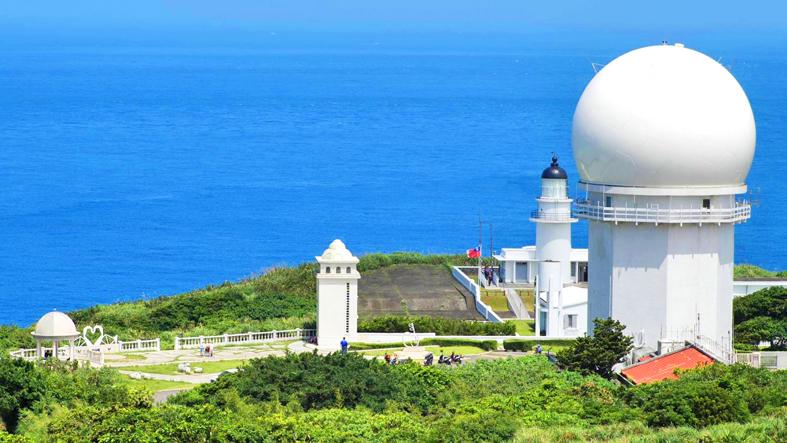
Photo courtesy of the Civil Aeronautics Administration
However, it is capable of monitoring various types of aircraft, Lin said.
“It will detect signals sent by aircraft and allow flight controllers to make queries. If an airplane does not send any signals, we will still know that it is about to enter our flight information region through the system,” Lin said.
The Air Navigation and Weather Services has installed 11 radar systems across the nation: nine terminal area radar systems and two long-range radar systems.
Another long-range radar system has been installed in Pingtung County’s Oluanpi (鵝鑾鼻), which would monitor aircraft passing through the south of the Taipei FIR, the CAA said.
In 2019, the CAA budgeted NT$676 million (US$24.37 million at the current exchange rate) to upgrade the nation’s long-range radar systems, which have been in use for more than 20 years.
The system in Oluanpi is to be officially activated next month, the agency added.
Wang told the ceremony that the Taipei FIR covers 18 international flight routes, which includes flights from the US, Canada, Japan, South Korea and China.
The upgraded radar system would enable air-traffic controllers to accurately identify the location, distance and altitude of aircraft to ensure aviation safety, he said.
As recommended by the International Civil Aviation Organization, the new radar system is also equipped with “Mode S,” which is a secondary surveillance process that allows selective interrogation of aircraft based on a unique 24-bit address assigned to each aircraft.
“The new radar system shows that Taiwan has been enhancing its civil aviation service and making sure that civil aviation standards are in sync with those set by the international organization,” Wang said.
Lin noted the challenges of building the radar system.
“The radar sits on a 32.3m-high tower. Construction was also affected by the northeast monsoon and work had to be suspended whenever there was a strong gust,” he said.
The new system makes a full sweep every 10 seconds, which would greatly enhance the accuracy of aircraft positioning, Lin said.
The new systems in Cape Santiago and Oluanpi are the “eyes” of Taiwan, which make it possible to monitor aircraft activity across the nation, the Air Aviation and Weather Services said.
“Construction in Oluanpi proceeded relatively smoothly because the system was built on flat terrain. The radar system in Cape Santiago is in a mountainous area, and workers could only deliver three dome panels at a time,” the agency said, adding that the COVID-19 pandemic has also made it difficult to schedule the importation of equipment and the arrival of engineers from overseas.
Each system’s primary surveillance radar would have a detection radius of 220 nautical miles (407.44km), with a capacity to detect more than 1,000 aircraft at a time, the agency said.
Their secondary surveillance radars would have a detection radius of 250 nautical miles, with a capacity to detect 900 aircraft at a time, it said.

A Hualien pomelo farmer refused to sell to China after the country announced it would permit more Taiwanese pomelo imports, prompting widespread support from Taiwanese consumers, who rallied to buy his fruit. China’s Taiwan Affairs Office last month said that China’s General Administration of Customs registered an additional 79 Taiwanese pomelo orchards and packing facilities in Hualien County, allowing more Taiwanese producers to export pomelos to China. “I am a Hualien fruit farmer and I refuse to sell to China,” Liu Tzu-hao (劉子豪) from Ruisui Township (瑞穗) said in an online post. Liu is a well-known farmer in the community and has served
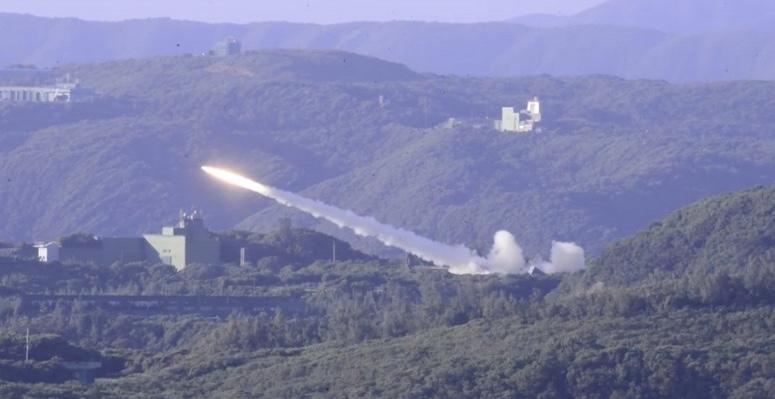
A Chinese military drone was spotted conducting reconnaissance off Taitung County as President William Lai (賴清德) visited Pingtung County this morning to inspect a drill of the armed forces’ precision-strike capabilities, prompting the military to closely monitor its actions. Today was the final day of a three-day military exercise at Jioupeng Base (九鵬基地) to test the joint combat capabilities of the armed forces and coast guard. The exercise began on Wednesday simulating air defense interception and yesterday tested long-range strike capabilities and new air defense weapons. This morning, the military conducted a final exercise involving air defense, anti-ship and drone operations. Military sources said

OCT. 31: The antiviral drugs Tamiflu and Eraflu have been distributed to about 4,000 medical facilities nationwide for people in seven groups who develop flu-like symptoms As the domestic influenza epidemic enters its peak season and continues to escalate, the Centers for Disease Control (CDC) yesterday announced that publicly funded influenza antiviral drugs for seven eligible groups have been extended to Oct. 31, allowing those who develop flu-like symptoms to receive the medication without undergoing a rapid influenza test. The CDC has extended the expanded use of flu antiviral drugs to seven groups: healthcare and influenza-prevention personnel; residents and staff at nursing homes, long-term care facilities and similar institutions; kindergarten and daycare workers and home-based caregivers; students from kindergarten through high school, vocational high school and the

Taiwanese Tsai Chin-shu (蔡金樹), who had been imprisoned in China for engaging in activity that “endangers national security,” said on Facebook on Friday that he has returned to Taiwan. Tsai, chairman of the Southern Taiwan Union of Cross-strait Relations Associations, had traveled frequently between Taiwan and China for years, and at one time ran a trading company in China’s Pingtan. In July 2018, he traveled to Quanzhou, Fujian Province, to attend a cross-strait food trade fair and stayed at a hotel in Xiamen. He checked out the following day and then disappeared. His family had made repeated appeals to the authorities


 RSS
RSS