


A COVID-19 vaccine trial carried out in Taiwan has found that a combination of the AstraZeneca and the locally developed Medigen vaccines is more effective than two doses of AstraZeneca, the research team said on Saturday.
The trial, which was initiated by Chang Gung Memorial Hospital, examined 100 people aged 22 to 62 divided into two groups: One group was vaccinated with two AstraZeneca doses, while the other received a first dose of AstraZeneca and a second dose of Medigen, team leader Chen Chih-jung (陳志榮) said.
The geometric mean titers (GMTs) of neutralizing antibodies in the mix-and-match group after 10 days were 1.8 times higher than in the AstraZeneca group, said Chen, who heads the Molecular Infectious Diseases Research Center at the hospital’s Linkou branch.

Photo: CNA
After 28 days, the level of neutralizing antibodies was 1.1 times higher in the mix-and-match group than in the AstraZeneca group, he told a seminar on the trial’s findings at the hospital.
The GMTs were twice as high when the Medigen dose was given four to six weeks after the AstraZeneca dose, rather than an interval of eight to 10 weeks, Chen said.
Another study at the hospital tracked the levels of neutralizing antibodies in 683 hospital employees inoculated with AstraZeneca and Moderna, he said.
In a mix-and-match group, the level of of the neutralizing antibodies was far from ideal when a Moderna dose was given more than 12 weeks after a first dose of AstraZeneca, Chen said.
People who decide to follow the mix-and-match approach should have an interval of no more than 10 weeks between the first and second doses, he said.
The hospital employees’ second doses were delayed by more than 12 weeks because of supply issues, so they were allowed to mix vaccine brands, Chen said.
The government presently allows people who received a first dose of AstraZeneca to get a Pfizer-BioNTech or Moderna vaccine as their second dose after a minimum interval of eight weeks.

LOUD AND PROUD Taiwan might have taken a drubbing against Australia and Japan, but you might not know it from the enthusiasm and numbers of the fans Taiwan might not be expected to win the World Baseball Classic (WBC) but their fans are making their presence felt in Tokyo, with tens of thousands decked out in the team’s blue, blowing horns and singing songs. Taiwanese fans have packed out the Tokyo Dome for all three of their games so far and even threatened to drown out home team supporters when their team played Japan on Friday. They blew trumpets, chanted for their favorite players and had their own cheerleading squad who dance on a stage during the game. The team struggled to match that exuberance on the field, with
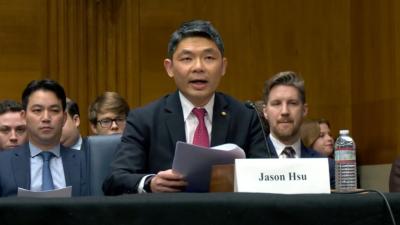
If China chose to invade Taiwan tomorrow, it would only have to sever three undersea fiber-optic cable clusters to cause a data blackout, Jason Hsu (許毓仁), a senior fellow at the Hudson Institute and former Chinese Nationalist Party (KMT) legislator, told a US security panel yesterday. In a Taiwan contingency, cable disruption would be one of the earliest preinvasion actions and the signal that escalation had begun, he said, adding that Taiwan’s current cable repair capabilities are insufficient. The US-China Economic and Security Review Commission (USCC) yesterday held a hearing on US-China Competition Under the Sea, with Hsu speaking on
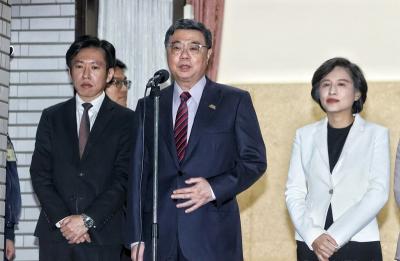
Taiwan is awaiting official notification from the US regarding the status of the Agreement on Reciprocal Trade (ART) after the US Supreme Court ruled US President Donald Trump's global tariffs unconstitutional. Speaking to reporters before a legislative hearing today, Premier Cho Jung-tai (卓榮泰) said that Taiwan's negotiation team remains focused on ensuring that the bilateral trade deal remains intact despite the legal challenge to Trump's tariff policy. "The US has pledged to notify its trade partners once the subsequent administrative and legal processes are finalized, and that certainly includes Taiwan," Cho said when asked about opposition parties’ doubts that the ART was
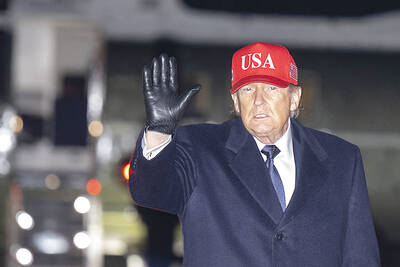
The US’ joint strikes with Israel on Iran dismantled a key pillar of China’s regional strategy, removing an important piece in Beijing’s potential Taiwan Strait scenario, said Zineb Riboua, a senior researcher at the Hudson Institute’s Center for Middle East Peace and Security. In an article titled: “The Iran Question Is All About China,” Riboua said that understanding the Iran issue in the context of China’s “grand strategy” is essential to fully grasp the complexity of the situation. Beijing has spent billions of dollars over the years turning Iran into a “structural strategic asset,” diverting US military resources in the


 RSS
RSS