


Staff reporters, with staff writer
Bayonet drills are an essential part of the army’s training curriculum, Minister of National Defense Chiu Kuo-cheng (邱國正) said on Monday as he defended a policy of the army’s top general to increase bayonet drills in training programs.
At a meeting of the legislature’s Foreign Affairs and National Defense Committee, Democratic Progressive Party Legislator Tsai Shih-ying (蔡適應) questioned the usefulness of the drills.
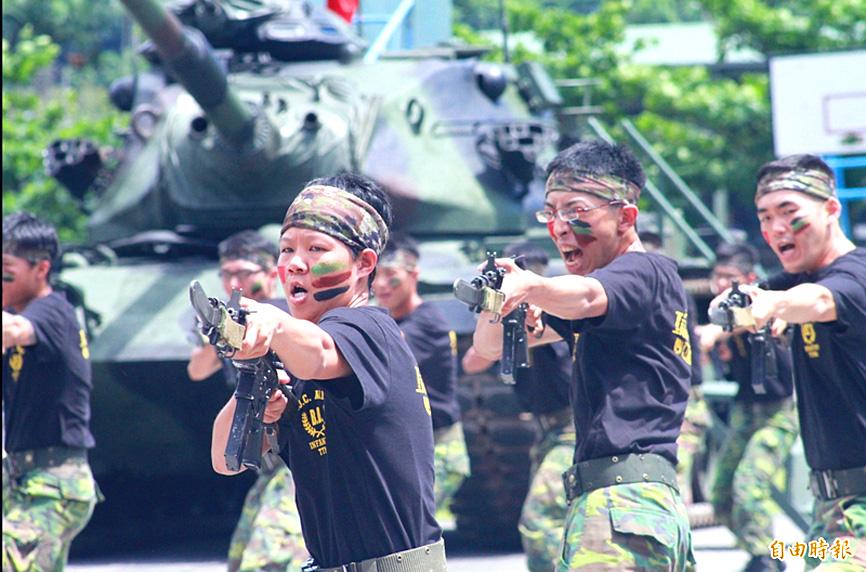
Photo: Chen Hsien-yi, Taipei Times
Army General Hsu Yen-pu (徐衍璞) has introduced physical standards and combat skills-related policy changes since he assumed command of the service in July.
Tsai asked Chiu if he agrees with the army’s renewed interest in bayonets and to explain how bayonet training is being conducted.
Citing the US Army’s decision to discontinue bayonet drills in 2010, Tsai said that Taiwan’s army should consider prioritizing physical fitness programs — including weight training, calisthenics, running and marches — over proficiency with the bayonet.
Chiu said that he agrees with Hsu’s bayonet training policy, adding that the drills build up the mental and physical conditioning of soldiers.
These aspects are core components of the army’s training, alongside other elements such as technical proficiency and command skills, he said.
Bayonet drills are incorporated into the training curriculum, while the unit that conducts the training adjusts the intensiveness depending whether it is for a combat or support element, he said.
Army Chief of Staff Lieutenant General Chang Yuan-hsun (章元勳) said that bayonet drills are carried out within the time allotted to units for training.
A retired general who requested anonymity on Thursday said that public interest in the bayonet policy is evidence that the nation is paying attention to the threat from China.
However, most comments on the issue have been “uninformed,” the retired general said.
In Taiwan’s armed forces, bayonet fighting is practiced as a martial art that revolves around the use of the weapon when it is affixed to a rifle to rapidly defeat an enemy at close quarters, they said.
“The army’s emphasis on bayonet skills has nothing to do with human wave tactics,” they said.
The bayonet fulfills a particular set of requirements in close combat and most of the world’s militaries continue to issue bayonets as a standard infantry weapon, they said, adding that bayonet-bearing troops are frequently seen in recent combat photography.
Fixing bayonets is effective in the assault or defense of a position and escorting prisoners of war, and helps soldiers to retain their rifles when fighting at grappling range, they said.
“Bayonet drills are necessary for the individual soldier to wield the weapon effectively to complete their mission,” they said. “The armed forces would be remiss if it issued bayonets ... without providing instruction in the use of the weapon.”

The Centers for Disease Control (CDC) yesterday reported the first case of a new COVID-19 subvariant — BA.3.2 — in a 10-year-old Singaporean girl who had a fever upon arrival in Taiwan and tested positive for the disease. The girl left Taiwan on March 20 and the case did not have a direct impact on the local community, it said. The WHO added the BA.3.2 strain to its list of Variants Under Monitoring in December last year, but this was the first imported case of the COVID-19 variant in Taiwan, CDC Deputy Director-General Lin Ming-cheng (林明誠) said. The girl arrived in Taiwan on

South Korea is planning to revise its controversial electronic arrival card, a step Taiwanese officials said prompted them to hold off on planned retaliatory measures, a South Korean media report said yesterday. A Yonhap News Agency report said that the South Korean Ministry of Foreign Affairs is planning to remove the “previous departure place” and “next destination” fields from its e-arrival card system. The plan, reached after interagency consultations, is under review and aims to simplify entry procedures and align the electronic form with the paper version, a South Korean ministry official said. The fields — which appeared only on the electronic form

The Ministry of Foreign Affairs (MOFA) is suspending retaliation measures against South Korea that were set to take effect tomorrow, after Seoul said it is updating its e-arrival system, MOFA said today. The measures were to be a new round of retaliation after Taiwan on March 1 changed South Korea's designation on government-issued alien resident certificates held by South Korean nationals to "South Korea” from the "Republic of Korea," the country’s official name. The move came after months of protests to Seoul over its listing of Taiwan as "China (Taiwan)" in dropdown menus on its new online immigration entry system. MOFA last week
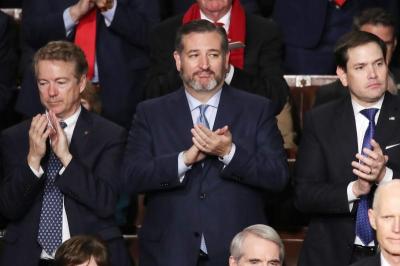
A bipartisan group of US senators has introduced a bill to enhance cooperation with Taiwan on drone development and to reduce reliance on supply chains linked to China. The proposed Blue Skies for Taiwan Act of 2026 was introduced by Republican US senators Ted Cruz and John Curtis, and Democratic US senators Jeff Merkley and Andy Kim. The legislation seeks to ease constraints on Taiwan-US cooperation in uncrewed aerial systems (UAS), including dependence on China-sourced components, limited access to capital and regulatory barriers under US export controls, a news release issued by Cruz on Wednesday said. The bill would establish a "Blue UAS


 RSS
RSS