

US Secretary of Defense Lloyd Austin said on Friday that the Pentagon would continue to support Taiwan’s military, but he declined to say if US troops would defend the island against China, after US President Joe Biden said there was a US “commitment” to do so.
“As we’ve done over multiple administrations, we will continue to help Taiwan with the sorts of capabilities that it needs to defend itself,” Austin said at NATO headquarters.
“So we’ll stay focused on those things, and I won’t engage in any hypotheticals with respect to Taiwan,” he told reporters.
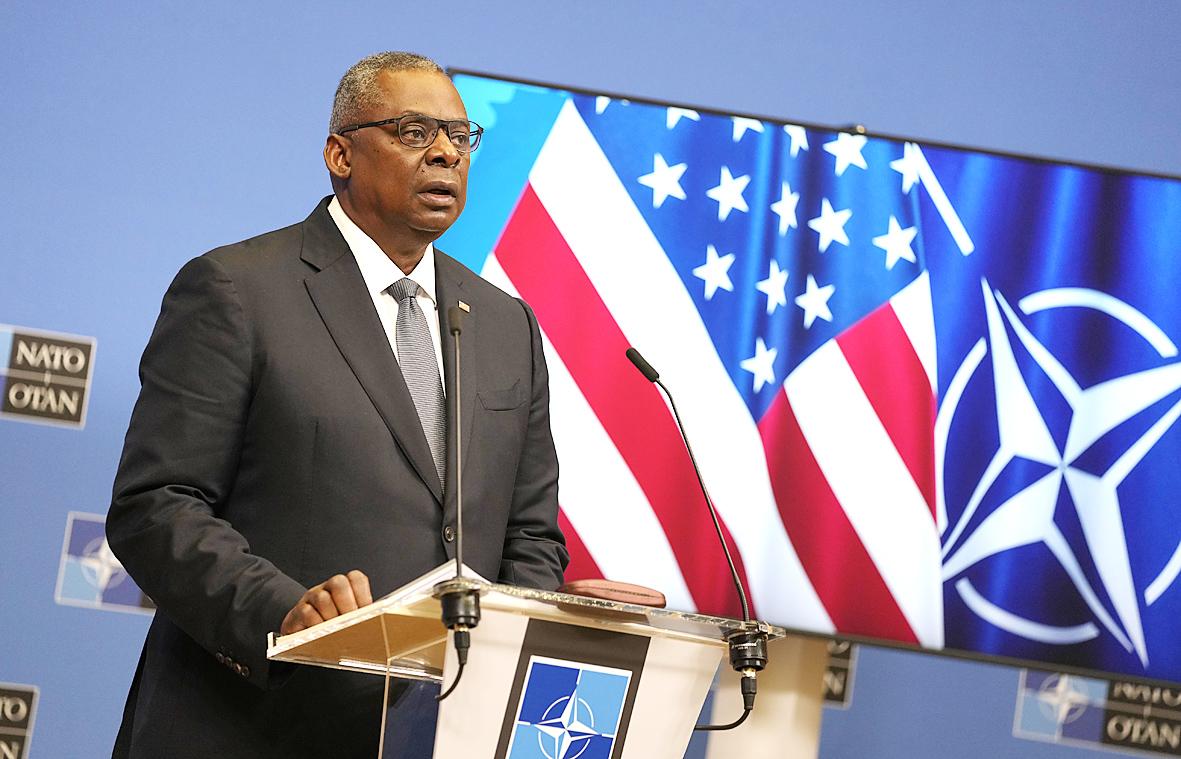
Photo: AP
Biden on Thursday sparked a new firestorm in relations between Washington and Beijing by saying the US had an agreement to help defend Taiwan.
At a CNN town hall meeting, Biden was asked whether the US would come to Taiwan’s defense if China invaded.
“Yes,” he responded. “We have a commitment to that.”
The comment sparked a sharp retort from Beijing, warning that Washington “should act and speak cautiously on the Taiwan issue.”
Austin said that the US is committed to the official “one China” policy, in which Washington accepts that Beijing governs China.
However, that does not prevent the US from providing aid to Taiwan, including potent military hardware.
Asked if Biden’s comments raised the specter of NATO being dragged into a US conflict with China, NATO Secretary-General Jens Stoltenberg sought to avoid exacerbating the conflict.
“I would not speculate about a hypothetical situation,” he said.
“I think what is important now is to reduce tensions in the area. If I started to speculate, I think I actually will contribute to the opposite,” he said. “So we should solve all disputes and differences and disagreements in the region by political and diplomatic means.”
Shortly after Biden spoke, a White House spokesperson said there was no change in policy, and analysts said it appeared that the president misspoke.
Asked at a Friday news briefing whether it was Biden’s intention to move away from strategic ambiguity to make an unambiguous statement about how the US would respond to a Chinese attack on Taiwan, White House press secretary Jen Psaki said: “Our policy has not changed. He was not intending to convey a change in policy, nor has he made a decision to change our policy.”
Meanwhile, North Korea yesterday accused the Biden administration of raising military tensions with China through its “reckless” backing of Taiwan, and said the growing US military presence in the region constitutes a potential threat to the North.
In comments carried by state media, North Korean Vice Foreign Minister Pak Myong-ho criticized the US for sending warships through the Taiwan Strait and providing Taiwan with upgraded weapons systems and military training.
He said the increasing military presence of US-led “hostile forces” in the region was based on a “lame assertion” that North Korea and China would cause trouble in Taiwan and the Korean Peninsula.
“This reality proves that the US is in its bid to stifle our country and China, both socialist countries, in order to hold on to its supremacy,” Pak said.
North Korea has increasingly criticized the US’ broader security role in the Asia-Pacific region amid an intensifying competition with China, Pyongyang’s major ally and economic lifeline.
Last month, North Korea threatened unspecified countermeasures following the Biden administration’s decision to provide nuclear-powered submarines to Australia.
Additional reporting by AP

A Hualien pomelo farmer refused to sell to China after the country announced it would permit more Taiwanese pomelo imports, prompting widespread support from Taiwanese consumers, who rallied to buy his fruit. China’s Taiwan Affairs Office last month said that China’s General Administration of Customs registered an additional 79 Taiwanese pomelo orchards and packing facilities in Hualien County, allowing more Taiwanese producers to export pomelos to China. “I am a Hualien fruit farmer and I refuse to sell to China,” Liu Tzu-hao (劉子豪) from Ruisui Township (瑞穗) said in an online post. Liu is a well-known farmer in the community and has served
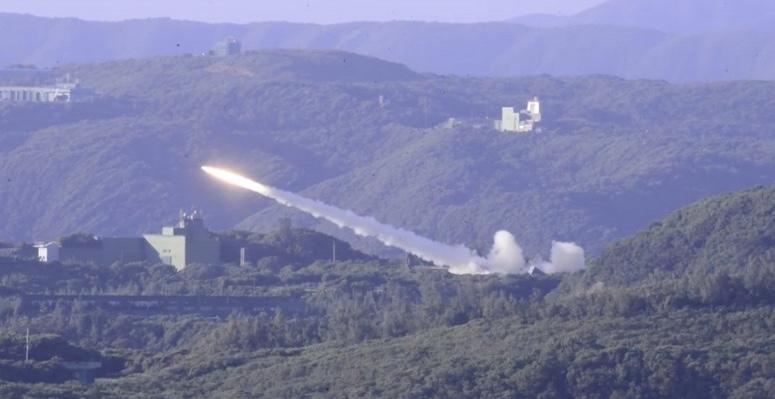
A Chinese military drone was spotted conducting reconnaissance off Taitung County as President William Lai (賴清德) visited Pingtung County this morning to inspect a drill of the armed forces’ precision-strike capabilities, prompting the military to closely monitor its actions. Today was the final day of a three-day military exercise at Jioupeng Base (九鵬基地) to test the joint combat capabilities of the armed forces and coast guard. The exercise began on Wednesday simulating air defense interception and yesterday tested long-range strike capabilities and new air defense weapons. This morning, the military conducted a final exercise involving air defense, anti-ship and drone operations. Military sources said

OCT. 31: The antiviral drugs Tamiflu and Eraflu have been distributed to about 4,000 medical facilities nationwide for people in seven groups who develop flu-like symptoms As the domestic influenza epidemic enters its peak season and continues to escalate, the Centers for Disease Control (CDC) yesterday announced that publicly funded influenza antiviral drugs for seven eligible groups have been extended to Oct. 31, allowing those who develop flu-like symptoms to receive the medication without undergoing a rapid influenza test. The CDC has extended the expanded use of flu antiviral drugs to seven groups: healthcare and influenza-prevention personnel; residents and staff at nursing homes, long-term care facilities and similar institutions; kindergarten and daycare workers and home-based caregivers; students from kindergarten through high school, vocational high school and the
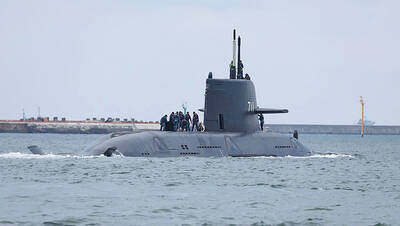
UPDATE: The submarine would need to undergo combined systems testing and crew training for navy personnel before it is ready for mission, an expert said Taiwan’s first domestically built submarine, the Hai Kun (Narwhal, 海鯤), could be delivered to the navy as early as next month, military expert and Taiwan Association for Security and Development chairman Chi Tung-yun (紀東昀) said yesterday. The submarine was yesterday morning observed departing for its 21st sea trial and its 15th submerged test. The vessel missed the initial delivery deadline of November last year due to “testing delays,” its primary contractor, shipbuilder CSBC Corp, Taiwan, said in June. The contractor also cited “political pressure from China” in procuring critical equipment. All testing operations are in the final stages, with the


 RSS
RSS