

More than 90 percent of Taiwanese want to receive cash rather than “quintuple stimulus vouchers” proposed by the Executive Yuan, a survey by the Consumers’ Foundation showed yesterday.
The Executive Yuan is planning to issue another round of stimulus vouchers worth NT$5,000 to encourage domestic consumption in the wake of the recent COVID-19 outbreak.
It on Thursday touted four advantages of issuing “quintuple stimulus vouchers” instead of cash, saying that the expiration date on the vouchers would mean that people would have to spend them quickly and, hence, stimulate the economy.
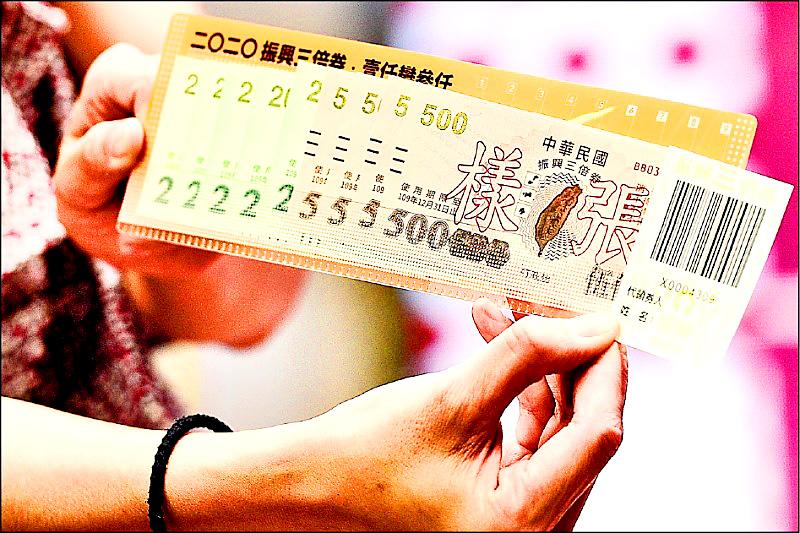
Photo: Wu Chi-lun, Taipei Times
Rather than using cash for one-time payments such as taxes and fines, business owners could also use the vouchers they have received, creating a consumption cycle, it said.
Vouchers could also be more beneficial, as many businesses and local governments would offer discounts or incentives encouraging consumers to spend them, it said, adding that by requiring people to pay NT$1,000 in advance they would be less likely to waste the money.
The Executive Yuan is scheduled to further discuss the proposed voucher plan with the Democratic Progressive Party (DPP) caucus today.
The foundation said its online questionnaire found that 90.2 percent of respondents would prefer cash, while only 9.8 percent were in favor of “quintuple stimulus vouchers.”
Their reasons for choosing cash include hoping the government would “provide relief first, then stimulate the economy,” consider the administrative costs of issuing vouchers a waste of money, consider cash more environmentally friendly, or prefer cash because it can be saved or used to pay for tuition or other purposes, it said.
Foundation chairman Terry Huang (黃怡騰) said the foundation originally planned to conduct the survey from Thursday last week through tomorrow, but more than 20,000 people had already responded by Saturday, so it decided to publicize the poll results ahead of the Executive Yuan’s meeting with the DPP caucus today.
Foundation secretary-general Hsu Tse-yu (徐則鈺) said the survey showed that the vast majority of people would prefer cash, so the government should listen to the public and give out cash as soon as possible to help people who suffered economically during the COVID-19 pandemic.
The “quintuple stimulus vouchers” not only cost money to print, but also limit trading partners, as they involve tax reporting and other procedures, said Lu Hsin-chang (盧信昌), a professor at National Taiwan University’s Department of International Business.
They are also less convenient than cash for residents in remote areas, Lu added.
When the government issued the Triple Stimulus Vouchers last year, business owners needed to go through complicated procedures such as stamping the vouchers and bank reconciliation, he said, adding that extended transaction periods when using vouchers also increase the risk of disease transmission.
Huang said the survey result showed “the people’s complaints,” and urged the government to deal with the people’s grievances.
The budget for economic stimulus policies comes from taxpayer money, so its should be used to best solve the challenges people are facing, he said.

A total of 400 foreign “high- level” professionals have been naturalized as Republic of China (Taiwan) citizens over the past decade as the government has eased nationality rules to attract talent from a wider range of fields, the Ministry of the Interior said yesterday. The 400th high-level professional, who works in the electronics industry, was approved for ROC citizenship on Aug. 26, the MOI said. The MOI quoted the newly naturalized citizen as saying that Taiwan is a leader in fields such as semiconductors, electronics manufacturing, artificial intelligence development and energy technology. He also said
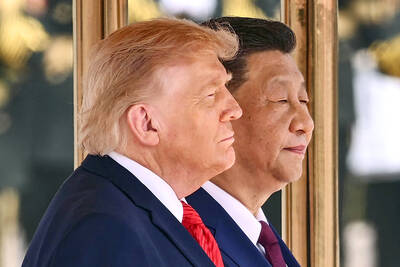
China has warned that it could cancel a planned US-China leaders’ summit if Washington approves new arms sales to Taiwan, a Japanese media outlet quoted sources as saying yesterday. US President Donald Trump, “apparently eager to showcase some diplomatic achievements ahead of November’s midterm congressional elections, places great importance on holding the summit with Chinese President Xi Jinping (習近平),” Japan’s Kyodo News reported. “While preparing for Xi’s upcoming trip, China has restated its position that the Taiwan issue is a ‘red line’ in bilateral relations,” the report said. The report said that when Xi met with Trump in Beijing in May, Xi said
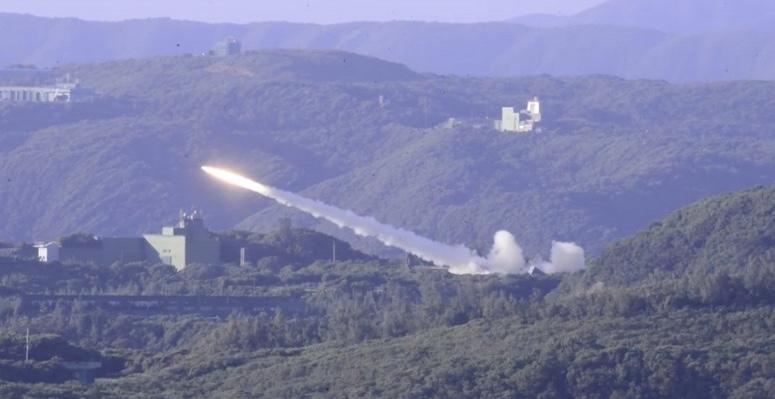
A Chinese military drone was spotted conducting reconnaissance off Taitung County as President William Lai (賴清德) visited Pingtung County this morning to inspect a drill of the armed forces’ precision-strike capabilities, prompting the military to closely monitor its actions. Today was the final day of a three-day military exercise at Jioupeng Base (九鵬基地) to test the joint combat capabilities of the armed forces and coast guard. The exercise began on Wednesday simulating air defense interception and yesterday tested long-range strike capabilities and new air defense weapons. This morning, the military conducted a final exercise involving air defense, anti-ship and drone operations. Military sources said
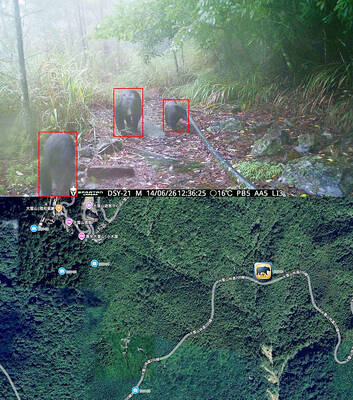
RARE PEEK: The footage released showed one of the bears staying in a cave for as long as 70 days, providing the first record of Formosan black bear’s overwintering The Forestry and Nature Conservation Agency yesterday released tracking records of released Formosan black bears for the first time, showing that they get much closer to human settlements than previously thought. The agency said it had captured two bears, Da Qu-ali (達古阿里) and Aziman (阿里曼), in indigenous villages in Hualien County and began to track them with a camera-mounted satellite collar after releasing them back into the wild. The results confirmed that the bears have moved from deep mountain areas into lowland hills closer to human communities, leading to an increase in human-bear conflicts, it said. The agency has introduced artificial intelligence-assisted early


 RSS
RSS