


A special exhibition aimed at highlighting the diversity of Aboriginal cultures yesterday opened at the Sun Yat-sen Memorial Hall in Taipei to mark Indigenous Peoples’ Day.
The exhibition, titled “Ita/kita” (一起得力量,我們!), is curated by Masao Aki and organized by the Ministry of Culture, it said.
Ita and kita mean “us” among many Aboriginal groups in Taiwan, as well as Austronesian-speaking nations, Aki said.
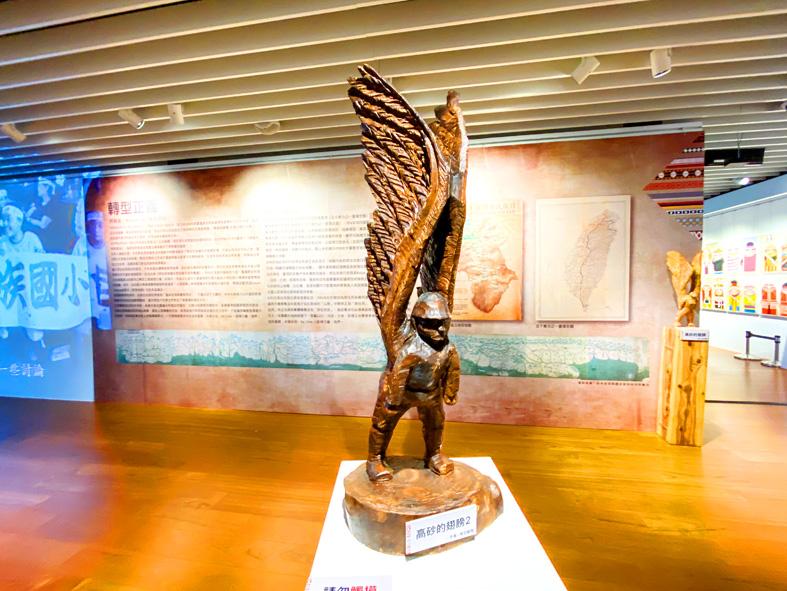
Photo: Chuang Shih-hsien, Taipei Times
Aruwai Kaumakan, Alik Studio, Siki Sufin, Eval Malinjinnan, Tafong Kati and Ruby Swana are among the participating artists, the ministry said.
One of the pieces featured in the exhibition is The Song of Life (生命之歌) by Paiwan artist Aruwai Kaumakan.
The work was inspired by the artist’s experience with Typhoon Morakot, which struck her village in August 2009, it said, adding that the piece symbolizes the togetherness of the village, as well as the artist’s attempt to overcome her sorrow in losing her home and land.
The Song of Life is being displayed in the exhibition’s “Power of Rebirth” section, the ministry said.
Everyone should cherish and recognize Aboriginal culture as an indispensable part of what defines Taiwan, Minister of Culture Lee Yung-te (李永得) said at the exhibition’s opening reception on Saturday.
Aborigines’ achievements in sports, music and the arts, as well as their contributions to the nation’s multiculturalism, deserve people’s deepest respect, he said.
Hopefully, through the exhibition, more people would pay attention to Aborigines’ interpretations of history and art, he added.
“Only by listening to and respecting the subjective interpretation of Aborigines can we truly understand,” Lee said.
Indigenous Peoples’ Day commemorates Aborigines’ movement to rectify their name, Council of Indigenous Peoples Minister Icyang Parod said at the reception.
A decade after the movement began, the name “Aborigines” was officially included in the Constitution on Aug. 1, 1994, he said.
On Aug. 1, 2016, President Tsai Ing-wen (蔡英文) apologized to Aborigines on behalf of the government, and announced that it would promote Aborigines’ efforts toward historical and transitional justice, he said.
“Ita/kita” is at the memorial’s Bo-ai Gallery until Wednesday next week, the ministry said.
It would be open for four 90-minute sessions each day beginning at 9am, 11am, 1:30pm and 3:30pm, with up to 100 visitors allowed each session, it said.

The military has spotted two Chinese warships operating in waters near Penghu County in the Taiwan Strait and sent its own naval and air forces to monitor the vessels, the Ministry of National Defense (MND) said. Beijing sends warships and warplanes into the waters and skies around Taiwan on an almost daily basis, drawing condemnation from Taipei. While the ministry offers daily updates on the locations of Chinese military aircraft, it only rarely gives details of where Chinese warships are operating, generally only when it detects aircraft carriers, as happened last week. A Chinese destroyer and a frigate entered waters to the southwest
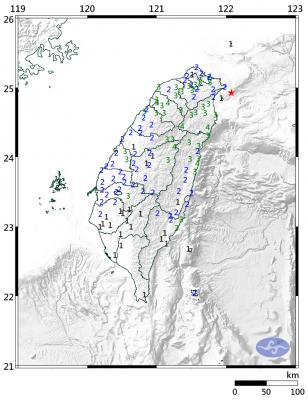
A magnitude 6.1 earthquake struck off the coast of Yilan County at 8:39pm tonight, the Central Weather Administration (CWA) said, with no immediate reports of damage or injuries. The epicenter was 38.7km east-northeast of Yilan County Hall at a focal depth of 98.3km, the CWA’s Seismological Center said. The quake’s maximum intensity, which gauges the actual physical effect of a seismic event, was a level 4 on Taiwan’s 7-tier intensity scale, the center said. That intensity level was recorded in Yilan County’s Nanao Township (南澳), Hsinchu County’s Guansi Township (關西), Nantou County’s Hehuanshan (合歡山) and Hualien County’s Yanliao (鹽寮). An intensity of 3 was

Japanese Prime Minister Sanae Takaichi’s comment last year on Tokyo’s potential reaction to a Taiwan-China conflict has forced Beijing to rewrite its invasion plans, a retired Japanese general said. Takaichi told the Diet on Nov. 7 last year that a Chinese naval blockade or military attack on Taiwan could constitute a “survival-threatening situation” for Japan, potentially allowing Tokyo to exercise its right to collective self-defense. Former Japan Ground Self-Defense Force general Kiyofumi Ogawa said in a recent speech that the remark has been interpreted as meaning Japan could intervene in the early stages of a Taiwan Strait conflict, undermining China’s previous assumptions
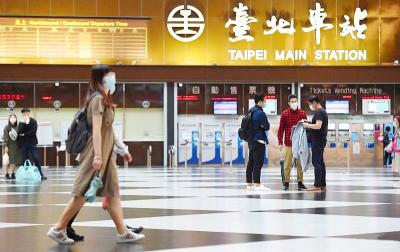
Taiwan Railways Corp (TRC) today announced that Shin Kong Mitsukoshi has been selected as the preferred bidder to operate the Taipei Railway Station shopping mall, replacing the current operator, Breeze Development Co Ltd. Among eight qualified firms that delivered presentations and were evaluated by a review committee, Shin Kong Mitsukoshi was ranked first, while Breeze was named the runner-up, the rail company said in a statement. Contract negotiations are to proceed in accordance with regulations, it said, adding that if negotiations with the top bidder fail, it could invite the second-ranked applicant to enter talks. Breeze in a statement today expressed doubts over


 RSS
RSS