


Sixty-two percent of Taiwanese disapprove of the Central Epidemic Command Center’s (CECC) progress in obtaining COVID-19 vaccines, while 65.6 percent said that they would not take domestic vaccines that lack WHO certification, a poll released yesterday by Trend Survey and Research and commissioned by the Taiwan People’s Party (TPP) found.
Trend Survey general manager Wu Shih-chang (吳世昌) announced the results of the survey with TPP officials at a virtual news conference, adding that 41.3 percent of respondents said that they highly disapproved of the center’s efforts to secure vaccines.
About 68.6 percent of the respondents agreed that the country should rely on internationally approved vaccines, including 47.3 percent of Democratic Progressive Party (DPP) voters, 86.7 percent of Chinese Nationalist Party (KMT) voters, 92.6 percent of TPP voters and 68.7 percent of independents, he said.
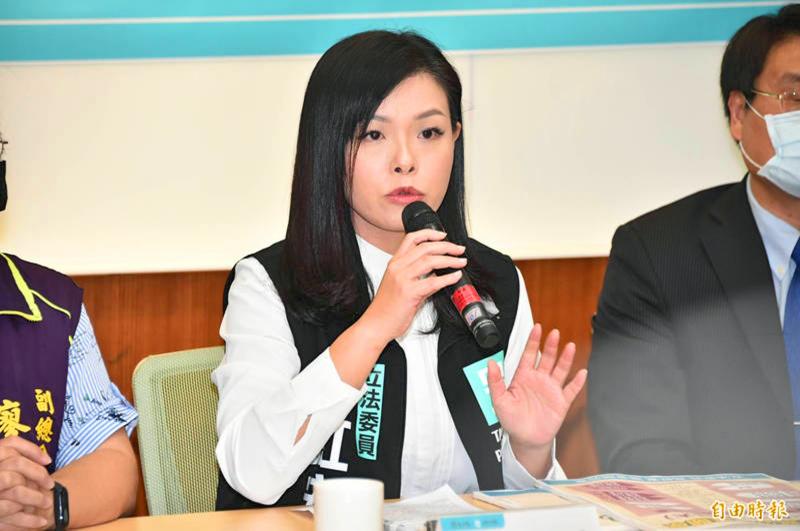
Photo: Wu Chia-ying, Taipei Times
Just 28.1 percent of respondents said that they were willing to take a domestic vaccine not approved by the WHO, the European Medicines Agency or the US Food and Drug Administration.
Of the 65.6 percent of respondents who were unwilling to take a vaccine not approved by an international body, 36.7 percent said they would be highly unwilling to do so, Wu said.
About 52.8 percent of DPP voters and 48.6 percent of Taiwan Statebuilding Party voters said that they were willing to receive a Taiwanese vaccine, while less than 30 percent of voters from all other parties said that they would.
The poll was conducted from Saturday to Monday through telephone surveys, and collected 1,068 valid samples from people aged 22 and older.
Separately, TPP Legislator Ann Kao (高虹安) earned praise on social media after she on Tuesday questioned Minister of Health and Welfare Chen Shih-chung (陳時中) and Premier Su Tseng-chang (蘇貞昌) on the floor of the legislature over the government’s handling of domestic vaccines.
The Centers for Disease Control on May 28 preordered 10 million vaccine doses from local developers even when budget and trial results were not yet confirmed, said Kao, a former vice president of Hon Hai Technology Group’s Industrial Big Data Office.
On the same day, Deputy Minister of Health and Welfare Hsueh Jui-yuan (薛瑞元) told lawmakers that the vaccines budget approved last year had been used up buying foreign-made vaccines, Kao said.
Lawmakers did not amend the laws that would enable the government to raise the limit on that budget to NT$840 billion (US$30.32 billion) until three days later, and they are not expected to vote on the additional funding before Friday next week, she said.
“Where did the budget for the May 28 order of 10 million doses of domestic vaccines come from?” she asked. “Who authorized it and according to what law?”
The government had secured Taiwan’s right to priority access to the vaccines as a precondition for research subsidies, she said before adding: “Why the rush when there are no other buyers for the supply?”
Taiwan-based vaccine makers were not expected to “unblind” clinical trials before the middle of this month, which makes the government’s decision to sign the contracts for the vaccines puzzling, she said.
“Why does the government not wait half a month for the trial to ‘unblind’?” she said.
Su did not directly respond to Kao’s questions, while Chen replied that the process was hastened to ensure manufacturers would be prepared to produce the vaccine doses.

The Centers for Disease Control (CDC) yesterday reported the first case of a new COVID-19 subvariant — BA.3.2 — in a 10-year-old Singaporean girl who had a fever upon arrival in Taiwan and tested positive for the disease. The girl left Taiwan on March 20 and the case did not have a direct impact on the local community, it said. The WHO added the BA.3.2 strain to its list of Variants Under Monitoring in December last year, but this was the first imported case of the COVID-19 variant in Taiwan, CDC Deputy Director-General Lin Ming-cheng (林明誠) said. The girl arrived in Taiwan on

South Korea is planning to revise its controversial electronic arrival card, a step Taiwanese officials said prompted them to hold off on planned retaliatory measures, a South Korean media report said yesterday. A Yonhap News Agency report said that the South Korean Ministry of Foreign Affairs is planning to remove the “previous departure place” and “next destination” fields from its e-arrival card system. The plan, reached after interagency consultations, is under review and aims to simplify entry procedures and align the electronic form with the paper version, a South Korean ministry official said. The fields — which appeared only on the electronic form
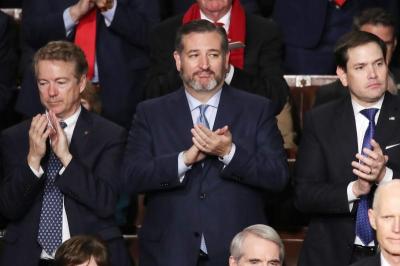
A bipartisan group of US senators has introduced a bill to enhance cooperation with Taiwan on drone development and to reduce reliance on supply chains linked to China. The proposed Blue Skies for Taiwan Act of 2026 was introduced by Republican US senators Ted Cruz and John Curtis, and Democratic US senators Jeff Merkley and Andy Kim. The legislation seeks to ease constraints on Taiwan-US cooperation in uncrewed aerial systems (UAS), including dependence on China-sourced components, limited access to capital and regulatory barriers under US export controls, a news release issued by Cruz on Wednesday said. The bill would establish a "Blue UAS

The Ministry of Foreign Affairs (MOFA) is suspending retaliation measures against South Korea that were set to take effect tomorrow, after Seoul said it is updating its e-arrival system, MOFA said today. The measures were to be a new round of retaliation after Taiwan on March 1 changed South Korea's designation on government-issued alien resident certificates held by South Korean nationals to "South Korea” from the "Republic of Korea," the country’s official name. The move came after months of protests to Seoul over its listing of Taiwan as "China (Taiwan)" in dropdown menus on its new online immigration entry system. MOFA last week


 RSS
RSS