


The Ministry of Transportation and Communications should make it mandatory for pilots and flight attendants, as well as their family members, to be vaccinated in view of a cluster of COVID-19 cases at the Novotel Taipei Taoyuan International Airport hotel, lawmakers said at a meeting of the legislature’s Transportation Committee yesterday.
The cluster infection at the hotel had led to 28 confirmed COVID-19 cases as of Tuesday, including hotel workers, as well as China Airlines flight and cabin crew, and their family members.
The Central Epidemic Command Center (CECC) yesterday tightened quarantine requirements for pilots and flight attendants, who must quarantine for five days and observe self-health management guidelines for another nine days.
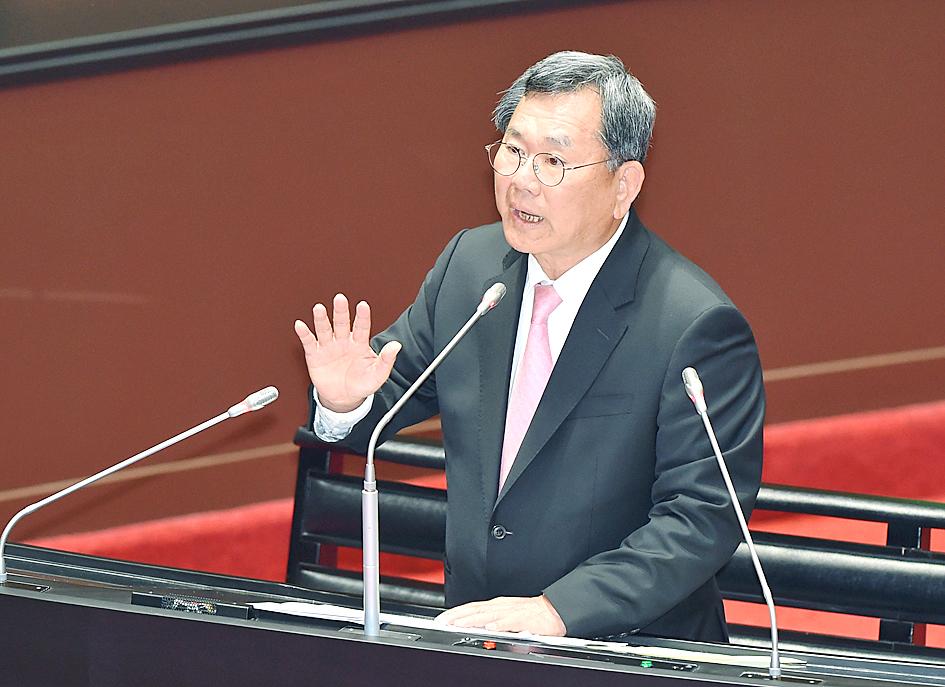
Photo: Liao Chen-huei, Taipei Times
Prior to the announcement, flight and cabin crew were required to quarantine for three days and follow self-health management guidelines for another 11 days.
The outbreak at the hotel was the focus of the committee, which had met to unfreeze part of the ministry’s budget.
Many countries have required flight and cabin crew, border control workers, as well as their family members, to be vaccinated, because they are more likely to be exposed to people infected with COVID-19 than doctors at hospitals, Democratic Progressive Party Legislator Lin Chun-hsien (林俊憲) said.
“Now we have a loophole in the disease prevention system. The government should make vaccination mandatory for airline employees and border control workers. Those working in transit hotels and quarantine hotels should also be vaccinated,” he said.
The ministry should make the recommendation when meeting with CECC officials, particularly now that vaccines are available, Lin added.
Wang said that he agreed with the proposal and would ask the Civil Aeronautics Administration (CAA) to study it, but added that the center would have the final say on the matter.
Democratic Progressive Party (DPP) Legislator Chen Ming-wen (陳明文) said the government should take responsibility for the COVID-19 outbreak at the hotel, as the cases have caused panic and pushed the nation to the brink of community infection.
As Minister of Health and Welfare Chen Shih-chung (陳時中), who heads the CECC, had said that vaccination is the best way to prevent the spread of the coronavirus at this stage, the ministry should ask pilots at China Airlines and other carries to be vaccinated, Chen Ming-wen said.
In addition to airline workers, railway and highway bus workers should be vaccinated as well, he added.
About 27 percent of 1,279 China Airlines pilots have been vaccinated, CAA data showed.
More than 400 people have been quarantined due to the cluster infection at the hotel, it said.
Apart from accommodating pilots and flight attendants, the hotel also reportedly accommodated domestic tourists.
Wang told Chinese Nationalist Party (KMT) Legislator Hung Mong-kai (洪孟楷) that the government must strike a balance between the need to continue economic activities and containing the disease when setting quarantine requirement for flight and cabin crew.
However, what happened at the hotel is a special situation, Wang added.
“As an international tourism hotel, Novotel is regulated by the Tourism Bureau. The hotel’s Hall 2 was used as a quarantine hotel to accommodate foreign pilots in transit, and the service was overseen by the Taoyuan City Government,” he said.
“The hotel’s Hall 1, on the other hand, was for China Airlines flight and cabin crew who needed to fulfill the quarantine requirement. The flight and cabin crew are managed by the CAA,” Wang said.
“We will examine if guests in Hall 1 and Hall 2 share elevators and dining areas, and whether that needs to change,” he added.
Nearly 1,300 EVA Airways pilots and flight attendants had been vaccinated as of yesterday, the airline told the Taipei Times.

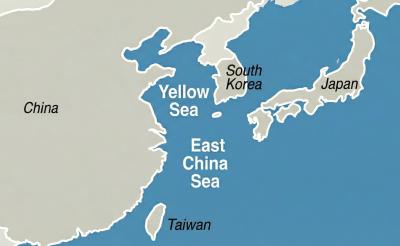
China has reserved offshore airspace in the Yellow Sea and East China Sea from March 27 to May 6, issuing alerts usually used to warn of military exercises, although no such exercises have been announced, the Wall Street Journal (WSJ) reported yesterday. Reserving such a large area for 40 days without explanation is an “unusual step,” as military exercises normally only last a few days, the paper said. These alerts, known as Notice to Air Missions (Notams), “are intended to inform pilots and aviation authorities of temporary airspace hazards or restrictions,” the article said. The airspace reserved in the alert is

South Korea is planning to revise its controversial electronic arrival card, a step Taiwanese officials said prompted them to hold off on planned retaliatory measures, a South Korean media report said yesterday. A Yonhap News Agency report said that the South Korean Ministry of Foreign Affairs is planning to remove the “previous departure place” and “next destination” fields from its e-arrival card system. The plan, reached after interagency consultations, is under review and aims to simplify entry procedures and align the electronic form with the paper version, a South Korean ministry official said. The fields — which appeared only on the electronic form

A bipartisan group of US senators has introduced a bill to enhance cooperation with Taiwan on drone development and to reduce reliance on supply chains linked to China. The proposed Blue Skies for Taiwan Act of 2026 was introduced by Republican US senators Ted Cruz and John Curtis, and Democratic US senators Jeff Merkley and Andy Kim. The legislation seeks to ease constraints on Taiwan-US cooperation in uncrewed aerial systems (UAS), including dependence on China-sourced components, limited access to capital and regulatory barriers under US export controls, a news release issued by Cruz on Wednesday said. The bill would establish a "Blue UAS
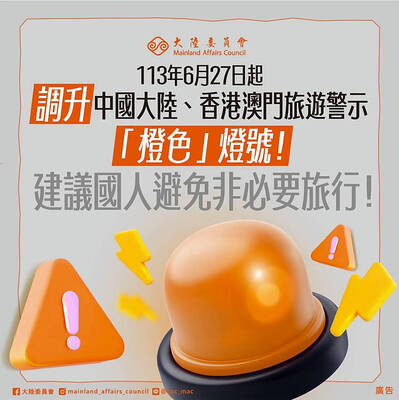
More than 6,000 Taiwanese students have participated in exchange programs in China over the past two years, despite the Mainland Affairs Council’s (MAC) “orange light” travel advisory, government records showed. The MAC’s publicly available registry showed that Taiwanese college and university students who went on exchange programs across the Strait numbered 3,592 and 2,966 people respectively. The National Immigration Agency data revealed that 2,296 and 2,551 Chinese students visited Taiwan for study in the same two years. A review of the Web sites of publicly-run universities and colleges showed that Taiwanese higher education institutions continued to recruit students for Chinese educational programs without


 RSS
RSS