


Taipei police on Wednesday last week made arrests linked to a drug ring in New Taipei City, the Taipei City Police Department said yesterday.
Thirteen people, six Taiwanese and seven foreigners, were detained, the department said.
The operation for more than a year sold heroin, amphetamines and other drugs to Indonesian migrant workers in New Taipei City’s Sinjhuang (新莊) and Shulin (樹林) districts, Criminal Investigation Division senior officer Tseng Yi-chun (曾逸群) said.
Police identified a 35-year-old Indonesian known as Susanti and her 27-year-old boyfriend surnamed Chen (陳) as the main figures in the operation, Tseng said.
To expand its customer base, the suspects initially provided narcotics to migrant workers for free, telling them that the substances would boost their energy levels or help them lose weight, Tseng said.
Once they became addicted, the suspects would charge high prices, he said.
If they could not afford the drugs, the suspects would make them deliver drugs in lieu of payment, he said.
Susanti came to Taiwan as a domestic worker three years ago, but ran away from her official place of employment after just three months, Tseng said.
She started the drugs operation with her boyfriend, Tseng said.
Raids were conducted after the National Immigration Agency was alerted to images of migrant workers taking drugs posted on Facebook, Tseng said.
The 13 suspects have been charged over breaches of the Narcotics Hazard Prevention Act (毒品危害防制條例), while an investigation is ongoing to determine the source of the drugs and possible involvement of others associated with the couple, he said.

UNREASONABLE SURVEILLANCE: A camera targeted on an road by a neighbor captured a man’s habitual unsignaled turn into home, netting him dozens of tickets The Taichung High Administrative Court has canceled all 45 tickets given to a man for failing to use a turn signal while driving, as it considered long-term surveillance of his privacy more problematic than the traffic violations. The man, surnamed Tseng (曾), lives in Changhua County and was reported 45 times within a month for failing to signal while driving when he turned into the alley where his residence is. The reports were filed by his neighbor, who set up security cameras that constantly monitored not only the alley but also the door and yard of Tseng’s house. The surveillance occurred from July

A Japan Self-Defense Forces vessel entered the Taiwan Strait yesterday, Japanese media reported. After passing through the Taiwan Strait, the Ikazuchi was to proceed to the South China Sea to take part in a joint military exercise with the US and the Philippines, the reports said. Japan Self-Defense Force vessels were first reported to have passed through the strait in September, 2024, with two further transits taking place in February and June last year, the Asahi Shimbun reported. Yesterday’s transit also marked the first time since Japanese Prime Minister Sanae Takaichi took office that a Japanese warship has been sent through the Taiwan

‘SAME OLD TRICK’: Even if Beijing resumes individual travel to Taiwan, it would only benefit Chinese tourism companies, the Economic Democracy Union convener said China’s 10 new “incentives” are “sugar-coated poison,” an official said yesterday, adding that Taiwanese businesses see them clearly for what they are, but that Beijing would inevitably find some local collaborators to try to drums up support. The official, speaking on condition of anonymity, made the remark ahead of a news conference the General Chamber of Commerce is to hold today. The event, titled “Industry Perspectives on China’s Recent Pro-Taiwan Policies,” is expected to include representatives from industry associations — such as those in travel, hotels, food and agriculture — to request the government cooperate with China’s new measures, people familiar with
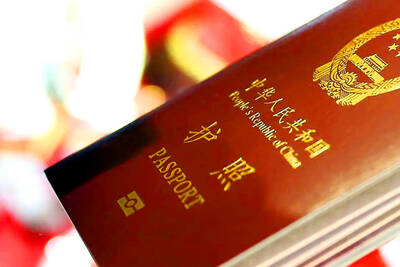
ANOTHER OPTION: The 13-year-old, whose residency status was revoked for holding a Chinese passport, could still apply for residency on humanitarian grounds, the government said The Executive Yuan has rejected an appeal from a 13-year-old Chinese student surnamed Lu (陸), whose permanent residency was revoked after immigration officers discovered he held a Chinese passport. Lu in December 2023 applied to settle in Taiwan to be with his mother, surnamed Lin (林), who is a Taiwan resident, an appeal decision released this month by the Executive Yuan showed. Lin settled in Taiwan after marrying a Taiwanese man in 2003, but the two divorced in 2011, and after marrying a Chinese man, she had Lu, the Executive Yuan’s appeals committee said. Lu’s application was approved in December 2024, and in


 RSS
RSS