


Since the COVID-19 outbreak began more than a year ago, Taiwanese consumers have developed a penchant for sanitation products and cosmetics that has led to unexpected opportunities for some businesses, retail sources said.
During the pandemic, consumers have been buying larger amounts of cleaning supplies, such as medical-grade alcohol, antibacterial soap, disinfectant sprays, wet wipes and hypochlorous acid cleaning solution, a Watson’s Personal Care Stores official said.
Demand for these items grew several times and shortages of 75 percent alcohol solution were particularly acute until Watsons took measures to maintain adequate supplies, the official said.
A Pxmart spokesperson said sales of bleach, liquid and bar soap, and alcohol hand wipes remained high, while a Carrefour spokesperson said sales of washers that utilize steam or hot water for better sanitization had gone up during the pandemic.
A spokesperson for smartphone manufacturer Xiaomi Corp said that sales of its previously unsuccessful automatic soap dispenser had increased since the virus’ outbreak.
Meanwhile, the requirement to wear masks in public has seemingly led to an increased interest in eye makeup.
Online retailer Momo.com said that sales of eye makeup had nearly doubled last year, with eye shadow palettes being the most popular.
Drug chain Cosmed said that sales of waterproof mascara, eyeliner and eye shadow had surged, claiming the top three spots for its most popular items.
Department store Shin Kong Mitsukoshi said that consumers have become more interested in skincare products that protect the skin against irritation and allergies, which might be caused by prolonged mask wearing.
Ointments featuring plant extracts that are billed as environmentally friendly and capable of protecting the skin are fast becoming one of the company’s best sellers, while breathable and hydrating foundations are becoming more popular, Shin Kong Mitsukoshi said.
As Taiwanese reduce unnecessary contact with others by cooking at home, supermarkets across the country are reporting rising profits from food sales, including fresh meat, seafood, fruit and vegetables, a source familiar with the industry said.
Sales of canned foods and healthy, organic food products doubled last year, they added.
A trend of exercising at home rather than at gyms has also led to an increase in sales of home exercise equipment, an online survey by Momo.com found.
From February last year to the end of December, sales of home exercise equipment increased 50 percent from the same period a year earlier, the survey showed.
Buyers of home exercise equipment tended to be 30 to 50 years old, and 60 percent of them were women, Momo.com said, adding that they mainly favored abdominal or full-body workout equipment, including ab rollers, treadmills and resistance bands.
Male consumers preferred equipment such as weights, dumbbells and weight training chairs, it said.
HTC Corp has rolled out a series of virtual reality and augmented reality games via the Viveport store.
An HTC spokesperson said that its fitness-centric games have sold well since the COVID-19 outbreak and a new series of games are being planned to help people stay fit amid the pandemic.
Additional reporting by Yang Ya-ming

A group of Taiwanese-American and Tibetan-American students at Harvard University on Saturday disrupted Chinese Ambassador to the US Xie Feng’s (謝鋒) speech at the school, accusing him of being responsible for numerous human rights violations. Four students — two Taiwanese Americans and two from Tibet — held up banners inside a conference hall where Xie was delivering a speech at the opening ceremony of the Harvard Kennedy School China Conference 2024. In a video clip provided by the Coalition of Students Resisting the CCP (Chinese Communist Party), Taiwanese-American Cosette Wu (吳亭樺) and Tibetan-American Tsering Yangchen are seen holding banners that together read:

UNAWARE: Many people sit for long hours every day and eat unhealthy foods, putting them at greater risk of developing one of the ‘three highs,’ an expert said More than 30 percent of adults aged 40 or older who underwent a government-funded health exam were unaware they had at least one of the “three highs” — high blood pressure, high blood lipids or high blood sugar, the Health Promotion Administration (HPA) said yesterday. Among adults aged 40 or older who said they did not have any of the “three highs” before taking the health exam, more than 30 percent were found to have at least one of them, Adult Preventive Health Examination Service data from 2022 showed. People with long-term medical conditions such as hypertension or diabetes usually do not
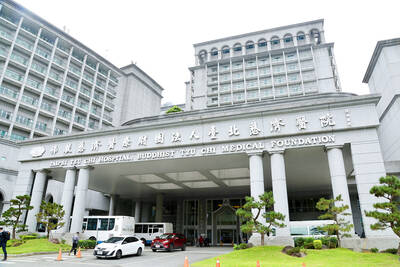
POLICE INVESTIGATING: A man said he quit his job as a nurse at Taipei Tzu Chi Hospital as he had been ‘disgusted’ by the behavior of his colleagues A man yesterday morning wrote online that he had witnessed nurses taking photographs and touching anesthetized patients inappropriately in Taipei Tzu Chi Hospital’s operating theaters. The man surnamed Huang (黃) wrote on the Professional Technology Temple bulletin board that during his six-month stint as a nurse at the hospital, he had seen nurses taking pictures of patients, including of their private parts, after they were anesthetized. Some nurses had also touched patients inappropriately and children were among those photographed, he said. Huang said this “disgusted” him “so much” that “he felt the need to reveal these unethical acts in the operating theater
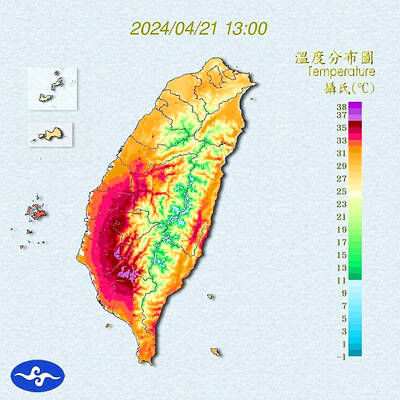
Heat advisories were in effect for nine administrative regions yesterday afternoon as warm southwesterly winds pushed temperatures above 38°C in parts of southern Taiwan, the Central Weather Administration (CWA) said. As of 3:30pm yesterday, Tainan’s Yujing District (玉井) had recorded the day’s highest temperature of 39.7°C, though the measurement will not be included in Taiwan’s official heat records since Yujing is an automatic rather than manually operated weather station, the CWA said. Highs recorded in other areas were 38.7°C in Kaohsiung’s Neimen District (內門), 38.2°C in Chiayi City and 38.1°C in Pingtung’s Sandimen Township (三地門), CWA data showed. The spell of scorching


 RSS
RSS