


The Taipei District Court on Friday ordered that PJ Asset Management CEO Daniel Tarng (唐楚烈) and three others be detained with restricted communication as part of a growing investigation into the alleged bribery of a Ministry of Labor funds manager in a stock manipulation scheme.
The court approved a request by the Taipei District Prosecutors’ Office to detain Tarng and PJ Asset Management executive Chiu Yu-yuan (邱裕元), as well as Fuh Hwa Securities Investment Trust Co chief investment officer John Chiu (邱明強) and Fuh Hwa asset manager Marco Liu (劉建賢), for suspected breaches of the Securities and Exchange Act (證券交易法).
In April last year, Tarng and Chiu purchased a large number of shares in Far Eastern Group, which they planned to sell off between April and July, prosecutors said.
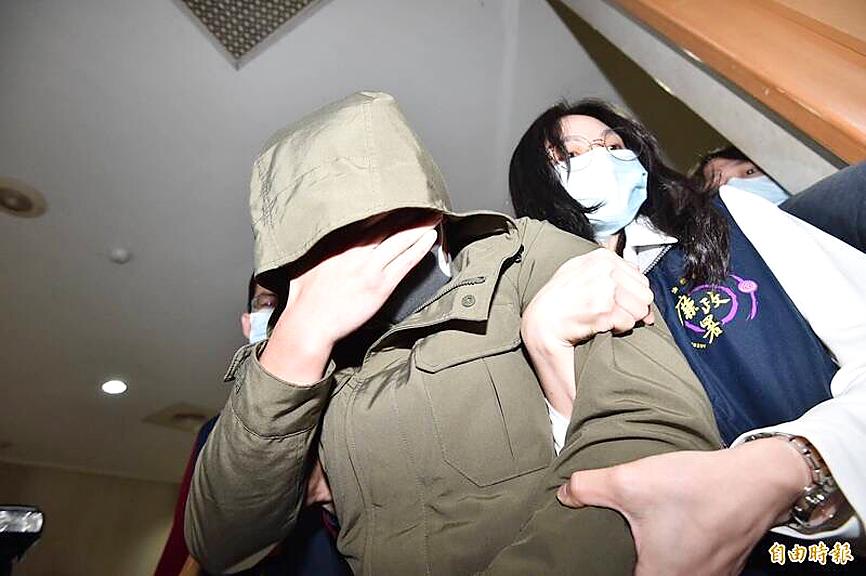
Photo: Tu Chien-jung, Taipei Times
When the stock price failed to rise as anticipated, the suspects allegedly asked Yu Nai-wen (游迺文), head of the Domestic Investment Division of the ministry’s Bureau of Labor Funds, to use the government fund to help them unload their stocks.
In a July meeting with PJ Asset Management and Fuh Hwa executives at a restaurant in Taipei, Yu agreed to purchase the stocks at artificially high prices using money from the labor fund, the prosecutors said.
Yu, who was allegedly paid bribes to purchase more than 400,000 shares through the scheme, came under suspicion during a routine audit of the fund, they said.
Prosecutors later found that between July 27 and Sept. 8, Yu deposited sums ranging from NT$30,000 to NT$100,000 (US$1,055 to US$3,516 at the current exchange rate) in his bank account, the prosecutors added.
A probe of Yu’s financial accounts from September 2012 to September this year showed multiple irregularities, including credit card spending that vastly exceeded his monthly salary and a one-time deposit of more than NT$9 million from an unidentified source, they said.
All of this led to the suspicion that he was taking bribes in exchange for manipulating the prices of selected stocks on the local bourse.
Yu was on Sept. 18 removed from his post, pending an investigation. On Nov. 27, he was detained and held with restricted communication.
Prosecutors have expanded the scope of the investigation, raiding the residences of Tarng and John Chiu, and summoning all four suspects for questioning on Thursday.
On Friday, the four were detained for suspected breaches of the Anti-Corruption Act (貪污治罪條例) by bribing a public official, and breaches of the Securities and Exchange Act by conspiring to manipulate stock prices.
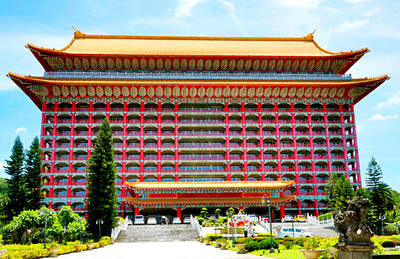
The Grand Hotel Taipei on Saturday confirmed that its information system had been illegally accessed and expressed its deepest apologies for the concern it has caused its customers, adding that the issue is being investigated by the Ministry of Justice Investigation Bureau. The hotel said that on Tuesday last week, it had discovered an external illegal intrusion into its information system. An initial digital forensic investigation confirmed that parts of the system had been accessed, it said, adding that the possibility that some customer data were stolen and leaked could not be ruled out. The actual scope and content of the affected data

DO THEY BITE IT? Cats have better memories than people might think, but their motivation is based entirely around the chance of getting fed Cats can remember the identity of the people who fed them the day before, Taipei-based veterinarians said on Friday, debunking a popular myth that cats have a short memory. If a stray does not recognize the person who fed them the previous day, it is likely because they are not carrying food and the cat has no reason to recognize them, said Wu Chou Animal Hospital head Chen Chen-huan (陳震寰). “When cats come to a human bearing food, it is coming for the food, not the person,” he said. “The food is the key.” Since the cat’s attention is on the food, it

A New York-based NGO has launched a global initiative to rename the nation’s overseas missions, most of which operate under the name "Taipei," to "Taiwan Representative Office (TRO)," according to a news release. Ming Chiang (江明信), CEO of Hello Taiwan, announced the campaign at a news conference in Berlin on Monday, coinciding with the World Forum held from Monday through Wednesday, the institution stated in the release. Speaking at the event, Democratic Progressive Party Legislator Huang Jie (黃捷) said she believed this renaming campaign would enable the international community to see Taiwan
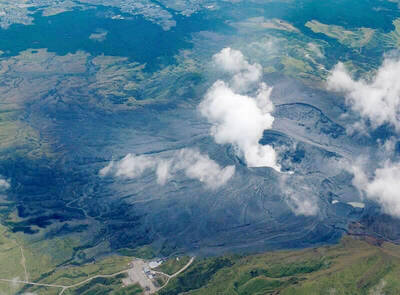
TOO DANGEROUS: The families agreed to suspend crewed recovery efforts that could put rescuers in danger from volcanic gases and unstable terrain The bodies of two Taiwanese tourists and a Japanese pilot have been located inside a volcanic crater, Japanese authorities said yesterday, nearly a month after a sightseeing helicopter crashed during a flight over southwestern Japan. Drone footage taken at the site showed three bodies near the wreckage of the aircraft inside a crater on Mount Aso in Kumamoto Prefecture, police and fire officials said. The helicopter went missing on Jan. 20 and was later found on a steep slope inside the Nakadake No. 1 Crater, about 50m below the rim. Authorities said that conditions at the site made survival highly unlikely, and ruled


 RSS
RSS