


White-label cellphones manufactured in a Chinese factory are believed to contain Trojan software that enables fraudsters to set up mobile game accounts using the owners’ phone numbers, police said on Saturday, with nearly 100 older people affected so far.
After receiving a number of complaints from local branches over the past few months, the National Police Agency launched an investigation into the mobile game points-for-cash scam.
The fraudsters would pose as women online to persuade people to buy game point cards at supermarkets and load the points into accounts created with the cellphone users’ phone numbers before requesting cash refunds from the game company.
The agency said that it traced most of the numbers to low-tech cellphones owned by older people who had never downloaded or even heard of the game.
Investigators then traced the phones to a white-label cellphone factory in China, which they suspect loaded Trojan software onto the devices that were sold in Taiwan with Taiwanese branding, unbeknownst to telecoms.
Investigators believe the fraudsters registered accounts using phone numbers held by people with the modified devices.
Once a confirmation code is sent by text message, the Trojan software would automatically forward it to the fraudster to complete setting up the account.
Most of the game accounts were registered with foreign IP addresses, limiting investigators’ ability to trace them, the agency said.
At this point, the only course of action is to hand over the owners of the phone numbers to prosecutors to determine if any laws were contravened, it added.
The agency said that it has contacted the game company in the hopes of disabling the ability to store points in foreign accounts, while the nation’s telecoms have been instructed to address the issue.
Aside from exercising caution when purchasing Chinese-made mobile phones, the agency offered some tips for avoiding malicious software or similar types of fraud.
If a cellphone user only plans to make and receive calls, the agency recommends contacting their telecom provider to disable text messaging to prevent bad actors from setting up accounts linked to their number.
A compromised phone or computer often displays signs such as increased battery usage or slow functionality, or would show a program that the user did not download, it said, adding that sometimes it disables or uninstalls antivirus software.
In addition, if someone’s device sends out e-mails to their contact list, is unable to download or run applications, displays an abnormal number of pop-ups, suddenly loses signal or cannot make or receive calls or messages, it might have a virus or be otherwise compromised, the agency said.

Eight Chinese naval vessels and 24 military aircraft were detected crossing the median line of the Taiwan Strait between 6am yesterday and 6am today, the Ministry of National Defense said this morning. The aircraft entered Taiwan’s northern, central, southwestern and eastern air defense identification zones, the ministry said. The armed forces responded with mission aircraft, naval vessels and shore-based missile systems to closely monitor the situation, it added. Eight naval vessels, one official ship and 36 aircraft sorties were spotted in total, the ministry said.
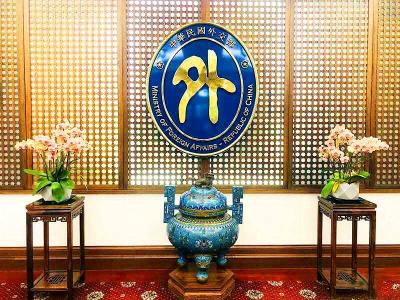
The Ministry of Foreign Affairs (MOFA) today said that if South Korea does not reply appropriately to its request to correct Taiwan’s name on its e-Arrival card system before March 31, it would take corresponding measures to alter how South Korea is labeled on the online Taiwan Arrival Card system. South Korea’s e-Arrival card system lists Taiwan as “China (Taiwan)” in the “point of departure” and “next destination” fields. The ministry said that it changed the nationality for South Koreans on Taiwan’s Alien Resident Certificates from “Korea” to “South Korea” on March 1, in a gesture of goodwill and based on the

Taiwanese officials were shown the first of 66 F-16V fighter jets purchased by Taiwan from the United States, the Ministry of National Defense said yesterday, adding the aircraft has completed an initial flight test and is expected to be delivered later this year. A delegation led by Deputy Minister of National Defense Hsu Szu-chien (徐斯儉) visited Lockheed Martin’s F-16 C/D Block 70 (also known as F-16V) assembly line in South Carolina on March 16 to view the aircraft. The jet will undergo a final acceptance flight in the US before being delivered to Taiwan, the
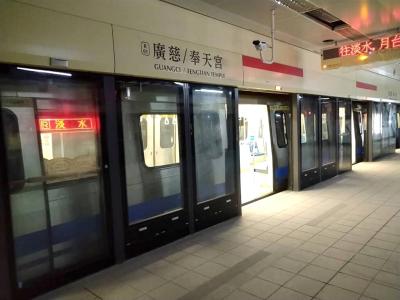
The New Taipei Metro's Sanyin Line and the eastern extension of the Taipei Metro's Tamsui-Xinyi Line (Red Line) are scheduled to begin operations in June, the National Development Council said today. The Red Line, which terminates at Xiangshan Station, would be connected by the 1.4km extension to a new eastern terminal, Guangci/Fengtian Temple Station, while the Sanyin Line would link New Taipei City's Tucheng and Yingge stations via Sanxia District (三峽). The council gave the updates at a council meeting reviewing progress on public construction projects for this year. Taiwan's annual public infrastructure budget would remain at NT$800 billion (US$25.08 billion), with NT$97.3


 RSS
RSS