


Taiwan must enlarge its reserve forces with people with information security skills or begin attracting talent to establish a “civil cyberwarrior” program to help counter Chinese threats online, an academic said.
Tzeng Yi-suo (曾怡碩), an assistant research fellow at the Institute for National Defense and Security Research, suggested the new program in an article titled “Civil Cyber Warriors: A Path that Taiwan Can Take” that was published by the institute on Wednesday.
Reserve forces who specialize in information warfare are not numerous enough, Tzeng said, citing a report by the Legislative Yuan’s Organic Laws and Statutes Bureau that criticized a voluntary short-term recall service program initiated in 2018 for allocating too little funding — NT$650,000 at the time of the report.
The 2018 program is part of the Ministry of National Defense’s effort to reduce standing force upkeep while maintaining a robust reservist force.
Tzeng criticized this year’s recruitment drive, as it only aimed to hire seven people with technical specialty backgrounds.
As the government encourages the development of information security enterprises, Tzeng said that there should be a significant number of individuals with the required backgrounds in the nation who could serve in the reservist force.
Tzeng said that the ministry should also inquire the number of individuals who had no experience or specialization in cyberwarfare when joining the military, but had started jobs related to information security after leaving.
Regarding a ban on travel to China for those who participated in the reservist program — which could decrease their chances of being hired — Tzeng said that the ministry should offer incentives to individuals and companies.
These incentive could include collaborative projects, tax deductions or wage subsidies, Tzeng said.
We must encourage individuals with high-tech backgrounds to participate in military efforts and contribute their knowledge to combating Internet threats from abroad, he added.
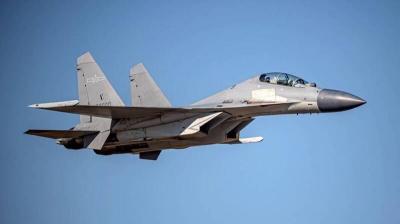
Eight Chinese naval vessels and 24 military aircraft were detected crossing the median line of the Taiwan Strait between 6am yesterday and 6am today, the Ministry of National Defense said this morning. The aircraft entered Taiwan’s northern, central, southwestern and eastern air defense identification zones, the ministry said. The armed forces responded with mission aircraft, naval vessels and shore-based missile systems to closely monitor the situation, it added. Eight naval vessels, one official ship and 36 aircraft sorties were spotted in total, the ministry said.
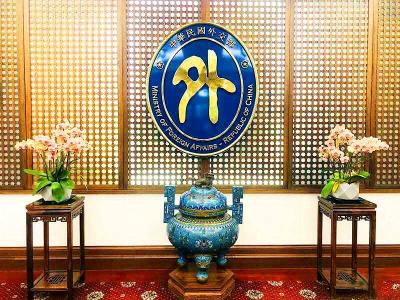
The Ministry of Foreign Affairs (MOFA) today said that if South Korea does not reply appropriately to its request to correct Taiwan’s name on its e-Arrival card system before March 31, it would take corresponding measures to alter how South Korea is labeled on the online Taiwan Arrival Card system. South Korea’s e-Arrival card system lists Taiwan as “China (Taiwan)” in the “point of departure” and “next destination” fields. The ministry said that it changed the nationality for South Koreans on Taiwan’s Alien Resident Certificates from “Korea” to “South Korea” on March 1, in a gesture of goodwill and based on the

Taiwanese officials were shown the first of 66 F-16V fighter jets purchased by Taiwan from the United States, the Ministry of National Defense said yesterday, adding the aircraft has completed an initial flight test and is expected to be delivered later this year. A delegation led by Deputy Minister of National Defense Hsu Szu-chien (徐斯儉) visited Lockheed Martin’s F-16 C/D Block 70 (also known as F-16V) assembly line in South Carolina on March 16 to view the aircraft. The jet will undergo a final acceptance flight in the US before being delivered to Taiwan, the
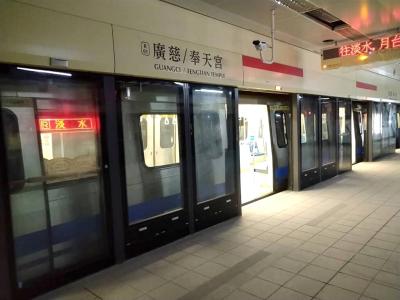
The New Taipei Metro's Sanyin Line and the eastern extension of the Taipei Metro's Tamsui-Xinyi Line (Red Line) are scheduled to begin operations in June, the National Development Council said today. The Red Line, which terminates at Xiangshan Station, would be connected by the 1.4km extension to a new eastern terminal, Guangci/Fengtian Temple Station, while the Sanyin Line would link New Taipei City's Tucheng and Yingge stations via Sanxia District (三峽). The council gave the updates at a council meeting reviewing progress on public construction projects for this year. Taiwan's annual public infrastructure budget would remain at NT$800 billion (US$25.08 billion), with NT$97.3


 RSS
RSS