


China Mengniu Dairy Co (中國蒙牛乳業) scrapped its plans to buy Kirin Holdings Co’s Australian beverage unit after being told that the deal would likely be blocked.
Australian Treasurer Josh Frydenberg said in a statement he had informed the Chinese dairy giant that he had reached a preliminary view that the proposed purchase “would be contrary to the national interest.”
The companies reached a deal last year for the Chinese firm to buy Kirin’s Lion Dairy & Drinks business for about ¥45.6 billion (US$430 million).
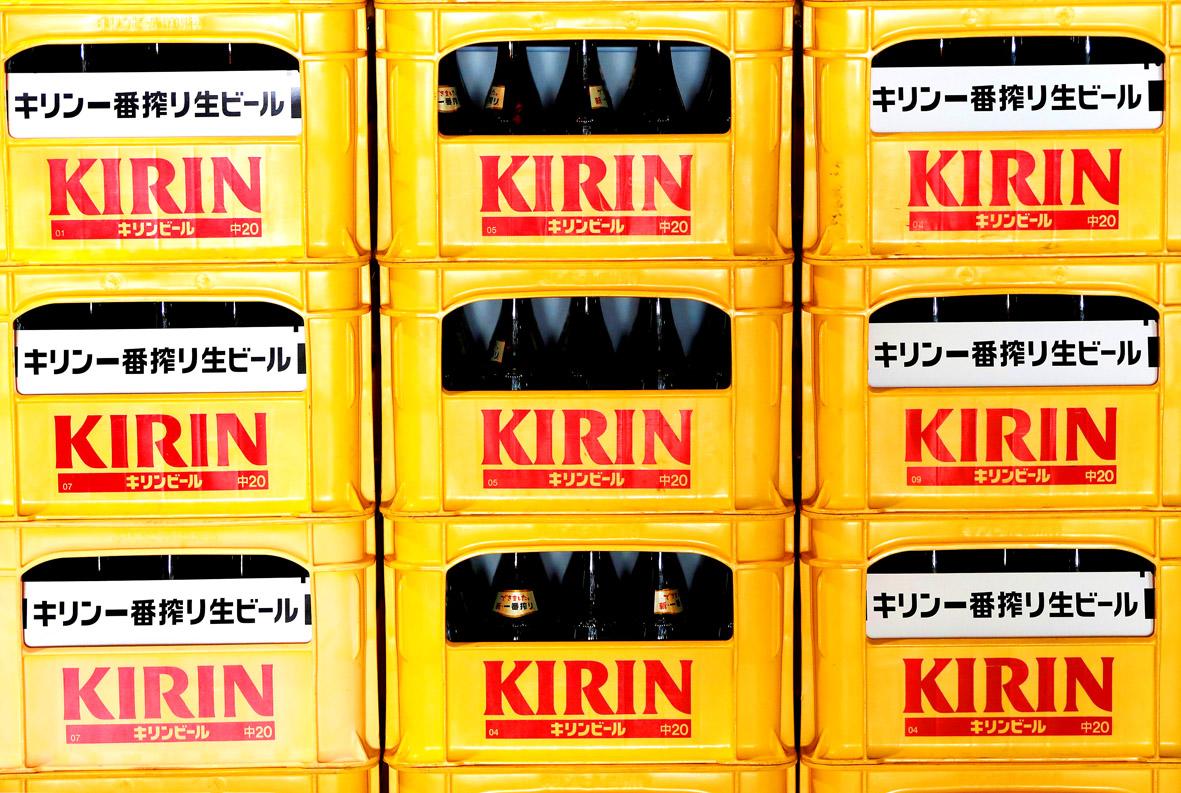
Photo: Reuters
The companies said in separate statements yesterday that they were ending the agreement, as it had not received regulatory approval.
The scrapped deal is being viewed in local media through the prism of strained diplomatic ties between Australia and China.
Relations between the two countries have been fraught since Canberra barred Huawei Technologies Co (華為) from participating in Australia’s 5G network.
China also expressed displeasure after Australia’s push for an independent inquiry into the origins of the COVID-19 pandemic.
China has started an investigation over accusations of dumping of Australian wine, halted some beef imports and placed tariffs on Australia’s barley exports after the conclusion of an earlier anti-dumping probe.
It has also cautioned its citizens against studying in or holidaying in Australia.
“It was probably politically untenable for Frydenberg to approve a deal of this size at a time when China is sanctioning Australia on multiple fronts,” said Richard McGregor, a senior fellow at Sydney-based think tank the Lowy Institute.
“It’s another spin in the cycle downwards in these nations’ relations,” McGregor said.
The collapse of the Kirin deal shows a reversal of sentiment from a year ago, when Mengniu won approval to buy organic infant formula maker Bellamy’s Australia Ltd for A$1.5 billion (US$1.1 billion).
The Australian Competition & Consumer Commission in February said that it was not opposed to the Kirin deal.
Australia on March 29 announced that due to the national security impacts of the pandemic, it would tighten restrictions on foreign takeovers, with all deals needing government approval, regardless of size.
On June 5, the government of Australian Prime Minister Scott Morrison announced that it would seek to implement permanent tougher screening measures on foreign investors seeking to buy sensitive assets from Jan. 1 next year.
Yet to be legislated, the changes would see telecommunications, energy, technology and defense-manufacturing companies be included in the zero-dollar threshold for screening.
The changes would include a new national security test and give the treasurer last-resort powers to force asset sales.
Mengniu said it was disappointed that the transaction could not be completed, as the Lion business created potential to build up its dairy supply chain in Oceania and Southeast Asia.
The company’s shares fell as much as 2.2 percent in Hong Kong trading yesterday.
“Mengniu has a stable dairy supply chain in Australia and New Zealand, and will continue to pursue its international strategy and take advantage of the existing resources in both domestic and international markets,” the company said in a statement.
Kirin shares yesterday slipped as much as 0.9 percent in Tokyo.
“Although this was an unfortunate outcome, we’ll continue to discuss the best potential scenario for Lion,” a Kirin spokesman said.
McGregor said that the development “signals to China that any substantial investment in Australia will come under increased scrutiny and be seen in the context of the tensions in the bilateral relationship.”
“China will probably see this as another example of Australia’s bad faith,” he said.

Cairo’s new monorail slices across the city skyline, running above the familiar chaos of blaring horns and aging buses’ exhaust fumes that mark rush hour below. The US$4.5 billion monorail, opened this month, is among Egypt’s most prominent new transport projects, part of a debt-funded infrastructure drive criticized for sapping state finances while bringing limited benefits to most of the country’s 109 million people. “It feels like you’re in a different country,” said Ramy Sayed, a restaurant manager, aboard a driverless Innovia 300 train. “No noise, no traffic, we’re not used to this.” The eastern line runs 56km from the bustling middle-class

Taiwanese firms have increased investment in the Philippines in recent years as Manila’s ties with Washington deepen and global supply chains continue to shift away from China, an expert at the Chung-Hua Institution for Economic Research (CIER, 中華經濟研究院) said yesterday. The Philippines had not been among Taiwanese investors’ top choices in Southeast Asia, CIER Taiwan ASEAN Studies Center director Kristy Hsu (徐遵慈) said at a seminar in Taipei. However, Taiwan’s investment in the country has grown significantly since the COVID-19 pandemic, reaching US $257 million last year, a high in recent years, she said. Although Taiwan’s total investment in the Philippines still lags

Intel Corp regards Taiwan Semiconductor Manufacturing Co (TSMC, 台積電) as a longstanding partner, as the US chipmaker would continue outsourcing production of advanced chips to TSMC, Intel chief executive officer Lip-Bu Tan (陳立武) said yesterday. “I don’t look at people as competitors. I look at the collaboration... Nvidia is also, you know, a good friend,” Tan told a news conference following his keynote speech at the Computex trade show in Taipei. “It’s a very trusted partnership for us... We are a big, top customer for them, and we’re going to continue doing that,” he said, referring to TSMC, the world’s largest foundry

Artificial intelligence (AI) agents would supplant smartphones as the center of people’s digital lives, fundamentally reshaping personal devices and driving a major computing upgrade cycle, Qualcomm Inc CEO Cristiano Amon said yesterday. In his keynote speech for this year’s Computex trade show in Taipei, Amon said that the rise of "agentic AI" — AI systems capable of reasoning, planning and carrying out tasks autonomously — would transform how people interact with technology across phones, PCs, vehicles and wearable devices. Describing the technology as the next major evolution in computing, Amon said that "2026 is the year of agents.” For decades, smartphones have sat


 RSS
RSS