


Government agencies across the nation yesterday flew the national flag at half-mast to mourn the passing of former president Lee Teng-hui (李登輝), who died on Thursday aged 97.
A memorial is to be open to the public daily from 10am to 5pm at the Taipei Guest House from today to Aug. 16 so that people can pay their respects to Lee, Presidential Office spokesman Alex Huang (黃重諺) said, adding that materials documenting Lee’s contributions to Taiwan and some of his more memorable speeches are to be displayed.
The arrangements for the memorial were decided at an intergovernmental meeting attended by Lee’s two daughters earlier yesterday, Huang said.
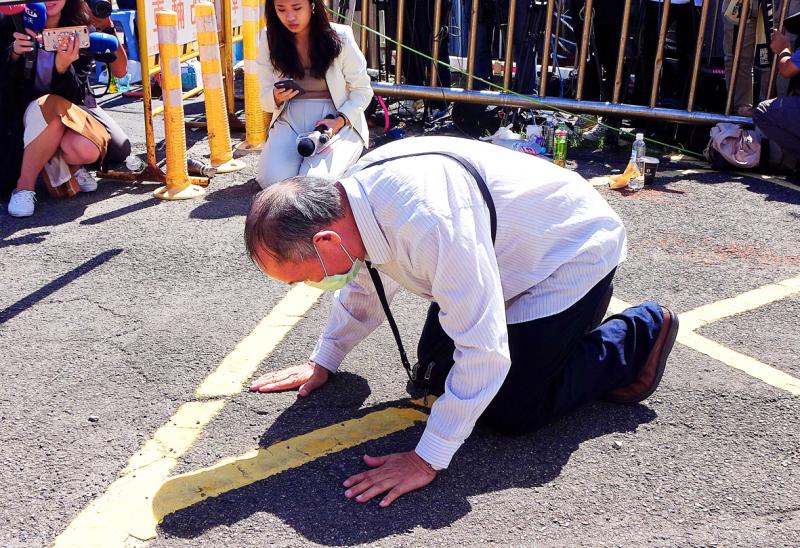
Photo: Liao Chen-huei, Taipei Times
Lee would have wanted to “break away from the old and reform the new,” the daughters told the meeting.
Lee’s family said that people were welcome to visit and mourn the former president, but asked that they not lay wreaths or baskets, he said.
For Lee’s overseas friends who cannot mourn him in person due to the COVID-19 pandemic, signature books would be available at the nation’s embassies and overseas offices for them to sign, Huang said.
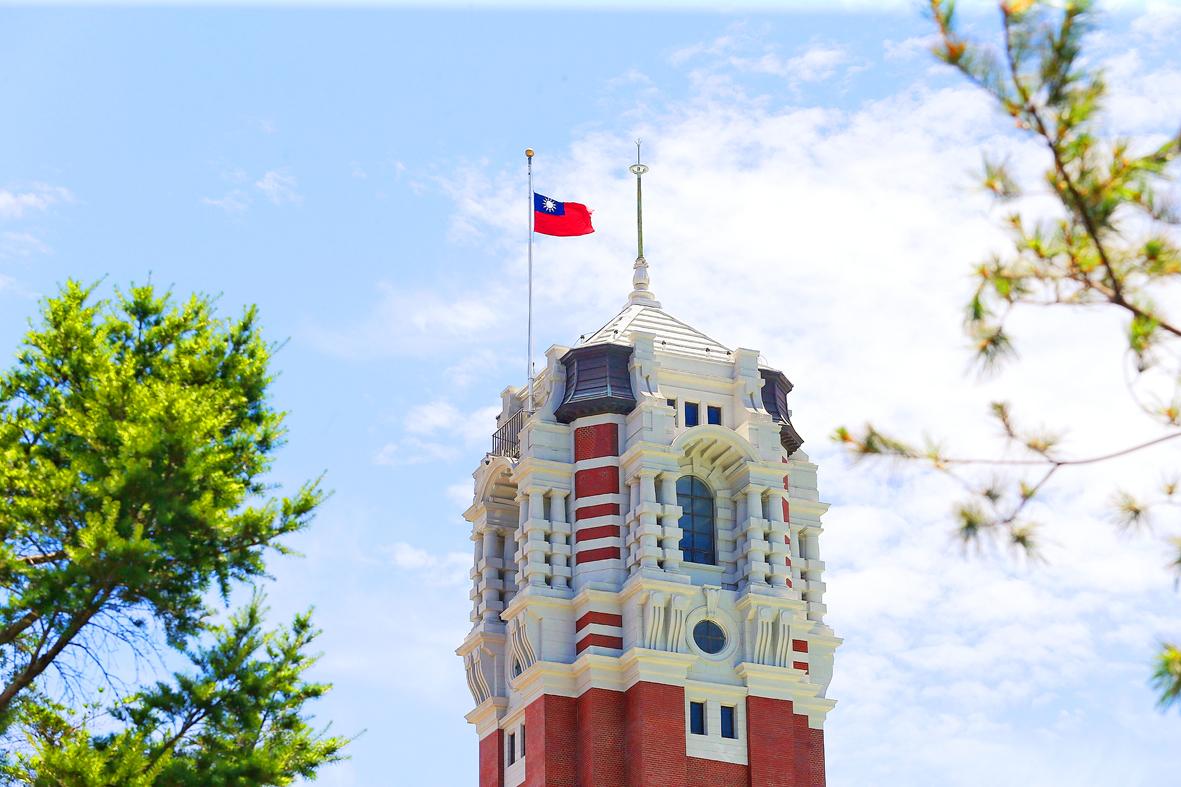
Photo: CNA
Lee is likely to be buried at Wujhih Mountain Public Military Cemetery in New Taipei City’s Sijhih District (汐止), a source with knowledge of the matter said, after his family said that they would respect the government’s arrangements for his funeral.
President Tsai Ing-wen (蔡英文) in a statement yesterday said that as president, Lee started a “silent revolution,” which weathered the crossfire of liberal and conservative forces, resolutely leading the nation toward democracy.
She was referring to the democratization movement that began in the late 1980s, including six amendments to the Constitution, which saw the end of the Period of National Mobilization Against Communist Rebellion, the re-election of members of the now-defunct National Assembly, the direct election of the president and vice president, the direct election of lawmakers, and the abolition of Article 100 of the Criminal Code, which allowed the government to quash dissent by indicting people for “having the intention” to commit the crime of subversion of state power.
Although Lee has left this world, he has left Taiwan with freedom and democracy, which would continue to guide Taiwanese in their pursuit of happiness for generations to come, Tsai said.
Vice President William Lai (賴清德) in a statement remembered Lee as a “warm man, who was a teacher and a friend.”
The silent revolution that Lee started led the nation through the most critical chapter of its democratization in a nonviolent manner, he said.
In 2000, Lee and former president Chen Shui-bian (陳水扁) achieved the nation’s first peaceful transition of power, which ushered in a new era for Taiwanese democracy, he added.
Chen yesterday said that he had suffered a sleepless night after learning of Lee’s death.
“Lee was like the old captain of a democratic ship called ‘Taiwan.’ Now that he is gone, Taiwan’s future requires everybody to unite to move forward,” Chen said. “Although Lee has physically left us, his aspirations for Taiwan will never die, but be forever in our hearts.”
Former president Ma Ying-jeou (馬英九) in a statement commended Lee’s efforts to democratize the nation, among other contributions, but said that Lee’s political views “underwent a drastic change” after he stepped down as president.
History would form an objective opinion of Lee’s life, Ma said.
Lee and Ma were estranged when Ma in 2000 joined a demonstration by KMT members outside the official residence of the president in Taipei, calling on Lee to resign as KMT chairman after the party’s presidential candidate, Lien Chan (連戰), lost the election that year.
After a brief reconciliation in 2010 when then-president Ma visited Lee at his home, the two fell out again when Ma in 2015 criticized Lee’s stance on Taiwan’s role during World War II and the sovereignty of the Diaoyutai Islands (釣魚台).
KMT Chairman Johnny Chiang (江啟臣) said that a person plays different roles in different stages of their life, which is bound to invite different opinions, but that Lee’s efforts to democratize the nation, as well his work as chairman of the KMT, had a profound impact on the nation and he hoped that Lee would rest in peace.
Additional reporting by Wang Chu-hsiu
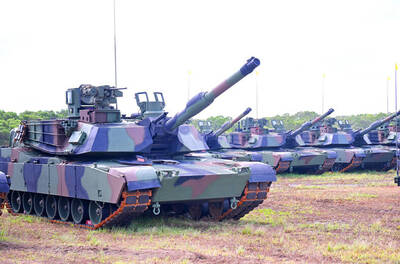
The manufacture of the remaining 28 M1A2T Abrams tanks Taiwan purchased from the US has recently been completed, and they are expected to be delivered within the next one to two months, a source said yesterday. The Ministry of National Defense is arranging cargo ships to transport the tanks to Taiwan as soon as possible, said the source, who is familiar with the matter. The estimated arrival time ranges from late this month to early next month, the source said. The 28 Abrams tanks make up the third and final batch of a total of 108 tanks, valued at about NT$40.5 billion
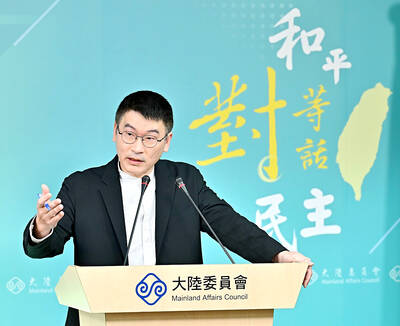
Two Taiwanese prosecutors were questioned by Chinese security personnel at their hotel during a trip to China’s Henan Province this month, the Mainland Affairs Council (MAC) said yesterday. The officers had personal information on the prosecutors, including “when they were assigned to their posts, their work locations and job titles,” MAC Deputy Minister and spokesman Liang Wen-chieh (梁文傑) said. On top of asking about their agencies and positions, the officers also questioned the prosecutors about the Cross-Strait Joint Crime-Fighting and Judicial Mutual Assistance Agreement, a pact that serves as the framework for Taiwan-China cooperation on combating crime and providing judicial assistance, Liang
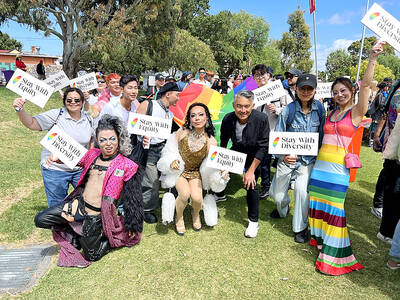
A group from the Taiwanese Designers in Australia association yesterday represented Taiwan at the Midsumma Pride March in Melbourne. The march, held in the St. Kilda suburb, is the city’s largest LGBTQIA+ parade and the flagship event of the annual Midsumma Festival. It attracted more than 45,000 spectators who supported the 400 groups and 10,000 marchers that participated this year, the association said. Taiwanese Designers said they organized a team to march for Taiwan this year, joining politicians, government agencies, professionals and community organizations in showing support for LGBTQIA+ people and diverse communities. As the first country in Asia to legalize same-sex
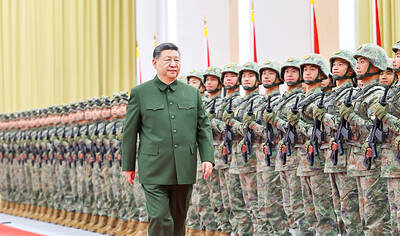
MOTIVES QUESTIONED The PLA considers Xi’s policies toward Taiwan to be driven by personal considerations rather than military assessment, the Epoch Times reports Chinese President Xi Jinping’s (習近平) latest purge of the Chinese People’s Liberation Army (PLA) leadership might have been prompted by the military’s opposition to plans of invading Taiwan, the Epoch Times said. The Chinese military opposes waging war against Taiwan by a large consensus, putting it at odds with Xi’s vision, the Falun Gong-affiliated daily said in a report on Thursday, citing anonymous sources with insight into the PLA’s inner workings. The opposition is not the opinion of a few generals, but a widely shared view among the PLA cadre, the Epoch Times cited them as saying. “Chinese forces know full well that


 RSS
RSS