


A former top disease control official has urged the government to issue emergency use authorizations (EUAs) to speed up the development of COVID-19 vaccine candidates, saying that plans to hold clinical trials before the end of the year are “simply too slow.”
Taiwan needs to take steps to accelerate the domestic development of a vaccine, because it might not have immediate access when one is discovered abroad, given the intensity of global demand, said Su Ih-jen (蘇益仁), former Centers for Disease Control director.
More than 100 COVID-19 vaccine candidates are in development worldwide, 18 of which have entered human trials as of July 2, according to the WHO.
The US, Europe and China are making the fastest progress and have said a vaccine could reach the market by the end of the year.
In Taiwan, only two firms have submitted applications for clinical trials, while a third is expected to do so this month, the Central Epidemic Command Center said.
The National Health Research Institutes (NHRI) said that it hopes to have a vaccine candidate enter clinical trials by late this year.
Su said that Taiwan should follow the US and European countries and expedite vaccine development by issuing emergency authorizations, which shorten the regulatory approval process or allow human trials to proceeds while an application is under review.
Governments in the US and Europe are working as partners in developing a vaccine, rather than solely as regulators, and have been responding quickly to developers’ issues, Su added.
NHRI president Liang Kung-yee (梁賡義) said that the institute is in talks with the Ministry of Health and Welfare and the Taiwan Food and Drug Administration.
They are discussing vaccine authorization guidelines, based on those in the US, which would allow the NHRI to carry out certain regulatory, testing and production procedures concurrently, Liang said.
Under the plan, phase I clinical trials, which involve testing a drug on a small number of healthy volunteers, could be held simultaneously with toxicity testing as early as this month, Liang said.
Phase II testing — for efficacy and side effects — and mass production could also start at the same time, before the end of the year, while phase III testing, which involves larger-scale efficacy tests, could be completed by next April or May, Liang said.
In related news, CECC spokesman Chuang Jen-hsiang (莊人祥) yesterday said that the Filipino woman who tested positive for COVID-19 in Hong Kong after transiting through Taiwan on Friday was probably infected in the Philippines, not in Taiwan.
The woman flew from Manila to Taiwan, then transferred to a flight to Hong Kong, where on Saturday she was confirmed to have contracted COVID-19, Chuang said.
It is “absolutely impossible” for the passenger to have contracted the virus in Taiwan, as she had only spent a few hours at the airport, Chuang said, adding that it is impossible to test positive for COVID-19 hours after exposure to the virus.
Given that she tested positive a day after her arrival in Hong Kong, she was probably infected in the Philippines, he said.
The CECC would wait for Hong Kong to provide relevant information about the passenger, and assess the scope of her interactions with Taiwanese, before deciding how many people should be added to the center’s watch list, he said.
Additional reporting by Lin Hui-chin

Kenting National Park service technician Yang Jien-fon (楊政峰) won a silver award in World Grand Prix Photography Awards Spring Season for his photograph of two male rat snakes intertwined in combat. Yang’s colleagues at Kenting National Park said he is a master of nature photography who has been held back by his job in civil service. The awards accept entries in all four seasons across six categories: architectural and urban photography, black-and-white and fine art photography, commercial and fashion photography, documentary and people photography, nature and experimental photography, and mobile photography. Awards are ranked according to scores and divided into platinum, gold and
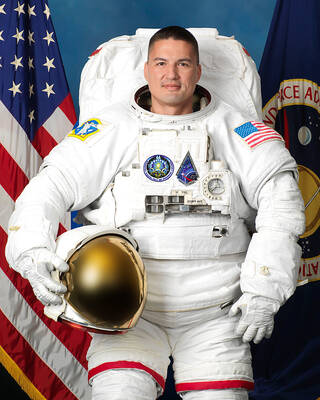
SPACE VETERAN: Kjell N. Lindgren, who helps lead NASA’s human spaceflight missions, has been on two expeditions on the ISS and has spent 311 days in space Taiwan-born US astronaut Kjell N. Lindgren is to visit Taiwan to promote technological partnerships through one of the programs organized by the US for its 250th national anniversary. Lindgren would be in Taiwan from Tuesday to Saturday next week as part of the US Bureau of Educational and Cultural Affairs’ US Speaker Program, organized to celebrate the 250th anniversary of the signing of the Declaration of Independence, the American Institute in Taiwan (AIT) said in a statement yesterday. Lindgren plans to engage with key leaders across the nation “to advance cutting-edge technological partnerships and inspire the next generation of scientists and engineers,”

The Chinese Nationalist Party (KMT) caucus yesterday said it opposes the introduction of migrant workers from India until a mechanism is in place to prevent workers from absconding. Minister of Labor Hung Sun-han (洪申翰) on Thursday told the Legislative Yuan that the first group of migrant workers from India could be introduced as early as this year, as part of a government program. The caucus’ opposition to the policy is based on the assessment that “the risk is too high,” KMT caucus secretary-general Lin Pei-hsiang (林沛祥) said. Taiwan has a serious and long-standing problem of migrant workers absconding from their contracts, indicating that

UNREASONABLE SURVEILLANCE: A camera targeted on an road by a neighbor captured a man’s habitual unsignaled turn into home, netting him dozens of tickets The Taichung High Administrative Court has canceled all 45 tickets given to a man for failing to use a turn signal while driving, as it considered long-term surveillance of his privacy more problematic than the traffic violations. The man, surnamed Tseng (曾), lives in Changhua County and was reported 45 times within a month for failing to signal while driving when he turned into the alley where his residence is. The reports were filed by his neighbor, who set up security cameras that constantly monitored not only the alley but also the door and yard of Tseng’s house. The surveillance occurred from July


 RSS
RSS