


The government should step up alcohol education and prevention efforts, and allocate more of the budget to it, doctors said on Friday, citing the high consumption of alcohol among Taiwanese adolescents.
One out of four 12-to-17-year-olds has consumed alcohol, said Yen Tsung-hai (顏宗海), director of Linkou Chang Gung Memorial Hospital’s Department of Clinical Toxicology.
The Health Promotion Administration (HPA) budgets NT$1.3 billion (US$43.9 million) annually to prevent the health hazards of tobacco, but it has not allocated a separate budget for preventing teenage drinking or excessive alcohol use, Yen said.

Photo: Tsai Tsung-hsien, Taipei Times
“There is no so-called ‘safe drinking level’ for minors,” because any amount consumed hinders their brain development, he said, citing the sensitivity of the hippocampus and the prefrontal lobe to ethanol.
“Ethanol is neurotoxic, and long-term drinkers are prone to liver disease and cirrhosis of the liver, as well as a higher risk of cardiovascular disease,” he added.
Teenagers who have a drinking habit can develop antisocial traits and experience low mood more easily, he said, adding that they also have a higher likelihood of being addicted to alcohol as adults.
Similar to how tobacco products were advertised in the past, commercials present alcoholic beverages as boosting the fun of social gatherings, and this perception of alcohol has contributed to a spike in underage drinking, said Guo Fei-ran (郭斐然), an attending physician in National Taiwan University Hospital’s Department of Family Medicine.
Convenience stores offer alcoholic drinks, including beer, cocktails and flavored alcoholic beverages, in the non-alcoholic drinks section, so young people who might have only wanted a soft drink could be easily tempted, Guo added.
The National Communications Commission from March last year required broadcast media not to show advertisements for alcohol before 9pm, but most teenagers go to bed later than that, he said.
No regulations have been introduced for advertising online when teenagers use the Internet the most, he said, adding that images and information related to alcoholic beverages are everywhere online.
“The loose regulations regarding alcohol are why underage people live in an environment full of alcohol,” he said, urging the government to implement new guidelines for online content showing alcoholic beverages.
Government agencies focus less on alcohol education and prevention for young people than on tobacco and drug prevention, but alcohol consumption is the cause of multiple health and social issues, Yen said.
“Hopefully, the government will add alcohol prevention as an item in its budget next year,” he added.
HPA Tobacco Control Division official Lu Meng-ying (呂孟穎) said that alcohol prevention is promoted through interministerial channels.
For example, police agencies are responsible for drunk driving prevention, while the Ministry of Health and Welfare’s Department of Mental and Oral Health is responsible for treating alcoholism, Lu said.
The HPA bundles alcohol prevention with its tobacco prevention, so the tobacco prevention funding is available to alcohol prevention efforts, typically in the form of special projects, he added.

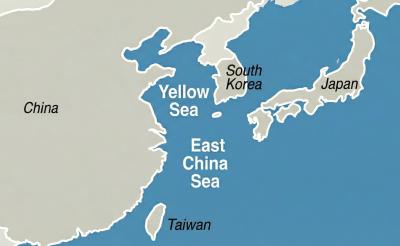
China has reserved offshore airspace in the Yellow Sea and East China Sea from March 27 to May 6, issuing alerts usually used to warn of military exercises, although no such exercises have been announced, the Wall Street Journal (WSJ) reported yesterday. Reserving such a large area for 40 days without explanation is an “unusual step,” as military exercises normally only last a few days, the paper said. These alerts, known as Notice to Air Missions (Notams), “are intended to inform pilots and aviation authorities of temporary airspace hazards or restrictions,” the article said. The airspace reserved in the alert is
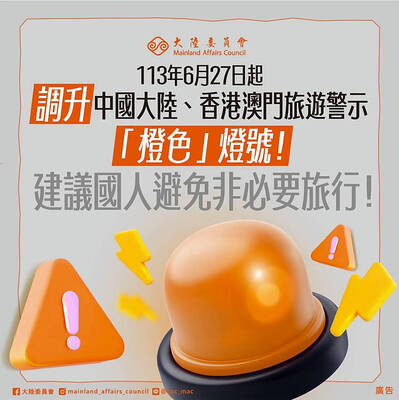
More than 6,000 Taiwanese students have participated in exchange programs in China over the past two years, despite the Mainland Affairs Council’s (MAC) “orange light” travel advisory, government records showed. The MAC’s publicly available registry showed that Taiwanese college and university students who went on exchange programs across the Strait numbered 3,592 and 2,966 people respectively. The National Immigration Agency data revealed that 2,296 and 2,551 Chinese students visited Taiwan for study in the same two years. A review of the Web sites of publicly-run universities and colleges showed that Taiwanese higher education institutions continued to recruit students for Chinese educational programs without
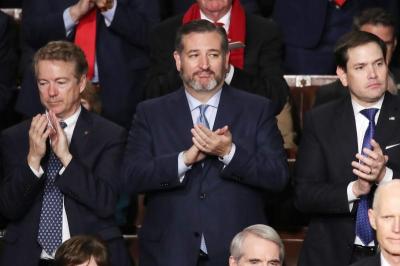
A bipartisan group of US senators has introduced a bill to enhance cooperation with Taiwan on drone development and to reduce reliance on supply chains linked to China. The proposed Blue Skies for Taiwan Act of 2026 was introduced by Republican US senators Ted Cruz and John Curtis, and Democratic US senators Jeff Merkley and Andy Kim. The legislation seeks to ease constraints on Taiwan-US cooperation in uncrewed aerial systems (UAS), including dependence on China-sourced components, limited access to capital and regulatory barriers under US export controls, a news release issued by Cruz on Wednesday said. The bill would establish a "Blue UAS
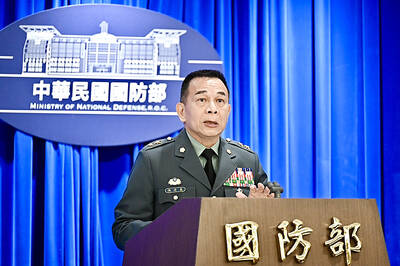
The Republic of China Army Command yesterday relieved Kinmen Defense Battalion commander after authorities indicted the officer on charges connected to using methamphetamine. The Kinmen District Prosecutors’ Office on Wednesday detained Colonel He (何) after the Coast Guard linked him to drug shipments and proceeded to charge him yesterday for using and possessing crystal meth. The man was released on a NT$50,000 bail and banned from leaving Kinmen, the office said. Army Chief of Staff Lieutenant General Chen Chien-yi (陳建義) told a news conference yesterday that He has been removed and another officer is taking over the unit as the acting commander. The military


 RSS
RSS