


Immunologists Marc Feldmann, Charles Dinarello and Tadamitsu Kishimoto have been awarded the Tang Prize in biopharmaceutical science, the head of the selection committee said at a news conference in Taipei yesterday.
The three were recognized for their contributions to the development of cytokine-targeting biological therapies to treat inflammatory diseases, according to the award citation released by the Tang Prize Foundation.
Cytokines are proteins produced by the immune system that transmit messages to cells and are contributors to inflammatory diseases, autoimmune syndromes and cancers.
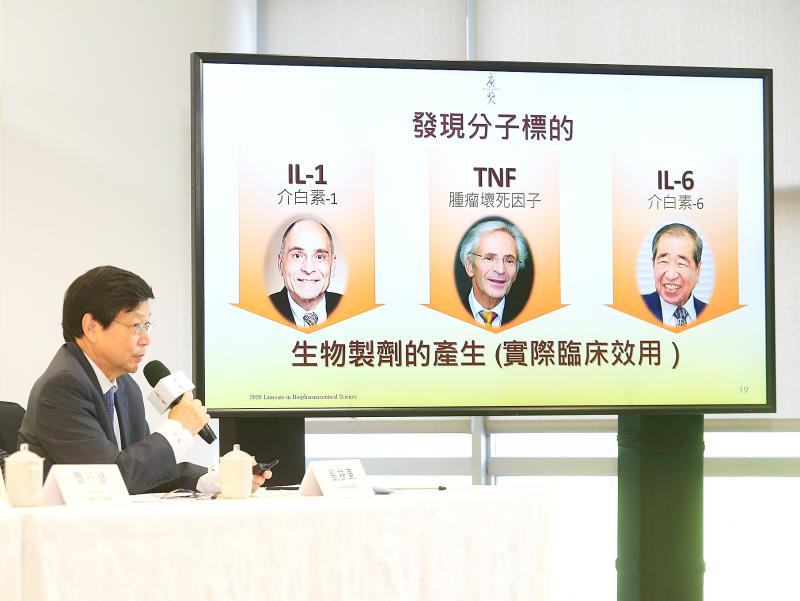
Photo: CNA
Feldmann, 75, is an Australian immunologist who has contributed to the development of anti-tumor necrosis factor therapy for rheumatoid arthritis and other autoimmune and inflammatory diseases.
He was the first to demonstrate that diseased joints in people with rheumatoid arthritis have far more pro-inflammatory cytokines than normal, and he identified tumor necrosis factor as the critical cytokine, the foundation said.
Dinarello, a professor of medicine and immunology from the US, is “one of the founding fathers” of cytokine studies, having purified and cloned a protein named interleukin-1 beta (IL-1B), the foundation said.
He laid the groundwork for establishing IL-1B as a potent mediator of fever and inflammatory diseases, which led to the development of therapeutics, the foundation said.
Kishimoto, 76, of Japan discovered and cloned a cytokine that regulates antibody production, later named interleukin-6, and demonstrated its involvement in the pathogenesis of inflammatory diseases, it said.
Successive trials, with Kishimoto’s help, have led to the approval of medicines for autoimmune diseases by regulatory agencies in various countries, it said.
“The pioneering work of doctors Feldmann, Dinarello and Kishimoto is transformative,” the foundation said. “Their research led to the development of biopharmaceuticals that have benefited millions of people suffering from autoimmune and inflammatory diseases.”
The Tang Prize is a two-yearly award established in 2012 by Taiwanese entrepreneur Samuel Yin (尹衍樑) to honor people who have made prominent contributions in four categories — sustainable development, biopharmaceutical science, Sinology and rule of law.
The three winners are to share a cash award of NT$40 million (US$1.35 million) and a NT$10 million research grant, and will receive medals and certificates.
A week-long program revolving around the ceremony is to begin on Sept. 20.
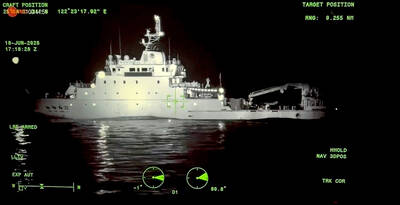
EXCUSES: Beijing is using government and research vessels as a pretext to harass the nation and enter its EEZ, and engage in ‘hegemonic expansion,’ the coast guard said The Coast Guard Administration yesterday said it drove away Chinese oceanographic research vessel Xiang Yang Hong 22 (向陽紅33) from restricted waters after warning it that it was in Taiwan’s exclusive economic zone (EEZ). The Chinese vessel entered restricted waters off the coast of Yilan County’s Suao (蘇澳) at 11:35pm on Thursday, the coast guard said, adding that it dispatched the Lanyu patrol vessel and the boat PP-10077 to shadow the Chinese ship and issue radio warnings ordering it to leave. China has no sovereignty over waters off Taiwan’s east coast, Lanyu’s crew told Xiang Yang Hong 22 over the radio, and demanded
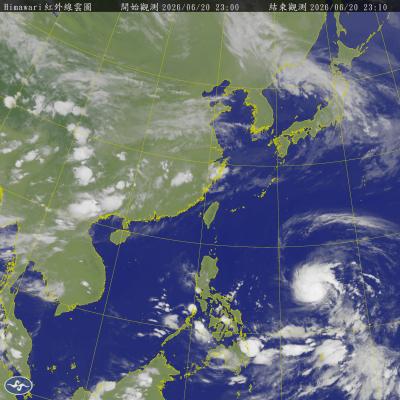
Tropical Storm Mekkhala is forecast to strengthen into a typhoon tomorrow and could come close enough to Taiwan later in the week to prompt a sea warning, the Central Weather Administration (CWA) said yesterday. As of 2 pm, the storm was located 1,870 kilometers southeast of Taiwan's southern tip and moving west- northwest at 23 km per hour. CWA forecaster Cheng Chieh-jen (鄭傑仁) said Mekkhala is expected to continue moving west-northwest through Tuesday under the influence of the Pacific high- pressure system before gradually turning north toward waters east of Taiwan or south of the Ryukyu Islands. The timing and angle of the
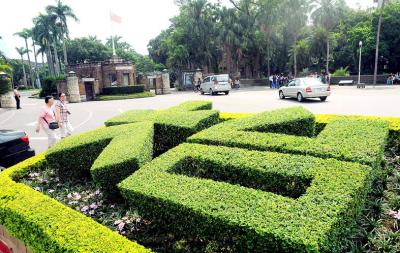
Four Taiwanese universities have been ranked among the world's top 200 institutions in the Quacquarelli Symonds (QS) World University Rankings for next year, the highest Taiwan has ever placed in the category, with National Taiwan University (NTU) achieving its best performance at 54th globally and 17th in Asia. The four Taiwanese institutions in the global top 200 are NTU (54th), National Tsing Hua University (142nd), National Yang Ming Chiao Tung University (177th) and National Cheng Kung University (191st), the rankings showed. All four universities achieved their highest-ever global rankings this year, QS data showed. National Cheng Kung University entered the top 200 for

RISING POPULARITY: Enhanced flight connectivity and a visa waiver trial program are among the motivations that have boosted travel to Taiwan by Filipinos, the agency said The Tourism Administration said yesterday that it is stepping up efforts to attract tourists from the Philippines following strong growth during the first quarter. The agency’s data showed the nation welcomed 210,000 Filipino visitors from January to March, marking a 43 percent increase compared with the same period last year. The Philippines is Taiwan’s top source of inbound tourists among the Southeast Asian nations, data showed. With a population of 116 million and national median age of 26, the Philippines boasts a young demographic with strong travel potential, the Tourism Administration said. Outbound travel demand in the Philippines continues to rise amid robust


 RSS
RSS