


No new cases of COVID-19 were reported yesterday, marking the 27th consecutive day without new domestic cases in Taiwan, the Central Epidemic Command Center (CECC) said yesterday.
CECC specialist advisory panel convener Chang Shan-chwen (張上淳) said that 66,460 suspected cases have been reported from Jan. 15 to Thursday, and 440 have tested positive for the disease.
Among the infected patients, 308 (70 percent) were asymptomatic or had mild symptoms, 96 (21.8 percent) had pneumonia and 36 (8.2 percent) had serious pneumonia or acute respiratory distress syndrome, he said.
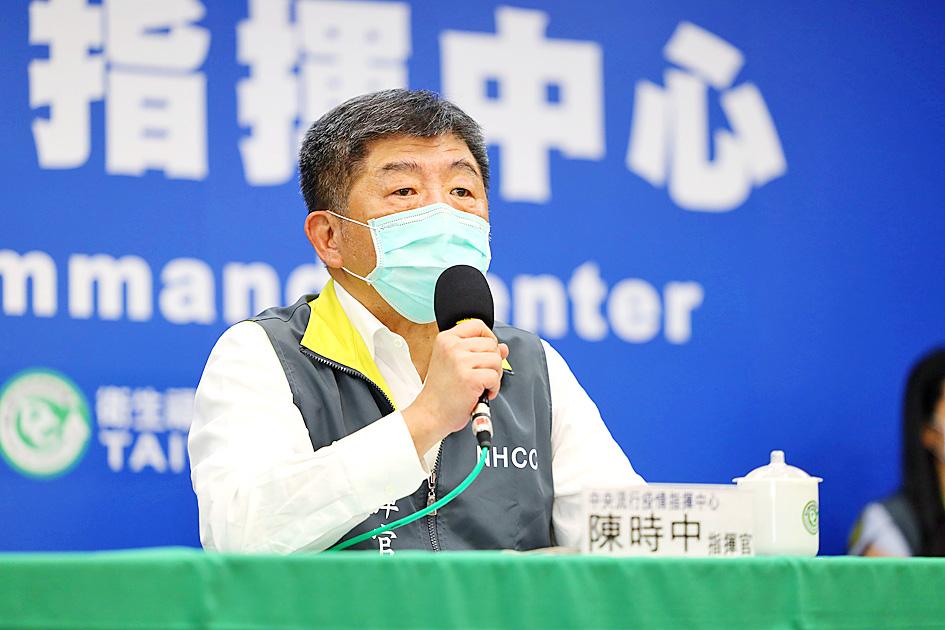
Photo provided by the Central Epidemic Command Center via CNA
A total of 361 patients (82 percent) have left isolation after testing negative three consecutive times, 352 (80 percent) have been discharged from hospitals, 82 (18.6 percent) remain hospitalized and six (1.4 percent) have died, he said.
Chang said that among 24 patients who had or have depended on ventilators, as of yesterday only three remain on ventilators, and one still requires extracorporeal membrane oxygenation.
No COVID-19 cases have been detected among medical practitioners and long-term care facility workers, he said, adding that expanded criteria for testing them were implemented on March 30.
“It is likely that the total number of cases [in Taiwan] would remain about the same, with maybe a few sporadic imported cases still being reported,” Chang said.
“With COVID-19’s 14-day incubation period, if no new case has been detected in local communities for two incubation periods — 28 days — from a public health perspective, we could view our communities as safe,” he said.
Taiwan has an infection rate of about 18.6 confirmed cases per 1 million people and a death rate of about 0.3 deaths per 1 million, which are lower than Organisation for Economic Co-operation and Development member countries, Chang said.
The infection rates in several European countries and the US are higher than 3,000 cases per 1 million, he added.
In other news, Minister of Health and Welfare Chen Shih-chung (陳時中), who heads the center, said that as spectators at CPBL baseball games on Friday were well-behaved in practicing personal disease prevention measures in the first two games opened to the public, the CECC is considering raising the maximum number of spectators per game from 1,000 to 2,000.
Additionally, Department of Medical Affairs Director-General Shih Chung-liang (石崇良) said that from yesterday, regulations for visitors to intensive care units, hospices and palliative care units in hospitals have been relaxed, allowing for a maximum of two visitors per hospital bed in a given visiting period.
Each hospital would determine the visiting hours, and hospitals are required to control the flow of visitors and implement disinfection measures, he said.

FUKUOKA SITUATION: Japanese media reported that the pathogen is expected to be identified by the summer, while the CDC downplayed the idea that it was hMPV A “mysterious cold-like illness” reported in Japan’s Fukuoka Prefecture does not seem to be a new disease, but Japanese authorities have been asked about the situation, the Centers for Disease Control (CDC) said yesterday. The Fukuoka Prefectural Medical Association on Wednesday told a news conference that a “mystery cold” that has become a hot topic on social media is “highly likely to be caused by some kind of viral infection,” Japan’s KBC News reported. “Many people are experiencing symptoms starting with a sore throat, followed by a runny nose, phlegm and a severe cough,” KBC News reported, citing association officials. Health authorities are

Nvidia Corp CEO Jensen Huang (黃仁勳) arrived in Taiwan yesterday ahead of upcoming AI and technology events, saying he plans to meet with clients and Taiwan Semiconductor Manufacturing Co Chairman C.C. Wei (魏哲家) during his visit. After landing at Taipei Songshan Airport, Huang posed for photos with fans and handed out Yakult drinks to reporters and supporters waiting at the scene, saying he has “a lot to do” during the trip. Asked about reports that Nvidia’s planned headquarters site in Taipei’s Beitou Shilin Technology Park could break ground on May 27, Huang said that if the company holds an event, he would

The Ministry of Finance this afternoon announced the winning numbers for the March-April uniform invoice lottery. The winning number for the NT$10 million (US$318,060) special prize is 19531471, and the winning number for the NT$2 million grand prize is 85941329. Three numbers were drawn for the NT$200,000 first prize: 07225810, 20231230 and 83518781. Those with receipts matching the last seven digits of any of the first-prize numbers will win the NT$40,000 second prize, while those matching the last six digits will win the NT$10,000 third prize. Those whose receipts match the last five digits of the first-prize numbers can claim the NT$4,000 fourth prize,
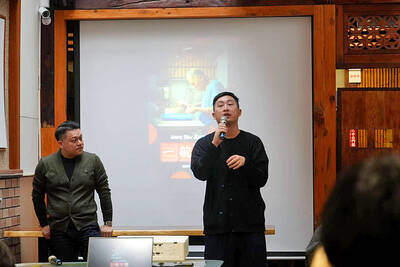
Taiwan Travelogue (臺灣漫遊錄), which earlier this week became the first Taiwanese novel to win the International Booker Prize, is to be adapted into a television series through a Taiwan-Japan coproduction, producer Chang Chen-yu (張辰漁) said yesterday. Chang, a producer at World Softest Production Film Co, wrote on Facebook that the company had been searching for projects with international appeal that retain a strong Taiwanese identity after colleagues and Japanese partners strongly recommended the novel. After reading the book, Chang said he immediately decided to pursue the screen rights. “A great story has the power to transcend time and borders, and connect countless people,”


 RSS
RSS