


Two of the nation’s largest medical associations have expressed support for the doctor who assessed the mental health of a man who was charged with stabbing and killing a railway police officer last year, after the doctor was harassed.
Allowing legal cases to be decided by public opinion would not be good for Taiwan’s independent judiciary, the two groups — the Taiwan Academy of Psychiatry and the Law, and the Taiwanese Society of Psychiatry — said in a joint statement on Saturday.
Railway Police Bureau officer Lee Cheng-han (李承翰) was stabbed to death by a man surnamed Cheng (鄭) on July 3 last year.
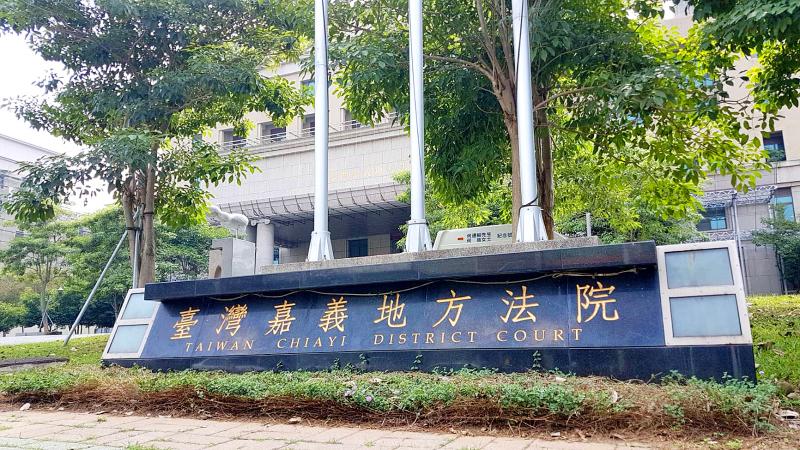
Photo: Ting Wei-chieh, Taipei Times
The Chiayi District Court on April 30 found Cheng not guilty in the case’s first ruling, as he was diagnosed with schizophrenia.
It ruled that he could be released on NT$500,000 bail and was ordered go undergo mental health treatment for five years.
Prosecutors on Saturday filed an appeal after the court decided for a second time on Friday to commute Cheng’s sentence on grounds of diminished responsibility.
The ruling has sparked a wave of public anger directed at Taichung Veterans General Hospital, Chiayi Branch physician Shen Cheng-che (沈正哲), who conducted Cheng’s psychiatric assessment.
“I made the assessment on the basis of my professional judgement, but I have no control over how the court ultimately decides to sentence the suspect,” Shen said on Facebook on Friday.
Despite sympathizing with Lee’s family, Shen wrote: “If the purpose is just to follow public opinion or societal expectations, then there is no reason to seek a doctor’s assessment, and people could just decide the matter with an Internet poll.”
The medical associations’ statement said that the assessment was only one piece of evidence that the judge considered in his ruling, and the weight attached to that assessment was determined solely by the independent judiciary, adding that the doctor making the assessment had no influence over the case.
In some past cases, the judge did not take such assessments into consideration, showing that they were not the sole factor in the final ruling, the statement said.
The judiciary made the utmost effort to consider evidence from both sides equally and to seek the truth, it said.
The prosecutors in Cheng’s case were dissatisfied with the first ruling, and criticized the psychological evaluation of Cheng and the process by which that evaluation was reached, Taiwanese Society of Psychiatry secretary-general Liao Ting-lieh (廖定烈) said.
“We regret to see this [response to an evaluation],” he said.
The public’s desire to find someone responsible in such a large case is understandable, but denouncing the judge who made the ruling or the doctor who made the evaluation is inappropriate, Liao said.
Judges are also able to seek evaluations from multiple doctors, or request multiple evaluations, but this would affect the judiciary’s budget and must be taken into account, he said.
A large number of variables could affect the outcome of a psychological evaluation, such as the accuracy of the information collected, whether the information collected was the same when gathered at different times or in different environments, and so on, he added.
Additional reporting by CNA

The manufacture of the remaining 28 M1A2T Abrams tanks Taiwan purchased from the US has recently been completed, and they are expected to be delivered within the next one to two months, a source said yesterday. The Ministry of National Defense is arranging cargo ships to transport the tanks to Taiwan as soon as possible, said the source, who is familiar with the matter. The estimated arrival time ranges from late this month to early next month, the source said. The 28 Abrams tanks make up the third and final batch of a total of 108 tanks, valued at about NT$40.5 billion

Two Taiwanese prosecutors were questioned by Chinese security personnel at their hotel during a trip to China’s Henan Province this month, the Mainland Affairs Council (MAC) said yesterday. The officers had personal information on the prosecutors, including “when they were assigned to their posts, their work locations and job titles,” MAC Deputy Minister and spokesman Liang Wen-chieh (梁文傑) said. On top of asking about their agencies and positions, the officers also questioned the prosecutors about the Cross-Strait Joint Crime-Fighting and Judicial Mutual Assistance Agreement, a pact that serves as the framework for Taiwan-China cooperation on combating crime and providing judicial assistance, Liang
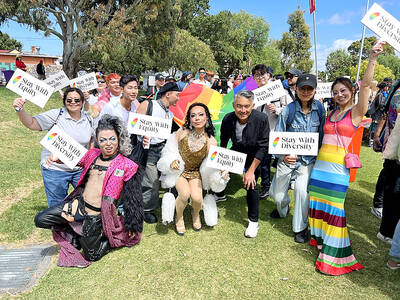
A group from the Taiwanese Designers in Australia association yesterday represented Taiwan at the Midsumma Pride March in Melbourne. The march, held in the St. Kilda suburb, is the city’s largest LGBTQIA+ parade and the flagship event of the annual Midsumma Festival. It attracted more than 45,000 spectators who supported the 400 groups and 10,000 marchers that participated this year, the association said. Taiwanese Designers said they organized a team to march for Taiwan this year, joining politicians, government agencies, professionals and community organizations in showing support for LGBTQIA+ people and diverse communities. As the first country in Asia to legalize same-sex
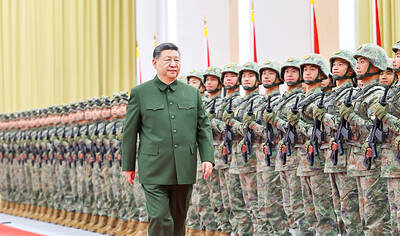
MOTIVES QUESTIONED The PLA considers Xi’s policies toward Taiwan to be driven by personal considerations rather than military assessment, the Epoch Times reports Chinese President Xi Jinping’s (習近平) latest purge of the Chinese People’s Liberation Army (PLA) leadership might have been prompted by the military’s opposition to plans of invading Taiwan, the Epoch Times said. The Chinese military opposes waging war against Taiwan by a large consensus, putting it at odds with Xi’s vision, the Falun Gong-affiliated daily said in a report on Thursday, citing anonymous sources with insight into the PLA’s inner workings. The opposition is not the opinion of a few generals, but a widely shared view among the PLA cadre, the Epoch Times cited them as saying. “Chinese forces know full well that


 RSS
RSS