


The Transitional Justice Commission is reportedly planning on validating and announcing 85 historical sites of injustice, as well as proposing legislative suggestions for preserving them.
After consulting experts and using the UN’s International Convention for the Protection of All Persons from Enforced Disappearance as reference, the commission has drafted and finished revising key points in its final report on validating historical sites of injustice, which refer to places where those in power violated human rights during the authoritarian period.
The incidents span 1945 to 1992 and are mainly places where human rights violations occurred during the 228 Incident and the White Terror era, a commission member said.
More sites might be added, as investigation and research continue, the member said.
According to anonymous sources, the Yuan Ting police station in Keelung is one of the places that might be listed as a historical site of injustice.
The commission has also asked experts to produce a map of the sites.
Basic mapping data have been completed for six places, including the Investigation Bureau’s Ankang Reception House, sources said.
The commission has also arranged guided tours led by political victims to help visitors understand the environments in which people were detained during the authoritarian period.
The commission found that the Investigation Bureau set up a quasi-secret confinement center in the Taipei Detention Center that held political prisoners during the later stages of the Martial Law era.
In terms of investigations of historical sites of injustice, the commission has joined the New Taipei City Government in completing a boundary survey of the former Ankang execution grounds.
The Ankang site is where many political prisoners were executed after the mid-1950s, the commission said, adding that those who were executed there included Tang Shou-jen (湯守仁) and those involved in the Taiyuan Incident.
It was the longest-used execution site during the time of authoritarian rule, it said.
The commission said that its final report is to recommend a principle of preservation of the plans for historical sites of injustice.
For cases whose preservation involves property rights, major public interest, the financial burden of local self-governing groups or other matters that require the principle of legal reservation, the commission is considering proposing legislative suggestions for preserving historical sites of injustice, it added.
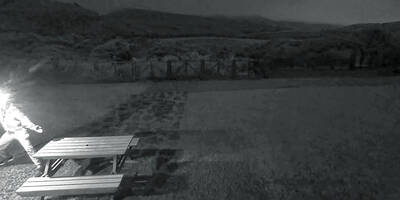
Yangmingshan National Park authorities yesterday urged visitors to respect public spaces and obey the law after a couple was caught on a camera livestream having sex at the park’s Qingtiangang (擎天崗) earlier in the day. The Shilin Police Precinct in Taipei said it has identified a suspect and his vehicle registration number, and would summon him for questioning. The case would be handled in accordance with public indecency charges, it added. The couple entered the park at about 11pm on Thursday and began fooling around by 1am yesterday, the police said, adding that the two were unaware of the park’s all-day live
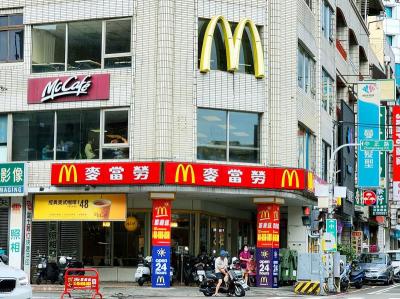
Fast food chain McDonald's is to raise prices by up to NT$5 on some products at its restaurants across Taiwan, starting on Wednesday next week, the company announced today. The prices of all extra value meals and sharing boxes are to increase by NT$5, while breakfast combos and creamy corn soup would go up by NT$3, the company said in a statement. The price of the main items of those meals, if ordered individually, would remain the same. Meanwhile, the price of a medium-sized lemon iced tea and hot cappuccino would rise by NT$3, extra dipping sauces for chicken nuggets would go up

Yangmingshan National Park’s Qingtiangang (擎天崗) nature area has gone viral after a park livestream camera observed a couple in the throes of intimate congress, which was broadcast live on YouTube, drawing large late-night crowds and sparking a backlash over noise, bright lights and disruption to wildlife habitat. The area’s livestream footage appeared to show a couple engaging in sexual activity on a picnic table in the park on Friday last week, with the uncensored footage streamed publicly online. The footage quickly spread across social media, prompting a tide of visitors to travel to the site to “check in” and recreate the

Minister of Digital Affairs Lin Yi-ching (林宜敬) yesterday cited regulatory issues and national security concerns as an expert said that Taiwan is among the few Asian regions without Starlink. Lin made the remarks on Facebook after funP Innovation Group chief executive officer Nathan Chiu (邱繼弘) on Friday said Taiwan and four other countries in Asia — China, North Korea, Afghanistan and Syria — have no access to Starlink. Starlink has become available in 166 countries worldwide, including Ukraine, Malaysia, the Philippines and Vietnam, in the six years since it became commercial, he said. While China and North Korea block Starlink, Syria is not


 RSS
RSS