


Chinese Nationalist Party (KMT) Legislator Johnny Chiang (江啟臣) and former KMT vice chairman Hau Lung-bin (郝龍斌) yesterday presented their platforms as candidates in the party’s chairperson by-election to be held on March 7.
Speaking before the presentations began at KMT headquarters in Taipei, KMT Acting Chairman Lin Rong-te (林榮德) called the by-election “the most important step in the party’s push for reform.”
“No matter which of the two of us serves as the chairman of the KMT, we will face difficult reforms,” Chiang said. “The KMT has reached an important moment when reform cannot be avoided.”
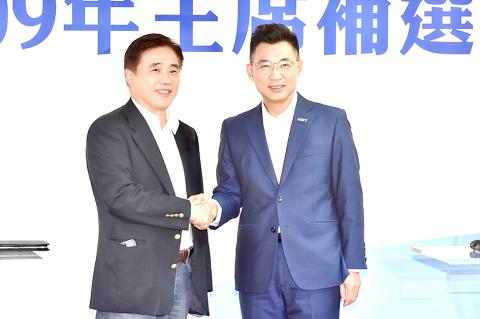
Photo: Tu Chien-jung, Taipei Times
Chiang said the party’s defeats in the 2016 and this year’s elections showed that it needs to “redesign and adjust” aspects such as its core values, policies and its nomination process.
Among the proposals he has made are the creation of an 11-member decisionmaking group within the party that would “respond quickly to public opinion”; better use of online tools to communicate with the public; and a digitization of the services the party provides to its members.
Chiang also called for a series of discussions on the party’s values and policies, including its policy on cross-strait relations.
Meanwhile, Hau attributed the party’s losses in the Jan. 11 elections to “selfishness” and a “lack of unity.”
President Tsai Ing-wen (蔡英文) and former premier William Lai (賴清德) ran on the same ticket after competing in the Democratic Progressive Party’s (DPP) presidential primary, he said, adding: “This is an example we must learn from.”
“The KMT’s core philosophy is to defend the Republic of China [ROC] and oppose Taiwan’s independence,” Hau said, adding that he would follow that philosophy.
In his speech, Hau also addressed calls for older members of the KMT to hand over the party’s leadership to the younger generation, saying that a person’s attitude, ability and experience — rather than age — determine whether they are competent.
During the question-and-answer portion of the presentations, reporters asked Chiang whether he plans to run in the 2022 local elections or the 2024 national elections.
Chiang said that his focus at the moment is on serving the public in his capacity as a lawmaker and leading the KMT’s reform if he is elected next month.
If elected, his term as chairman would end on May 20 next year, he said, adding: “After 2021, I do not know whether I will have an opportunity to perform other duties.”
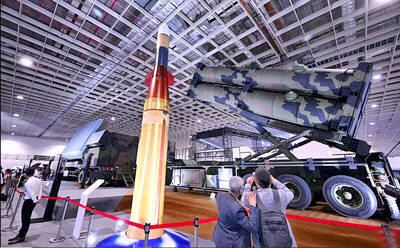
Taiwan is to commence mass production of the Tien Kung (天弓, “Sky Bow”) III, IV and V missiles by the second quarter of this year if the legislature approves the government’s NT$1.25 trillion (US$39.78 billion) special defense budget, an official said yesterday. Commenting on condition of anonymity, a defense official with knowledge of the matter said that the advanced systems are expected to provide crucial capabilities against ballistic and cruise missiles for the proposed “T-Dome,” an advanced, multi-layered air defense network. The Tien Kung III is an air defense missile with a maximum interception altitude of 35km. The Tien Kung IV and V
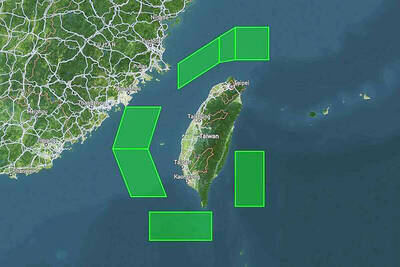
The disruption of 941 flights in and out of Taiwan due to China’s large-scale military exercises was no accident, but rather the result of a “quasi-blockade” used to simulate creating the air and sea routes needed for an amphibious landing, a military expert said. The disruptions occurred on Tuesday and lasted about 10 hours as China conducted live-fire drills in the Taiwan Strait. The Civil Aviation Administration (CAA) said the exercises affected 857 international flights and 84 domestic flights, affecting more than 100,000 travelers. Su Tzu-yun (蘇紫雲), a research fellow at the government-sponsored Institute for National Defense and Security Research, said the air
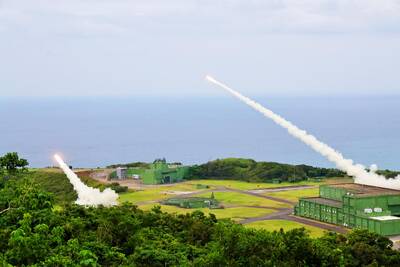
Taiwan lacks effective and cost-efficient armaments to intercept rockets, making the planned “T-Dome” interception system necessary, two experts said on Tuesday. The concerns were raised after China’s military fired two waves of rockets during live-fire drills around Taiwan on Tuesday, part of two-day exercises code-named “Justice Mission 2025.” The first wave involved 17 rockets launched at 9am from Pingtan in China’s Fujian Province, according to Lieutenant General Hsieh Jih-sheng (謝日升) of the Office of the Deputy Chief of the General Staff for Intelligence at the Ministry of National Defense. Those rockets landed 70 nautical miles (129.6km) northeast of Keelung without flying over Taiwan,
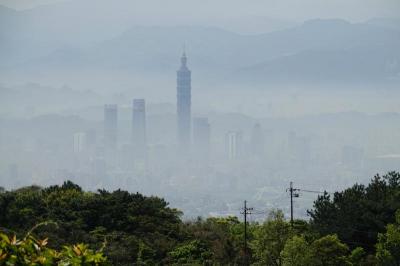
A strong continental cold air mass is to bring pollutants to Taiwan from tomorrow, the Ministry of Environment said today, as it issued an “orange” air quality alert for most of the country. All of Taiwan except for Hualien and Taitung counties is to be under an “orange” air quality alert tomorrow, indicating air quality that is unhealthy for sensitive groups. In China, areas from Shandong to Shanghai have been enveloped in haze since Saturday, the ministry said in a news release. Yesterday, hourly concentrations of PM2.5 in these areas ranged from 65 to 160 micrograms per cubic meter (mg/m³), and pollutants were


 RSS
RSS