


Taipei City University of Science and Technology (TPCU) students won four golds, three silvers, three bronzes and four special prizes at the Seoul International Invention Fair on Saturday.
A Bluetooth alcohol detection helmet for scooter riders, from a TPCU team of information engineering students, Tang Yuan-chi (湯元麒) and Gao Li-yu (高立瑜), and advising professor Chang Hsien-Chung (張獻中), earned a gold medal and a special prize at the international invention fair.
The device is intended to curb driving under the influence of alcohol, as these often-fatal incidents are common in Taiwan, the team said in a TPCU news release yesterday.
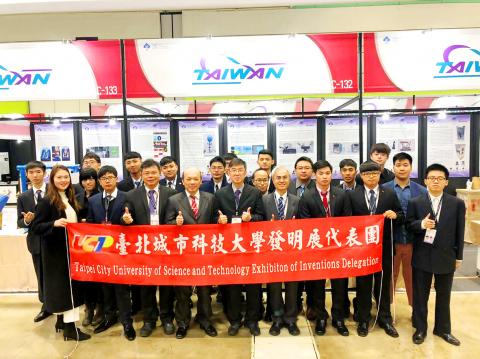
Photo courtesy of the Taipei City University of Science and Technology
The helmet uses Bluetooth earphones and a breath alcohol device to measure alcohol levels, which would prevent the scooter from starting if too high, it said.
Additionally, the scooter’s engine would shut off when the rider removes the helmet, preventing it from being started by someone else, the release added.
TPCU’s electrical engineering team also won a gold medal and a special prize with a safety device that alerts a scooter rider of dangerous turns.
The device collects data on driving speed, lean angles and centripetal force to determine whether it should alert the rider to slow down, the team said.
The school’s computer and communication engineering team won a special prize for its smart drying rack that automatically dries and sterilizes clothes.
It uses a fan, temperature and humidity detectors, and ultraviolet lights and LEDs to prevent mildew by drying and sterilizing clothes, the team said, adding that it could also send text alerts.
Another gold medal and special prize winner was the mechanical engineering team’s weather balloon equipped with infrared sensors that control its pressure valve to prevent it from bursting at high altitudes.
As it expands during ascent, the sensors tell the valve when to release pressure, the team said, adding that it would also lower costs.

The Chinese Communist Party (CCP) is pushing for residents of Kinmen and Lienchiang counties to acquire Chinese ID cards in a bid to “blur national identities,” a source said. The efforts are part of China’s promotion of a “Kinmen-Xiamen twin-city living sphere, including a cross-strait integration pilot zone in China’s Fujian Province,” the source said. “The CCP is already treating residents of these outlying islands as Chinese citizens. It has also intensified its ‘united front’ efforts and infiltration of those islands,” the source said. “There is increasing evidence of espionage in Kinmen, particularly of Taiwanese military personnel being recruited by the
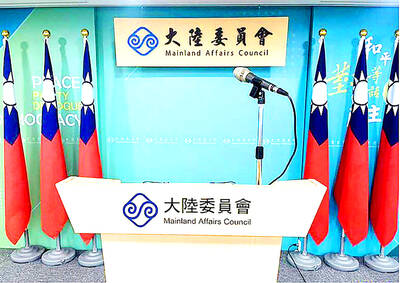
ENTERTAINERS IN CHINA: Taiwanese generally back the government being firm on infiltration and ‘united front’ work,’ the Asia-Pacific Elite Interchange Association said Most people support the government probing Taiwanese entertainers for allegedly “amplifying” the Chinese Communist Party’s propaganda, a survey conducted by the Asia-Pacific Elite Interchange Association showed on Friday. Public support stood at 56.4 percent for action by the Mainland Affairs Council and the Ministry of Culture to enhance scrutiny on Taiwanese performers and artists who have developed careers in China while allegedly adhering to the narrative of Beijing’s propaganda that denigrates or harms Taiwanese sovereignty, the poll showed. Thirty-three percent did not support the action, it showed. The poll showed that 51.5 percent of respondents supported the government’s investigation into Taiwanese who have

Left-Handed Girl (左撇子女孩), a film by Taiwanese director Tsou Shih-ching (鄒時擎) and cowritten by Oscar-winning director Sean Baker, won the Gan Foundation Award for Distribution at the Cannes Critics’ Week on Wednesday. The award, which includes a 20,000 euro (US$22,656) prize, is intended to support the French release of a first or second feature film by a new director. According to Critics’ Week, the prize would go to the film’s French distributor, Le Pacte. "A melodrama full of twists and turns, Left-Handed Girl retraces the daily life of a single mother and her two daughters in Taipei, combining the irresistible charm of
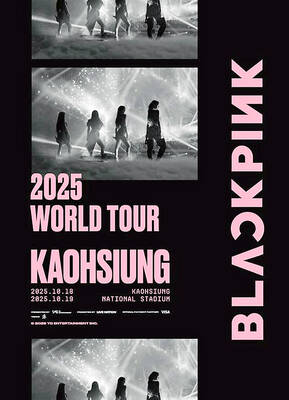
South Korean K-pop girl group Blackpink are to make Kaohsiung the first stop on their Asia tour when they perform at Kaohsiung National Stadium on Oct. 18 and 19, the event organizer said yesterday. The upcoming performances will also make Blackpink the first girl group ever to perform twice at the stadium. It will be the group’s third visit to Taiwan to stage a concert. The last time Blackpink held a concert in the city was in March 2023. Their first concert in Taiwan was on March 3, 2019, at NTSU Arena (Linkou Arena). The group’s 2022-2023 “Born Pink” tour set a


 RSS
RSS