


Dajia Jenn Lann Temple deputy chairman Cheng Ming-kun (鄭銘坤) was yesterday released on bail of NT$1 million (US$32,415) after being questioned over suspected fraud involving the temple in Taichung and Chunghwa Telecom.
Taichung prosecutors on Tuesday raided several sites after receiving reports of alleged collusion between Cheng and other temple officials with the telecom.
Ten people were summoned for questioning about the scheme, which reportedly involved NT$30 million in illegal profit.

Photo: Chang Hsuan–che, Taipei Times
The case involved the practice of lighting “luminous lamps” (光明燈) in temples to pray for good fortune, health, or job advancement among other requests, with prices differing depending on their wishes.
To keep up with technological advancements, Jenn Lann Temple in 2016 started to offer online lighting of “luminous lamps,” with Cheng and Chunghwa Telecom signing an agreement after holding a tender.
Prosecutors said that three companies were allegedly involved in the fraud, one run by Cheng and his daughter, along with Jin Chu Mi Co (金促米) owned by Lee Yue-yu (李岳怡), both of which are in Taichung, and a contractor in New Taipei City.
Cheng, his daughter, Lee, and two other executives at the three companies face charges of forgery and breaches of the Securities and Exchange Act (證券交易法) and the Business Entity Accounting Act (商業會計法).
Four other people were released after questioning yesterday, after posting bail of between NT$200,000 and NT$500,000.
Chunghwa Telecom lent Cheng and executives of the three companies about NT$30 million in cash as part of the project.
However, the companies did not pay back the money, which became default loans on the telecom’s books, prompting an accounting scrutiny and judicial investigation.
The project just did not work out as planned, Cheng said.
“We initiated the online program and made test runs for three months, but our computer system was not compatible with Chunghwa Telecom’s system,” he said.
“There was no formal business agreement with our temple, and we had only made test runs,” he added.
However, prosecutors alleged that the arrangement was a fraudulent scheme, that Cheng’s company and the two others needed funds for their business operations and secured tenders for the online “luminous lamps” project to obtain loans.
An investigation found financial irregularities at Chunghwa Telecom, where prosecutors allegedly uncovered illegal loans to 24 companies over the past two years, resulting in losses of about NT$400 million for the company, which led to the indictment of 49 employees in February.
Additional reporting by Jason Pan
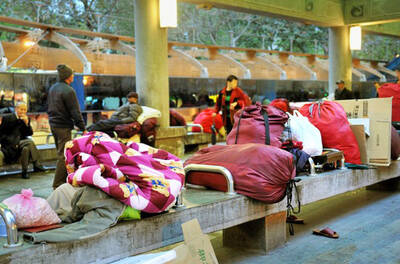
A year-long renovation of Taipei’s Bangka Park (艋舺公園) began yesterday, as city workers fenced off the site and cleared out belongings left by homeless residents who had been living there. Despite protests from displaced residents, a city official defended the government’s relocation efforts, saying transitional housing has been offered. The renovation of the park in Taipei’s Wanhua District (萬華), near Longshan Temple (龍山寺), began at 9am yesterday, as about 20 homeless people packed their belongings and left after being asked to move by city personnel. Among them was a 90-year-old woman surnamed Wang (王), who last week said that she had no plans

China might accelerate its strategic actions toward Taiwan, the South China Sea and across the first island chain, after the US officially entered a military conflict with Iran, as Beijing would perceive Washington as incapable of fighting a two-front war, a military expert said yesterday. The US’ ongoing conflict with Iran is not merely an act of retaliation or a “delaying tactic,” but a strategic military campaign aimed at dismantling Tehran’s nuclear capabilities and reshaping the regional order in the Middle East, said National Defense University distinguished adjunct lecturer Holmes Liao (廖宏祥), former McDonnell Douglas Aerospace representative in Taiwan. If
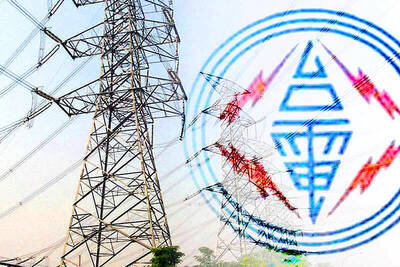
TO BE APPEALED: The environment ministry said coal reduction goals had to be reached within two months, which was against the principle of legitimate expectation The Taipei High Administrative Court on Thursday ruled in favor of the Taichung Environmental Protection Bureau in its administrative litigation against the Ministry of Environment for the rescission of a NT$18 million fine (US$609,570) imposed by the bureau on the Taichung Power Plant in 2019 for alleged excess coal power generation. The bureau in November 2019 revised what it said was a “slip of the pen” in the text of the operating permit granted to the plant — which is run by Taiwan Power Co (Taipower) — in October 2017. The permit originally read: “reduce coal use by 40 percent from Jan.
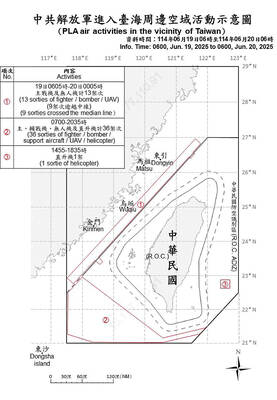
‘SPEY’ REACTION: Beijing said its Eastern Theater Command ‘organized troops to monitor and guard the entire process’ of a Taiwan Strait transit China sent 74 warplanes toward Taiwan between late Thursday and early yesterday, 61 of which crossed the median line in the Taiwan Strait. It was not clear why so many planes were scrambled, said the Ministry of National Defense, which tabulated the flights. The aircraft were sent in two separate tranches, the ministry said. The Ministry of Foreign Affairs on Thursday “confirmed and welcomed” a transit by the British Royal Navy’s HMS Spey, a River-class offshore patrol vessel, through the Taiwan Strait a day earlier. The ship’s transit “once again [reaffirmed the Strait’s] status as international waters,” the foreign ministry said. “Such transits by


 RSS
RSS