


Eleven universities in the nation have been ranked among the world’s best young universities this year.
The Young University Rankings, released by Times Higher Education, rank 250 schools that are less than 50 years old based on their teaching, research, international outlook and their work with industry.
National Taiwan University of Science and Technology (NTUST) was ranked 57th, two places up from its ranking last year, and the highest of any local institution.
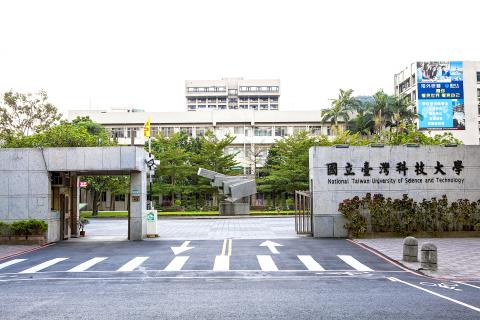
Photo: Lin Shao-yun, Taipei Times
Times Higher Education only provides individual rankings for the first 100 schools on its list. The rest are grouped between 101st to 150th, from 151st to 200th and from 210st to 250th.
National Yang Ming University was the only university in Taiwan to be ranked in the 101st to 150th grouping.
While Chang Gung University and National Sun Yat-Sen University placed in that category last year, this year they dropped to the next group, from 150th to 200th.
Asia University, Feng Chia University, I-Shou University, National Chung Cheng University, National Dong Hwa University, National Taipei University and Yuan Ze University all placed in the 201st to 250th grouping.
The top five schools on the young school list are the Hong Kong University of Science and Technology, the Ecole Polytechnique Federale de Lausanne in Switzerland, Nanyang Technological University in Singapore, Paris Sciences et Lettres in France and Maastricht University in the Netherlands.
Meanwhile, 17 Taiwanese schools were listed in the World University Rankings 2019 compiled by London-based Quacquarelli Symonds, with National Taiwan University placing 72nd, up four notches from last year.
It was the only local school to be listed among the top 100 in the annual survey.
Quacquarelli Symonds uses six indicators to assess performance: academic reputation, employer reputation, faculty-to-student ratio, citations per faculty, proportion of international students and proportion of international faculty.
Taiwanese universities placing in the top 500 are National Tsing Hua University (163), National Chiao Tung University (208), National Cheng Kung University (234), NTUST (257), National Yang Ming University (292), National Taiwan Normal University (308), Taipei Medical University (362), National Sun Yat-Sen University (402), National Central University (415) and Chang Gung University (429).
Taipei Medical University saw the biggest improvement, rising 36 notches from last year’s ranking, making it the nation’s top-ranked private university on the list.
National Taipei University of Technology ranked in the 561st to 570th category, National Chengchi University in the 601st to 650th category, National Chung Hsing University in the 651st to 700th category, and National Chung Cheng University, Feng Chia University and Fu Jen Catholic University in the 801st-1000th category.
The Massachusetts Institute of Technology retains its top spot in World University Rankings for the seventh consecutive year, followed by Stanford University, Harvard University and the California Institute of Technology.
National University of Singapore is the highest-ranked Asian institution at No. 11.

Actor Darren Wang (王大陸) was sentenced to six months in prison, commutable to a fine, by the New Taipei District Court today for contravening the Personal Data Protection Act (個人資料保護法) in a case linked to an alleged draft-dodging scheme. Wang allegedly paid NT$3.6 million (US$114,380) to an illegal group to help him evade mandatory military service through falsified medical documents, prosecutors said. He transferred the funds to Chen Chih-ming (陳志明), the alleged mastermind of a draft-evasion ring, although he lost contact with him as he was already in detention on fraud charges, they said. Chen is accused of helping a

SECURITY: Starlink owner Elon Musk has taken pro-Beijing positions, and allowing pro-China companies to control Taiwan’s critical infrastructure is risky, a legislator said Starlink was reluctant to offer services in Taiwan because of the nation’s extremely high penetration rates in 4G and 5G services, the Ministry of Digital Affairs said yesterday. The ministry made the comments at a meeting of the legislature’s Transportation Committee, which reviewed amendments to Article 36 of the Telecommunications Management Act (電信管理法). Article 36 bans foreigners from holding more than 49 percent of shares in public telecommunications networks, while shares foreigners directly and indirectly hold are also capped at 60 percent of the total, unless specified otherwise by law. The amendments, sponsored by Chinese Nationalist Party (KMT) Legislator Ko
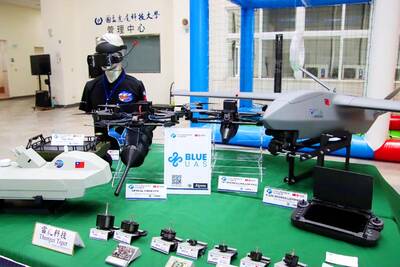
NON-RED SUPPLY: Boosting the nation’s drone industry is becoming increasingly urgent as China’s UAV dominance could become an issue in a crisis, an analyst said Taiwan’s drone exports to Europe grew 41.7-fold from 2024 to last year, with demand from Ukraine’s fight against Russian aggression the most likely driver of growth, a study showed. The Institute for Democracy, Society and Emerging Technology (DSET) in a statement on Wednesday said it found that many of Taiwan’s uncrewed aerial vehicle (UAV) sales were from Poland and the Czech Republic. These countries likely transferred the drones to Ukraine to aid it in its fight against the Russian invasion that started in 2022, it said. Despite the gains, Taiwan is not the dominant drone exporter to these markets, ranking second and fourth
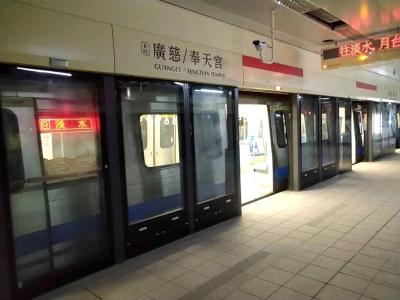
The eastern extension of the Taipei MRT Red Line could begin operations as early as late June, the Taipei Department of Rapid Transit Systems said yesterday. Taipei Rapid Transit Corp said it is considering offering one month of free rides on the new section to mark its opening. Construction progress on the 1.4km extension, which is to run from the current terminal Xiangshan Station to a new eastern terminal, Guangci/Fengtian Temple Station, was 90.6 percent complete by the end of last month, the department said in a report to the Taipei City Council's Transportation Committee. While construction began in October 2016 with an


 RSS
RSS