


Democratic Progressive Party (DPP) caucus convener Ker Chien-ming (柯建銘) yesterday called on former president Ma Ying-jeou (馬英九) to admit his guilt and not appeal after the Taiwan High Court overturned a lower court’s not-guilty verdict and sentenced Ma to four months in prison.
“This is a very important ruling in our nation’s judicial history. Ma, as president at the time, was found guilty of manipulating the justice system, impairing the Constitution and undermining the rule of law,” Ker told reporters after the court’s announcement.
The “landmark ruling” has significant ramifications for Taiwan’s democracy, the ongoing pursuit of transitional justice, the judicial reform process, efforts to amend the Constitution and the restoration of the public’s faith in judicial independence, he said.
Ker summarized Ma’s situation following the guilty verdict with a quote from a Ming Dynasty book, Caigentan (菜根譚): “A momentary abuse of political power in exchange for eternal misery” (弄權一時,淒涼萬古).
The case against Ma stems from his order to then-prosecutor-general Huang Shih-ming (黃世銘) to provide the Presidential Office with information about a Special Investigation Division (SID) investigation into alleged lobbying by Ker, then-legislative speaker Wang Jin-pyng (王金平) and others over an embezzlement case involving Ker.
The SID probe involved wiretaps on the conversations of several lawmakers, Ker said.
“It was a political machination by Ma to oust his opponents, hearkening back to the Martial Law era government’s use of intelligence agencies and the police state apparatus to monitor and suppress citizens,” Ker said.
“I wanted to set off fireworks to celebrate this ruling. The court has restored justice to society,” said prosecutor Lin Hsiu-tao (林秀濤), who filed a lawsuit after it was revealed that the SID tapped her and her daughter’s telephones as part of its probe.
“Ma broke the law and abused presidential power, poisoning our nation with discord and turmoil. Yet, he was given only a four-month term, which can be commuted to a NT$1,000 per day fine,” New Power Party Executive Chairman Huang Kuo-chang (黃國昌) said on Facebook. “Ma got off easy with a lenient term, but still moaned about a political persecution.”
“This was the right ruling by the court, and we hope it will smash the judiciary’s ‘protective armor’ that Ma set up as a safeguard against prosecution,” DPP Legislator Lin Chun-hsien (林俊憲) said, pointing to other litigation against Ma for alleged profiteering and receiving undue benefits.
“The long arm of the law will finally catch up to you Ma. You have been hiding from prosecution, but justice will be served eventually and the time grows near,” he added.

China might accelerate its strategic actions toward Taiwan, the South China Sea and across the first island chain, after the US officially entered a military conflict with Iran, as Beijing would perceive Washington as incapable of fighting a two-front war, a military expert said yesterday. The US’ ongoing conflict with Iran is not merely an act of retaliation or a “delaying tactic,” but a strategic military campaign aimed at dismantling Tehran’s nuclear capabilities and reshaping the regional order in the Middle East, said National Defense University distinguished adjunct lecturer Holmes Liao (廖宏祥), former McDonnell Douglas Aerospace representative in Taiwan. If
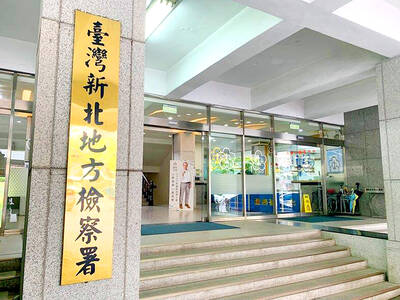
Prosecutors in New Taipei City yesterday indicted 31 individuals affiliated with the Chinese Nationalist Party (KMT) for allegedly forging thousands of signatures in recall campaigns targeting three Democratic Progressive Party (DPP) lawmakers. The indictments stem from investigations launched earlier this year after DPP lawmakers Su Chiao-hui (蘇巧慧) and Lee Kuen-cheng (李坤城) filed criminal complaints accusing campaign organizers of submitting false signatures in recall petitions against them. According to the New Taipei District Prosecutors Office, a total of 2,566 forged recall proposal forms in the initial proposer petition were found during the probe. Among those
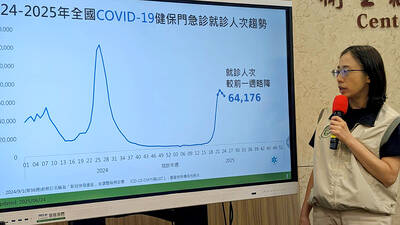
ECHOVIRUS 11: The rate of enterovirus infections in northern Taiwan increased last week, with a four-year-old girl developing acute flaccid paralysis, the CDC said Two imported cases of chikungunya fever were reported last week, raising the total this year to 13 cases — the most for the same period in 18 years, the Centers for Disease Control (CDC) said yesterday. The two cases were a Taiwanese and a foreign national who both arrived from Indonesia, CDC Epidemic Intelligence Center Deputy Director Lee Chia-lin (李佳琳) said. The 13 cases reported this year are the most for the same period since chikungunya was added to the list of notifiable communicable diseases in October 2007, she said, adding that all the cases this year were imported, including 11 from
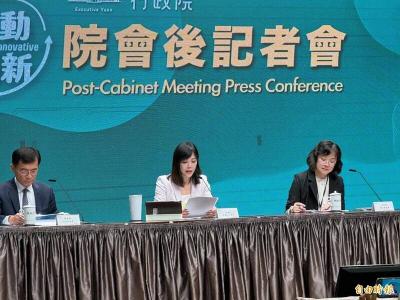
The Ma-anshan Nuclear Power Plant’s license has expired and it cannot simply be restarted, the Executive Yuan said today, ahead of national debates on the nuclear power referendum. The No. 2 reactor at the Ma-anshan Nuclear Power Plant in Pingtung County was disconnected from the nation’s power grid and completely shut down on May 17, the day its license expired. The government would prioritize people’s safety and conduct necessary evaluations and checks if there is a need to extend the service life of the reactor, Executive Yuan spokeswoman Michelle Lee (李慧芝) told a news conference. Lee said that the referendum would read: “Do


 RSS
RSS