


Taipei Mayor Ko Wen-je (柯文哲) said the city government has set up 325 locations for elderly people to have a meal together or take part in group activities with a view to encouraging the elderly to get out of the house and be more active.
Ko yesterday posted on Facebook a photograph of himself eating with elderly people at one of the locations.
Large daycare centers might not be the best solution for the Taiwan’s rapidly aging society, Ko wrote in the post.
“I think care services for elderly people should return to communities and establish meal-sharing locations where people can have affectionate ties,” he wrote. “To have groups take care of individuals is the effective and humane way.”
As of July, Taipei had a population of approximately 2.68 million, nearly 430,000 of whom are older than 65, Taipei Department of Civil Affairs statistics showed — exceeding the population under 14 years of age.
The data also show that young people continue to move out of the city.
The department estimates that the city will by 2020 have become a “hyper-aged society,” in which 20 percent of the population is older than 65.
The meal-sharing spot Ko visited was established at National Taiwan Normal University in April and serves as a recreational center where elderly residents can take part in four different activities or classes and three meal-sharing sessions per week.
Ko said Taiwanese are on average bedridden for about seven years of their lives and the city government’s goal is not only to help people live longer, but to help them live healthily and happily.
At the centers, the elderly are offered city-subsidized lunches, Ko said, adding that eating together is not the main goal of these locations, but rather a means to encourage elderly people to leave the home, participate in activities and build caring networks.
“If a group of people often dine together and one day one of them does not show up, the others will be concerned and care for the person,” Ko said.
He said the Taipei Department of Information Technology is designing an education vehicle that could tour the centers to teach elderly people how to use the latest digital products, while Taipei City Hospital has plans to design an outpatient vehicle for vaccination and cancer screening services.
Ko said the city also plans to issue a senior citizen card charged with NT$480 in credit every month to encourage the elderly to take the bus, MRT or taxi, ride the Maokong Gondola, rent YouBikes, or visit the zoo and other public facilities more often.
Elderly people with disabilities or dementia may require long-term care at daycare centers, Ko said, adding that the city offers 17 government-funded centers, which it plans to expand to 31 centers by 2020.
However, his goal is for the majority of the elderly to be taken care of in their own communities, Ko said.

SECURITY: Starlink owner Elon Musk has taken pro-Beijing positions, and allowing pro-China companies to control Taiwan’s critical infrastructure is risky, a legislator said Starlink was reluctant to offer services in Taiwan because of the nation’s extremely high penetration rates in 4G and 5G services, the Ministry of Digital Affairs said yesterday. The ministry made the comments at a meeting of the legislature’s Transportation Committee, which reviewed amendments to Article 36 of the Telecommunications Management Act (電信管理法). Article 36 bans foreigners from holding more than 49 percent of shares in public telecommunications networks, while shares foreigners directly and indirectly hold are also capped at 60 percent of the total, unless specified otherwise by law. The amendments, sponsored by Chinese Nationalist Party (KMT) Legislator Ko

The military has spotted two Chinese warships operating in waters near Penghu County in the Taiwan Strait and sent its own naval and air forces to monitor the vessels, the Ministry of National Defense (MND) said. Beijing sends warships and warplanes into the waters and skies around Taiwan on an almost daily basis, drawing condemnation from Taipei. While the ministry offers daily updates on the locations of Chinese military aircraft, it only rarely gives details of where Chinese warships are operating, generally only when it detects aircraft carriers, as happened last week. A Chinese destroyer and a frigate entered waters to the southwest
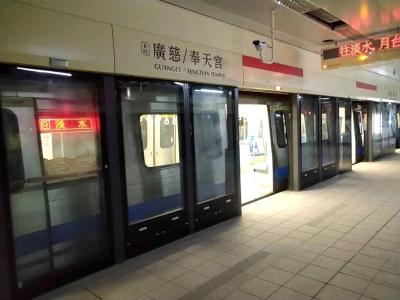
The eastern extension of the Taipei MRT Red Line could begin operations as early as late June, the Taipei Department of Rapid Transit Systems said yesterday. Taipei Rapid Transit Corp said it is considering offering one month of free rides on the new section to mark its opening. Construction progress on the 1.4km extension, which is to run from the current terminal Xiangshan Station to a new eastern terminal, Guangci/Fengtian Temple Station, was 90.6 percent complete by the end of last month, the department said in a report to the Taipei City Council's Transportation Committee. While construction began in October 2016 with an
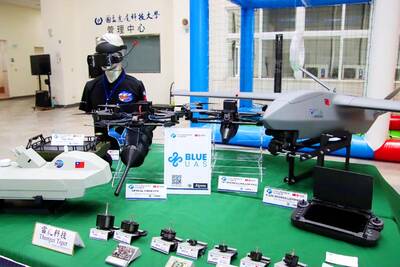
NON-RED SUPPLY: Boosting the nation’s drone industry is becoming increasingly urgent as China’s UAV dominance could become an issue in a crisis, an analyst said Taiwan’s drone exports to Europe grew 41.7-fold from 2024 to last year, with demand from Ukraine’s fight against Russian aggression the most likely driver of growth, a study showed. The Institute for Democracy, Society and Emerging Technology (DSET) in a statement on Wednesday said it found that many of Taiwan’s uncrewed aerial vehicle (UAV) sales were from Poland and the Czech Republic. These countries likely transferred the drones to Ukraine to aid it in its fight against the Russian invasion that started in 2022, it said. Despite the gains, Taiwan is not the dominant drone exporter to these markets, ranking second and fourth


 RSS
RSS