


As night falls on a square in Hualien County’s Mataian Village (馬太鞍), young women cast critical eyes over a dancing circle of men in embroidered skirts and feathered head dresses as part of an ancient matchmaking ritual.
Known as “Lovers’ Night,” it is the grand finale of the annual harvest festival of the Amis, the largest of the nation’s 16 recognized Aboriginal groups.
The village is a collection of basic, low-lying houses along meandering streets in a valley between two mountain ranges.

Photo: Sam Yeh, AFP
The harvest festival — which usually runs from June to August, with each village holding it at a different time — is the biggest and most important celebration for the Amis, and in Mataian it culminates with single women taking their pick of eligible bachelors.
The centuries-old custom is a reflection of a matriarchal system, which sees women make key decisions, including managing finances, and men marry into their wives’ families.
As the singing and dancing men increase their pace, the women move in behind their chosen love interest and tug on a multicolored cloth bag slung on their target’s shoulder.
To spark interest, the men wiggle and flex their muscles, the most popular among them accruing a line of interested women. If a man reciprocates the approach, he will give his bag — known as an alufo — to the woman, marking the beginning of a courtship.
In the past, the ritual would commonly lead to marriage and even now still sparks relationships, but it is also a chance for Amis community members who are working in the cities to return and socialize.
“Lovers’ Night is to make friends,” Cheng Ying-hsuan, 22, said.
Dressed in a red traditional outfit adorned with green beads and her own sequined alufo, she had returned to the village from Hualien, where she now lives, an hour’s drive away.
When asked if she hoped to find a boyfriend, she laughed and said: “That’s also a possibility.”
Mataian is one of the biggest Amis settlements and is home to about 500 people — mostly elders and children.
“We like the feeling of everyone coming back together and reconnecting. For us this is the most important,” said Liao Ching-tung, 28, who lives in Taipei.
Each harvest festival, hundreds who have moved away to work or study return to join in the festivities.
The community — which remains a marginalized in Taiwan — has seen its traditional culture eroded since immigrants started arriving from China centuries ago.
Since President Tsai Ing-wen (蔡英文) came to power in May last year, her government has been pushing for greater Aboriginal rights and preservation of traditional languages and culture.
However, some groups have criticized Tsai for not going far enough and have clashed with authorities over land rights policies, demanding that their ancestral areas be returned.
In Mataian, tradition is alive and kicking.
Lamen Panay, 41, who goes by her Amis name, says the matchmaking event is still meaningful to her even though she is no longer single.
She has a collection of lovers’ bags from past festivals, but has since settled down with her boyfriend, living with him in Taipei.
The couple are both from the village and Lamen still makes a point of picking him out during the matchmaking ritual.
“We are both usually very busy with work,” she said. “It’s necessary to rekindle the flames.”

The military has spotted two Chinese warships operating in waters near Penghu County in the Taiwan Strait and sent its own naval and air forces to monitor the vessels, the Ministry of National Defense (MND) said. Beijing sends warships and warplanes into the waters and skies around Taiwan on an almost daily basis, drawing condemnation from Taipei. While the ministry offers daily updates on the locations of Chinese military aircraft, it only rarely gives details of where Chinese warships are operating, generally only when it detects aircraft carriers, as happened last week. A Chinese destroyer and a frigate entered waters to the southwest

A magnitude 6.1 earthquake struck off the coast of Yilan County at 8:39pm tonight, the Central Weather Administration (CWA) said, with no immediate reports of damage or injuries. The epicenter was 38.7km east-northeast of Yilan County Hall at a focal depth of 98.3km, the CWA’s Seismological Center said. The quake’s maximum intensity, which gauges the actual physical effect of a seismic event, was a level 4 on Taiwan’s 7-tier intensity scale, the center said. That intensity level was recorded in Yilan County’s Nanao Township (南澳), Hsinchu County’s Guansi Township (關西), Nantou County’s Hehuanshan (合歡山) and Hualien County’s Yanliao (鹽寮). An intensity of 3 was

Japanese Prime Minister Sanae Takaichi’s comment last year on Tokyo’s potential reaction to a Taiwan-China conflict has forced Beijing to rewrite its invasion plans, a retired Japanese general said. Takaichi told the Diet on Nov. 7 last year that a Chinese naval blockade or military attack on Taiwan could constitute a “survival-threatening situation” for Japan, potentially allowing Tokyo to exercise its right to collective self-defense. Former Japan Ground Self-Defense Force general Kiyofumi Ogawa said in a recent speech that the remark has been interpreted as meaning Japan could intervene in the early stages of a Taiwan Strait conflict, undermining China’s previous assumptions
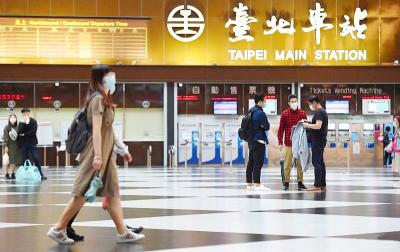
Taiwan Railways Corp (TRC) today announced that Shin Kong Mitsukoshi has been selected as the preferred bidder to operate the Taipei Railway Station shopping mall, replacing the current operator, Breeze Development Co Ltd. Among eight qualified firms that delivered presentations and were evaluated by a review committee, Shin Kong Mitsukoshi was ranked first, while Breeze was named the runner-up, the rail company said in a statement. Contract negotiations are to proceed in accordance with regulations, it said, adding that if negotiations with the top bidder fail, it could invite the second-ranked applicant to enter talks. Breeze in a statement today expressed doubts over


 RSS
RSS