


Worries that applying topical steroids might put unborn children at risk are not justified, Chang Gung Memorial Hospital dermatologist Chi Ching-chi (紀景琪) said yesterday, adding that parents should only worry if they applied more than 300g over the course of the pregnancy.
Clinical statistics showed that about 17 percent of pregnant women experience an itchy skin, but in about half of the cases this is caused by eczema, Chi said.
Eczema denotes a group of medical conditions that cause the skin to become inflamed or irritated, typically causing itching and redness.
Topical steroids — creams, ointment and lotions that contain corticosteroids (steroids) — are the most common medicine for treating eczema and reducing skin inflammation, Chi said.
He said many pregnant women are worried about side effects of the medicine on their unborn baby, but enduring itchy or inflamed skin without getting proper treatment can also harm an expecting mother’s health.
A research team led by Chi analyzed data from 14 different studies — comprising data collected from more than 1.6 million pregnant women and their babies — to understand the possible side effects of the application of topical steroids by women during pregnancy.
“Our research shows that only applying more than 300g of high or ultra-high-potency topical steroids over the span of the pregnancy would increase health risks,” he said.
“Possible adverse side effects include a low birth weight,” Chi said, adding that if a pregnant woman applied more than 300g of high or ultra-high-potency topical steroids during pregnancy, the risk of giving birth to a baby with low birth weight would increase from 5 percent to 35 percent.
Furthermore, analysis also showed that applying topical steroids, even in high doses, during pregnancy did not cause increased rates of caesarean delivery, congenital malformation, premature delivery or fetal death, Chi said.
He said a normal tube of steroid ointment contains about 10g and even if a large adult man applied the ointment all over his body, it would only take about 20g; and, as eczema often occurs on small areas of the skin, it would be difficult to apply more than 300g of the medicine during pregnancy.
The research results could be used as a guideline for the use of topical steroids by women during pregnancy, so that they would not need to worry too much about using medication to relieve their skin conditions.
Research results from the study have been published in the journal Cochrane Database of Systematic Reviews.

FUKUOKA SITUATION: Japanese media reported that the pathogen is expected to be identified by the summer, while the CDC downplayed the idea that it was hMPV A “mysterious cold-like illness” reported in Japan’s Fukuoka Prefecture does not seem to be a new disease, but Japanese authorities have been asked about the situation, the Centers for Disease Control (CDC) said yesterday. The Fukuoka Prefectural Medical Association on Wednesday told a news conference that a “mystery cold” that has become a hot topic on social media is “highly likely to be caused by some kind of viral infection,” Japan’s KBC News reported. “Many people are experiencing symptoms starting with a sore throat, followed by a runny nose, phlegm and a severe cough,” KBC News reported, citing association officials. Health authorities are

Nvidia Corp CEO Jensen Huang (黃仁勳) arrived in Taiwan yesterday ahead of upcoming AI and technology events, saying he plans to meet with clients and Taiwan Semiconductor Manufacturing Co Chairman C.C. Wei (魏哲家) during his visit. After landing at Taipei Songshan Airport, Huang posed for photos with fans and handed out Yakult drinks to reporters and supporters waiting at the scene, saying he has “a lot to do” during the trip. Asked about reports that Nvidia’s planned headquarters site in Taipei’s Beitou Shilin Technology Park could break ground on May 27, Huang said that if the company holds an event, he would

The Ministry of Finance this afternoon announced the winning numbers for the March-April uniform invoice lottery. The winning number for the NT$10 million (US$318,060) special prize is 19531471, and the winning number for the NT$2 million grand prize is 85941329. Three numbers were drawn for the NT$200,000 first prize: 07225810, 20231230 and 83518781. Those with receipts matching the last seven digits of any of the first-prize numbers will win the NT$40,000 second prize, while those matching the last six digits will win the NT$10,000 third prize. Those whose receipts match the last five digits of the first-prize numbers can claim the NT$4,000 fourth prize,
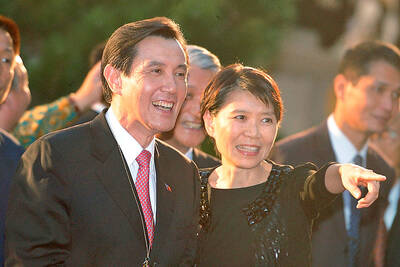
Former president Ma Ying-jeou (馬英九) yesterday expressed “shock and regret” over a statement issued by his wife without his consent, and rejected her assertion that his eldest sister, Ma Yi-nan (馬以南), would manage his medical care or act as his spokesperson amid an ongoing embezzlement probe into his foundation. Ma Ying-jeou in a statement said he was shocked by a statement by his wife, Chou Mei-ching (周美青), regarding his affairs. Ma Yi-nan “must not” be in charge of his healthcare and other personal affairs, nor can she be allowed to represent the Ma family, the former president said. He said he was also


 RSS
RSS