


A 58-year-old man suffered from an almost complete loss of memory when he woke up one morning and was later diagnosed with the rare condition known as transient global amnesia, a Taipei neurologist said yesterday
The man, surnamed Lin (林), is an executive at a foreign company. He shocked his family that morning, because he could not remember what he had just talked about a couple of minutes earlier, and repeatedly asked questions such as: “Where am I going today?” “What do I do?” and “What day is it today?”
Huang Chih-hsun (黃啟訓), a neurologist at the Shu Tien Clinic, said that a cerebrovascular ultrasound examination showed that Lin had transient global amnesia — a sudden, temporary episode of memory loss — caused by internal jugular vein valve incompetence.
He said that Lin had been emotional after watching a political talk show on TV and later had trouble defecating because of chronic constipation.
The intense emotions and the constipation might have caused the blood to flow backward or triggered venous hyperemia, Huang said.
“Memory formation is mainly controlled by the hippocampus in the brain. Because he suffered from internal jugular vein valvular incompetence, which caused ischemia in the hippocampus, he temporarily lost his memory,” Huang said.
He said valvular insufficiency usually occurs as a result of aging, but some people have a congenital vascular anomaly and the condition can trigger transient global amnesia, multiple sclerosis and cerebral vascular incidents.
People should consider having a cerebrovascular ultrasound examination and a test for internal jugular venous reflux when getting a health examination if they have suffered from temporary memory loss or a temporary feeling of suffocation, Huang said.
“People with such a condition [internal jugular vein valve incompetence] should avoid getting too angry or too excited, doing strenuous exercise or straining too much when suffering from constipation,” he said.

Actor Darren Wang (王大陸) was sentenced to six months in prison, commutable to a fine, by the New Taipei District Court today for contravening the Personal Data Protection Act (個人資料保護法) in a case linked to an alleged draft-dodging scheme. Wang allegedly paid NT$3.6 million (US$114,380) to an illegal group to help him evade mandatory military service through falsified medical documents, prosecutors said. He transferred the funds to Chen Chih-ming (陳志明), the alleged mastermind of a draft-evasion ring, although he lost contact with him as he was already in detention on fraud charges, they said. Chen is accused of helping a

SECURITY: Starlink owner Elon Musk has taken pro-Beijing positions, and allowing pro-China companies to control Taiwan’s critical infrastructure is risky, a legislator said Starlink was reluctant to offer services in Taiwan because of the nation’s extremely high penetration rates in 4G and 5G services, the Ministry of Digital Affairs said yesterday. The ministry made the comments at a meeting of the legislature’s Transportation Committee, which reviewed amendments to Article 36 of the Telecommunications Management Act (電信管理法). Article 36 bans foreigners from holding more than 49 percent of shares in public telecommunications networks, while shares foreigners directly and indirectly hold are also capped at 60 percent of the total, unless specified otherwise by law. The amendments, sponsored by Chinese Nationalist Party (KMT) Legislator Ko
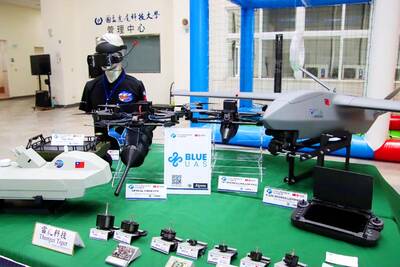
NON-RED SUPPLY: Boosting the nation’s drone industry is becoming increasingly urgent as China’s UAV dominance could become an issue in a crisis, an analyst said Taiwan’s drone exports to Europe grew 41.7-fold from 2024 to last year, with demand from Ukraine’s fight against Russian aggression the most likely driver of growth, a study showed. The Institute for Democracy, Society and Emerging Technology (DSET) in a statement on Wednesday said it found that many of Taiwan’s uncrewed aerial vehicle (UAV) sales were from Poland and the Czech Republic. These countries likely transferred the drones to Ukraine to aid it in its fight against the Russian invasion that started in 2022, it said. Despite the gains, Taiwan is not the dominant drone exporter to these markets, ranking second and fourth
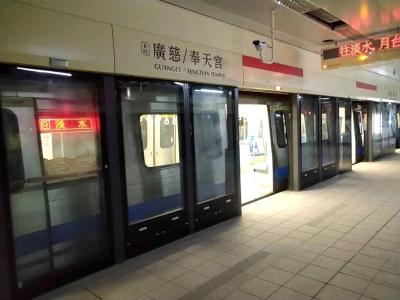
The eastern extension of the Taipei MRT Red Line could begin operations as early as late June, the Taipei Department of Rapid Transit Systems said yesterday. Taipei Rapid Transit Corp said it is considering offering one month of free rides on the new section to mark its opening. Construction progress on the 1.4km extension, which is to run from the current terminal Xiangshan Station to a new eastern terminal, Guangci/Fengtian Temple Station, was 90.6 percent complete by the end of last month, the department said in a report to the Taipei City Council's Transportation Committee. While construction began in October 2016 with an


 RSS
RSS