


Liberty Times: Did you imagine that “Ten Years” (十年) would elicit the response that it did?
Ng Ka-Leung (伍嘉良): It was all very unexpected, the award and the box office success. We only wanted to express honestly with the film our imaginings of the future and we had little idea if our creation would have the “stuff” that would resonate with the audience.
We had hoped that the film could begin a dialogue that would allow viewers to express their thoughts about the future on the issues and from their own perspectives; that was exactly our authorial intention.
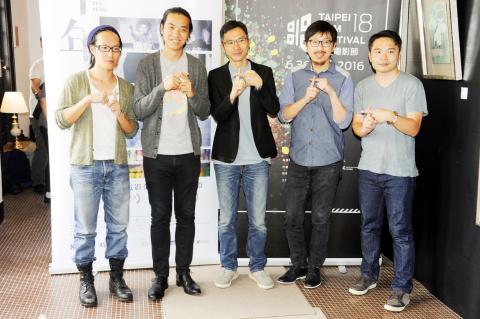
Photo: Chao Shih-hsun, Taipei Times
Wong Fei-Pang (黃飛鵬): With regard to what Ng said, we did not make the film to win prizes; rather we wanted to shoot something that would hold a mirror to social realities. Previously, we tried to show Ten Years to a broader Hong Kong audience by simultaneously screening the film in 14 locations in Hong Kong, and many communities, associations and store owners volunteered to help with the project. They are not people in the film industry; they helped because Ten Years resonated with them. For us, this is the more meaningful response.
LT: Do you see yourself as filmmakers or political activists? Under the government crackdown, do you find people around you engaging in self-censorship?
Chow Kwun-Wai (周冠威): A lot of people asked us if we were expressing a political platform in our film, or asked: “How much of your film is about political engagement?” In fact, I was not active during the Umbrella movement, as I believe that we must isolate ourselves from any movement so as to gain the vantage of perspective. This is my principle as a filmmaker.
Although Ten Years is seemingly a reaction to politics, that appearance is the result of the impossibility of escaping from politics; this film aimed to confront a reality in which every aspect of our lives has been hijacked by the political. Rather than politics itself, I want to explore the causal relationships found in this phenomenon and to explore the reality of politicization.
Ng: I do not believe in this dichotomy; filmmakers can take a political stance, as everyone is in part political. A film that intentionally avoids politics or is completely devoid of it would be the most highly politicized film of all.
Jevons Au (歐文傑): It must be said that being associated with Ten Years has not done me any favors and investors with a mind for profits would of course do well to stay abreast of controversies that might cost them audiences, who might have views that are opposed to those of the filmmaker.
Additionally, Ten Years is surrounded by a good deal of politicized interpretations, and as a result of that, I cannot let a protagonist in my other films hold an umbrella without being asked: “Are you hinting at something about the Umbrella movement?”
A majority of recent films in Hong Kong were made in collaboration with people from China and many times when investors find out that I am one of the codirectors of Ten Years, I either hear no more from them or they come to me for the explicit purpose of making a political film.
LT: The two-year production of “Ten Years” coincided with the Umbrella movement. Had that event in anyway worked into your film?
Au: We decided to make Ten Years before the Umbrella movement, but then it simply happened just as we were crafting plotlines for the film. Shooting on Dialect (方言), my short story, began in March 2014, the earliest of the five [short stories in Ten Years], and the Umbrella movement occurred from Sept. 26 to Dec. 15, 2014.
However, the impact of the movement on the whole film has been immense. Take my Dialect as an example, for which I initially planned a happy ending; as my sense of powerlessness deepened, I opted to forgo writing a resolution to the story, to make it more alarming to the viewers.
Ng: Shooting began on the four short stories other than Dialect after the end of the Umbrella movement; rather than a direct reaction to the Umbrella movement itself, the film is based on imaginings of the future that came from Hong Kongers’ rumination on the events that they have experienced over many years.
LT: Many Hong Kongers said that “Ten Years” is an ominous prophecy. Do you think that the stories in the film will come to pass in 10 years’ time?
Chow: One of the taglines for our film is: “A future we dread to see,” but I think some elements of the storylines will come to pass in less than 10 years, like the disappearance of Hong Kong’s farms; those are things that might come to pass, but we do not want them to.
Au: Quite a few Hong Kongers have said that Ten Years is mistitled, that it should read “This Year.” Certain plot elements in [my part of the] film came from my personal experience, or those of my friends.
For example, I have been ambushed at Hong Kong airport by the question: “Can you speak Standard Chinese?” (普通話, putonghua), or that in children’s Standard Chinese classes, the message was drummed into them: “Fluency in Standard Chinese is essential for your future,” et cetera. When those situations became commonplace, Dialect will become the reality and Hong Kong’s local culture will be lost.
Wong: I am more curious as to what will come to pass in the next 10 years of Taiwan’s future. Under globalization, the two locations mutually influence each other. Hong Kongers have observed with interest Taiwan’s Sunflower movement and the anti-nuclear protest movement, and some of the slogans and banners of those movements can be found in Hong Kong.
If a city has profit-seeking as its only goal, then other things like culture and agriculture that are of value will not be preserved. If the perspective that “all we need is to make money” is adopted, Hong Kong’s future will change for the worse.
People in the nations of Taiwan, Hong Kong, Singapore, Japan and other Asian countries are observing each other closely and hoping for a better future. There were Hong Kongers who went to Taiwan to support the Sunflower movement, and there have been Taiwanese who came to Hong Kong to support the Umbrella movement.
The world is one of mutual influence. If Hong Kong “takes a nosedive,” there is no way that Taiwan can remain unaffected; in fact the two sides are mutually dependent.
LT: There is this saying in Taiwan,: “Today’s Hong Kong, tomorrow’s Taiwan (今日香港,明日台灣),” as Taiwanese are generally concerned about the political situation in Hong Kong. “Ten Years” opens in Taiwanese theaters next month — is there anything in particular that you hope locals will take away from the film?
Chow: You hit the nail right on the head when you said “Today’s Hong Kong, tomorrow’s Taiwan.”
Several decades ago, Taiwanese used this same expression to convey their envy over Hong Kong’s development. Today, it expresses people’s fear of Taiwan becoming another Hong Kong. It is the complete opposite situation.
Making Ten Years was about giving a voice to the people of today and tomorrow who want to yell out: “If we start making changes now, there’s a chance for things to be better.”
LT: There is a sharp decline in the number of Chinese tourists who visit Hong Kong. What effect does this have on the economy and livelihoods of the people in Hong Kong?
Au: Hong Kong is an international city, tourists there were never meant to be from only one place. There are some businesses that cater only to Chinese visitors, but this is not a good long-term business model. In the beginning, large numbers of Chinese visitors came and divvied up our resources, our living space, our public transport and medical resources. We were compelled to “share.”
Ng: Only if a place can attract visitors from all over the world is it worthy of pride. Those Chinese travelers are only there buying daily goods, diapers and baby formula. Conversely, those who are squeezing locals out of their living space are not true tourists. All they bring to Hong Kong is an economic bubble. What Hong Kongers should be thinking about is how to create and protect what is unique to Hong Kong, not just trying to earn the yuan that is in front of their eyes.
LT: Chinese authorities want Hong Kong bookseller Lam Wing-kei (林榮基) of Causeway Bay Books to return to China to stand trial. Do you all feel that “one country, two systems” is already destroyed?
Zune Kwok (郭臻): It is really quite scary. Many Hong Kongers are worried that they too might mysteriously disappear one day for some unspecified reason.
Wong: This is a big wake-up call. When all is said and done, do the Basic Law and “one country, two systems,” which were included in the original agreement between Hong Kong and China, really exist? Is there still any need for compliance with that agreement? As it stands, “one country, two systems” exists in name only. How do we move forward into the future? Do we remedy the situation, renegotiate the terms of the relationship between the two sides, or just disregard the situation? This is in fact the biggest problem facing Hong Kong.
Translated by staff writers Jonathan Chin and William Hetherington
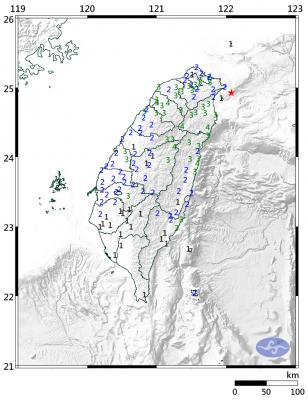
A magnitude 6.1 earthquake struck off the coast of Yilan County at 8:39pm tonight, the Central Weather Administration (CWA) said, with no immediate reports of damage or injuries. The epicenter was 38.7km east-northeast of Yilan County Hall at a focal depth of 98.3km, the CWA’s Seismological Center said. The quake’s maximum intensity, which gauges the actual physical effect of a seismic event, was a level 4 on Taiwan’s 7-tier intensity scale, the center said. That intensity level was recorded in Yilan County’s Nanao Township (南澳), Hsinchu County’s Guansi Township (關西), Nantou County’s Hehuanshan (合歡山) and Hualien County’s Yanliao (鹽寮). An intensity of 3 was

Instead of focusing solely on the threat of a full-scale military invasion, the US and its allies must prepare for a potential Chinese “quarantine” of Taiwan enforced through customs inspections, Stanford University Hoover fellow Eyck Freymann said in a Foreign Affairs article published on Wednesday. China could use various “gray zone” tactics in “reconfiguring the regional and ultimately the global economic order without a war,” said Freymann, who is also a nonresident research fellow at the US Naval War College. China might seize control of Taiwan’s links to the outside world by requiring all flights and ships entering or leaving Taiwan
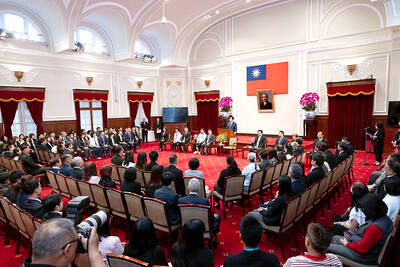
The next minimum wage hike is expected to exceed NT$30,000, President William Lai (賴清德) said yesterday during an award ceremony honoring “model workers,” including migrant workers, at the Presidential Office ahead of Workers’ Day today. Lai said he wished to thank the awardees on behalf of the nation and extend his most sincere respect for their hard work, on which Taiwan’s prosperity has been built. Lai specifically thanked 10 migrant workers selected for the award, saying that although they left their home countries to further their own goals, their efforts have benefited Taiwan as well. The nation’s industrial sector and small businesses lay
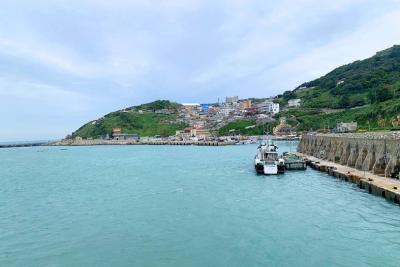
Taiwan has activated backup communications for its northernmost territory, the remote and strategically located island of Dongyin (東引), after poor weather conditions apparently shifted the wreckage of a ship onto an undersea cable causing it to break. The vulnerability of undersea communication cables linking Taiwan with its outlying islands has been a persistent cause of concern for Taipei, whose government has on several occasions blamed Chinese ships for intentionally causing damage. Dongyin, home to about 1,500 people, sits in a strategic position at the top of the Taiwan Strait and the island has a heavy military presence. It does not have an


 RSS
RSS